
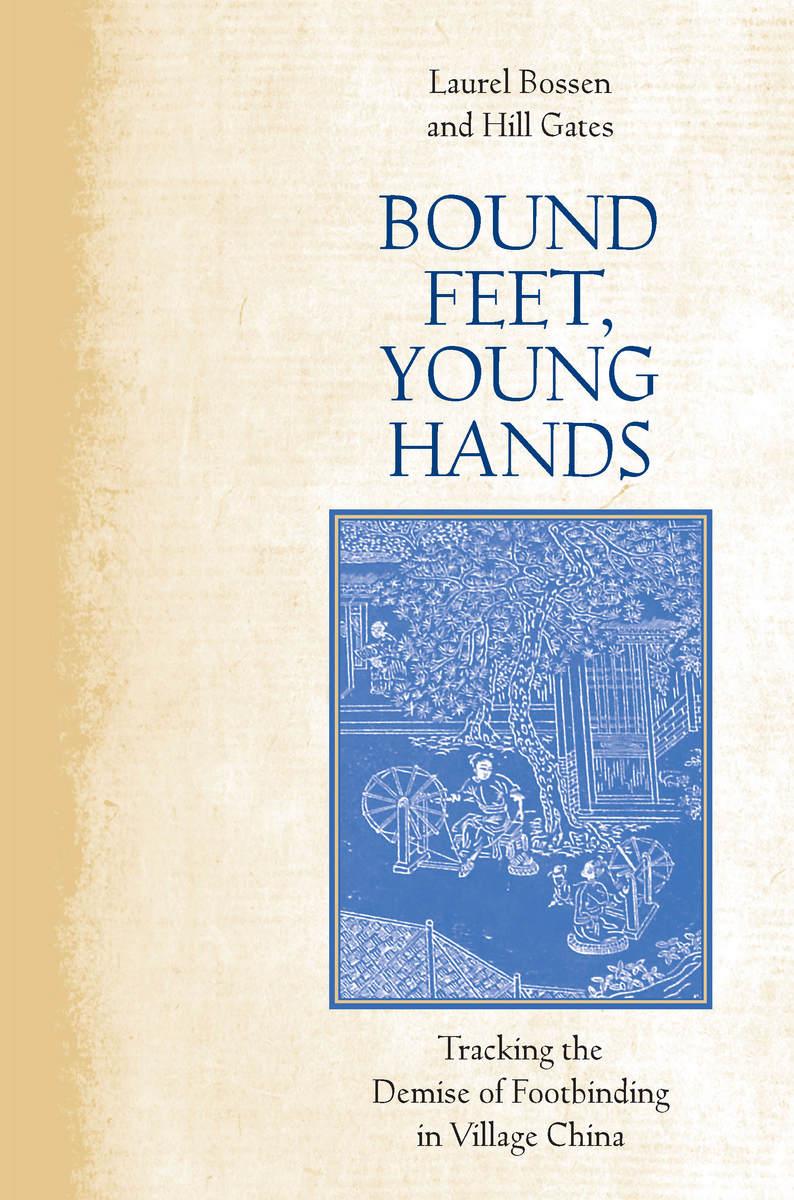
Footbinding was common in China until the early twentieth century, when most Chinese were family farmers. Why did these families bind young girls' feet? And why did footbinding stop? In this groundbreaking work, Laurel Bossen and Hill Gates upend the popular view of footbinding as a status, or even sexual, symbol by showing that it was an undeniably effective way to get even very young girls to sit still and work with their hands.
Interviews with 1,800 elderly women, many with bound feet, reveal the reality of girls' hand labor across the North China Plain, Northwest China, and Southwest China. As binding reshaped their feet, mothers disciplined girls to spin, weave, and do other handwork because many village families depended on selling such goods. When factories eliminated the economic value of handwork, footbinding died out. As the last generation of footbound women passes away, Bound Feet, Young Hands presents a data-driven examination of the social and economic aspects of this misunderstood custom.
Payez facilement par carte, Klarna, Apple Pay ou Google Pay. Pas satisfait ? Vous avez toujours une garantie de remboursement de 14 jours. En savoir plus dans nos conditions. Si vous avez des questions, envoyez-nous un e-mail à hello@memmo.org.
Memmo facilite tes études, où que tu sois dans le monde. On rassemble tes manuels de cours et des outils d'étude intelligents au même endroit : résumés, quiz, podcasts et flashcards. Et il y a Ted, ton compagnon d'étude qui répond à toutes tes questions. Plus de 50 000 étudiants étudient déjà ici – conçu pour t'aider à apprendre plus vite et à moins stresser.