
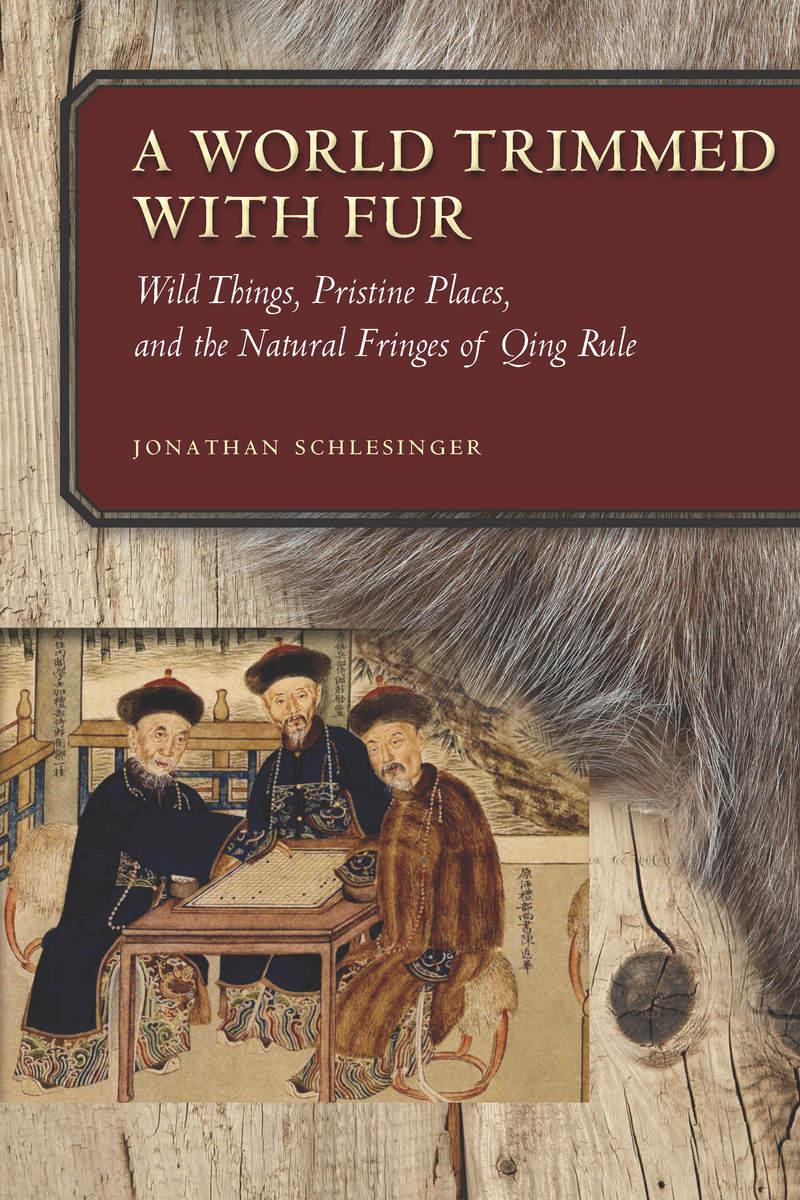
In the eighteenth and nineteenth centuries, booming demand for natural resources transformed China and its frontiers. Historians of China have described this process in stark terms: pristine borderlands became breadbaskets. Yet Manchu and Mongolian archives reveal a different story. Well before homesteaders arrived, wild objects from the far north became part of elite fashion, and unprecedented consumption had exhausted the region's most precious resources.
In A World Trimmed with Fur, Jonathan Schlesinger uses these diverse archives to reveal how Qing rule witnessed not the destruction of unspoiled environments, but their invention. Qing frontiers were never pristine in the nineteenth century—pearlers had stripped riverbeds of mussels, mushroom pickers had uprooted the steppe, and fur-bearing animals had disappeared from the forest. In response, the court turned to "purification;" it registered and arrested poachers, reformed territorial rule, and redefined the boundary between the pristine and the corrupted. Schlesinger's resulting analysis provides a framework for rethinking the global invention of nature.
Payez facilement par carte, Klarna, Apple Pay ou Google Pay. Pas satisfait ? Vous avez toujours une garantie de remboursement de 14 jours. En savoir plus dans nos conditions. Si vous avez des questions, envoyez-nous un e-mail à hello@memmo.org.
Memmo facilite tes études, où que tu sois dans le monde. On rassemble tes manuels de cours et des outils d'étude intelligents au même endroit : résumés, quiz, podcasts et flashcards. Et il y a Ted, ton compagnon d'étude qui répond à toutes tes questions. Plus de 50 000 étudiants étudient déjà ici – conçu pour t'aider à apprendre plus vite et à moins stresser.