
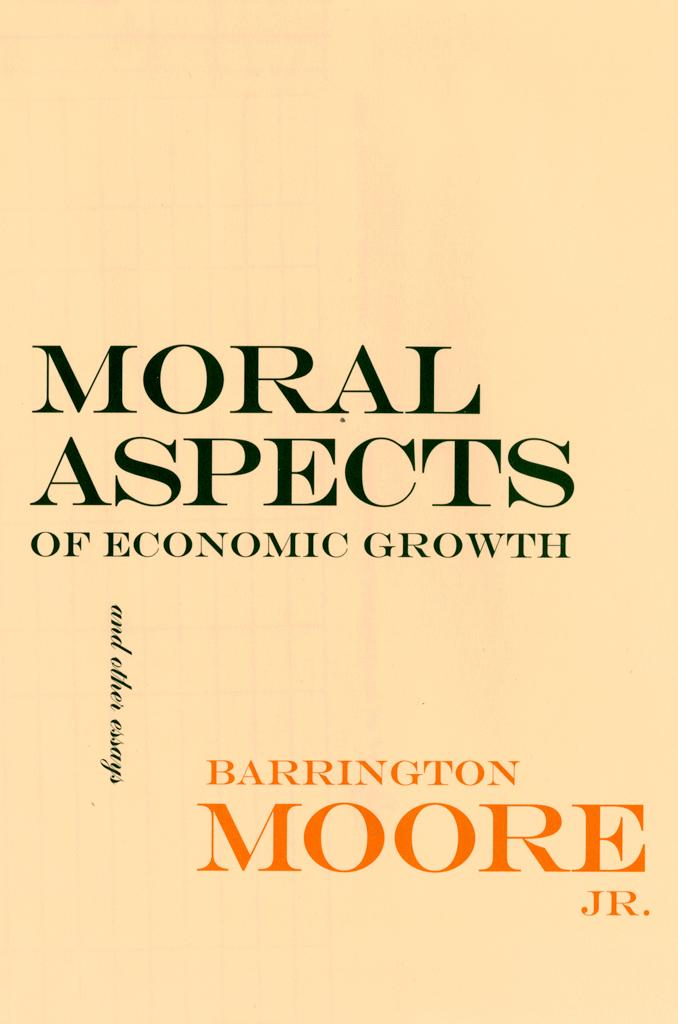
Barrington Moore, Jr., one of the most distinguished thinkers in critical theory and historical sociology, was long concerned with the prospects for freedom and decency in industrial society. The product of decades of reflection on issues of authority, inequality, and injustice, this volume analyzes fluctuating moral beliefs and behavior in political and economic affairs at different points in history, from the early Middle Ages in England to the prospects for liberalism under twentieth-century Soviet socialism. The social sources of antisocial behavior; principles of social inequality; and the origins, enemies, and possibilities of rational discussion in public affairs—these are among the topics Moore considers as he seeks to uncover the historical causes of some accepted forms of morality and to assess their social consequences.
The keynote essay examines how moral codes grew out of commercial practices in England from medieval times through the industrial revolution. Moore pays special attention to conceptions of honesty and the temptation to evade that inform the volume as a whole. In the other essays, he considers particular political issues, viewing "political" in its broadest sense as an unequal distribution of power and authority that carries a strong moral charge. Free of preaching and advocacy, his work offers a rare reasonable assessment of the morality of major social institutions over time.
Payez facilement par carte, Klarna, Apple Pay ou Google Pay. Pas satisfait ? Vous avez toujours une garantie de remboursement de 14 jours. En savoir plus dans nos conditions. Si vous avez des questions, envoyez-nous un e-mail à hello@memmo.org.
Memmo facilite tes études, où que tu sois dans le monde. On rassemble tes manuels de cours et des outils d'étude intelligents au même endroit : résumés, quiz, podcasts et flashcards. Et il y a Ted, ton compagnon d'étude qui répond à toutes tes questions. Plus de 50 000 étudiants étudient déjà ici – conçu pour t'aider à apprendre plus vite et à moins stresser.