
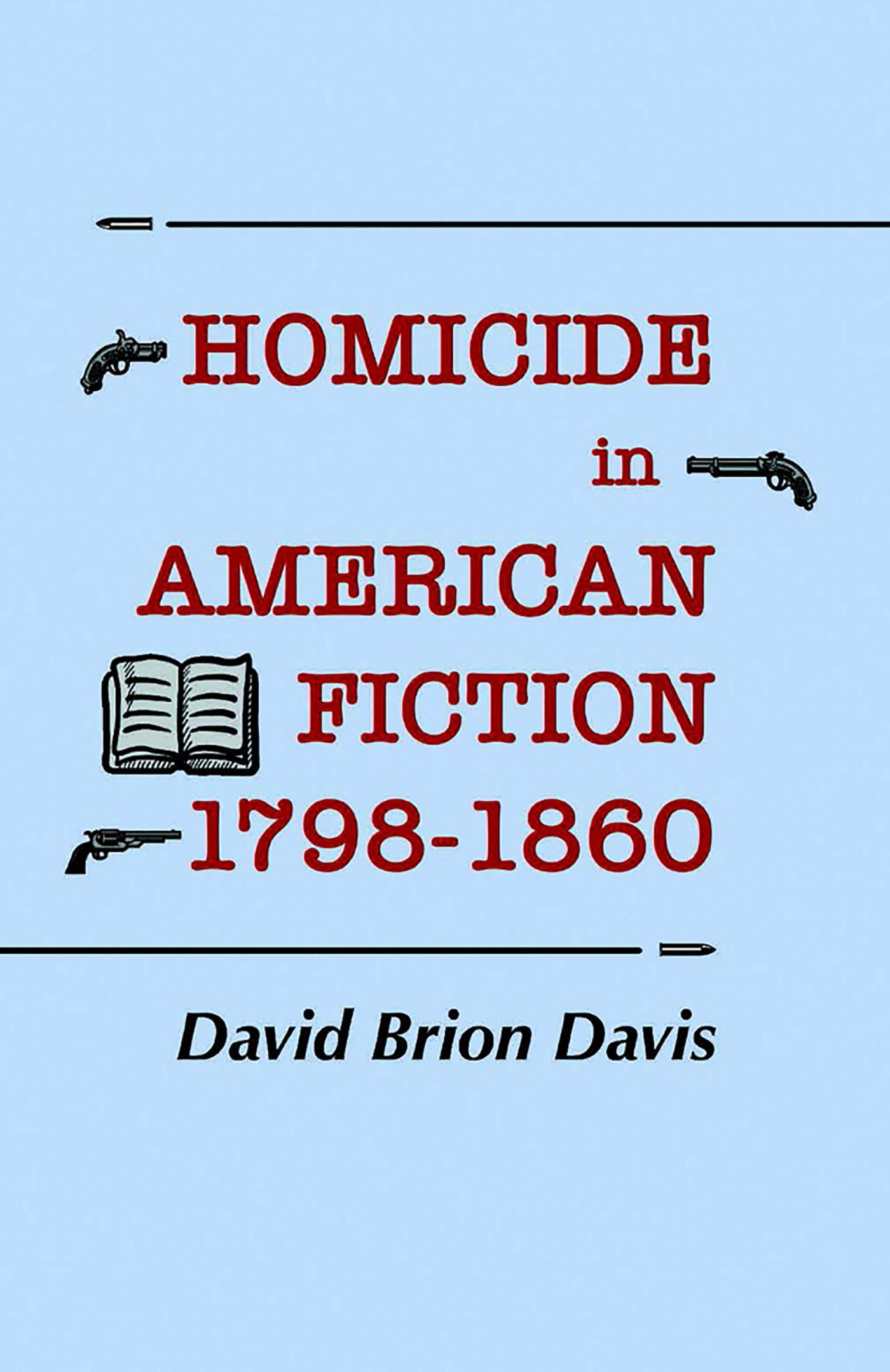
Homicide has many social and psychological implications that vary from culture to culture and which change as people accept new ideas concerning guilt, responsibility, and the causes of crime. A study of attitudes toward homicide is therefore a method of examining social values in a specific setting. Homicide in American Fiction, 1798–1860 is the first book to contrast psychological assumptions of imaginative writers with certain social and intellectual currents in an attempt to integrate social attitudes toward such diverse subjects as human evil, moral responsibility, criminal insanity, social causes of crime, dueling, lynching, the "unwritten law" of a husband's revenge, and capital punishment. In addition to works of literary distinction by Cooper, Hawthorne, Irving, and Poe, among others, Davis considers a large body of cheap popular fiction generally ignored in previous studies of the literature of this period. This is an engrossing study of fiction as a reflection of and a commentary on social problems and as an influence shaping general beliefs and opinions.
Payez facilement par carte, Klarna, Apple Pay ou Google Pay. Pas satisfait ? Vous avez toujours une garantie de remboursement de 14 jours. En savoir plus dans nos conditions. Si vous avez des questions, envoyez-nous un e-mail à hello@memmo.org.
Memmo facilite tes études, où que tu sois dans le monde. On rassemble tes manuels de cours et des outils d'étude intelligents au même endroit : résumés, quiz, podcasts et flashcards. Et il y a Ted, ton compagnon d'étude qui répond à toutes tes questions. Plus de 50 000 étudiants étudient déjà ici – conçu pour t'aider à apprendre plus vite et à moins stresser.