
Winner of the 2023 Emily Toth Award for Best Single Work in Women's Studies
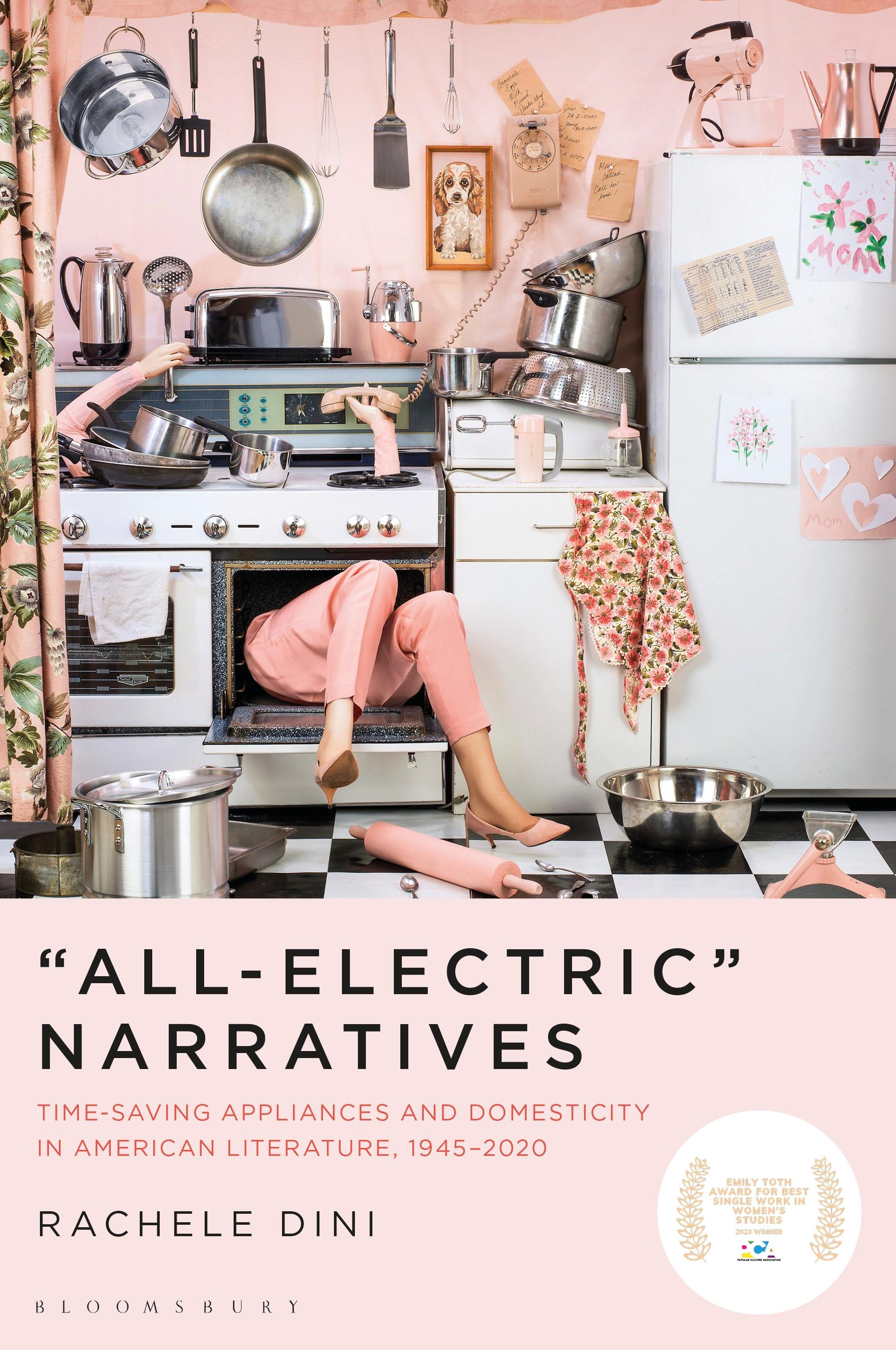
“All-Electric” Narratives is the first in-depth study of time-saving electrical appliances in American literature. It examines the literary depiction of refrigerators, vacuum cleaners, oven ranges, washing machines, dryers, dishwashers, toasters, blenders, standing and hand-held mixers, and microwave ovens between 1945, when the “all-electric” home came to be associated with the nation's hard-won victory, and 2020, as contemporary writers consider the enduring material and spiritual effects of these objects in the 21st century.
The appropriation and subversion of the rhetoric of domestic electrification and time-saving comprises a crucial, but overlooked, element in 20th-century literary forms and genres including Beat literature, Black American literature, second-wave feminist fiction, science fiction, and postmodernist fiction. Through close-readings of dozens of literary texts alongside print and television ads from this period, Dini shows how U.S. writers have unearthed the paradoxes inherent to claims of appliances' capacity to “give back” time to their user, transport them into a technologically-progressive future, or “return” them to some pastoral past. In so doing, she reveals literary appliances' role in raising questions about gender norms and sexuality, racial exclusion and erasure, class anxieties, the ramifications of mechanization, the perils and possibilities of conformity, the limitations of patriotism, and the inevitable fallacy of utopian thinking-while both shaping and radically disrupting the literary forms in which they operated.
“All-Electric” Narratives is the first in-depth study of time-saving electrical appliances in American literature. It examines the literary depiction of refrigerators, vacuum cleaners, oven ranges, washing machines, dryers, dishwashers, toasters, blenders, standing and hand-held mixers, and microwave ovens between 1945, when the “all-electric” home came to be associated with the nation's hard-won victory, and 2020, as contemporary writers consider the enduring material and spiritual effects of these objects in the 21st century.
The appropriation and subversion of the rhetoric of domestic electrification and time-saving comprises a crucial, but overlooked, element in 20th-century literary forms and genres including Beat literature, Black American literature, second-wave feminist fiction, science fiction, and postmodernist fiction. Through close-readings of dozens of literary texts alongside print and television ads from this period, Dini shows how U.S. writers have unearthed the paradoxes inherent to claims of appliances' capacity to “give back” time to their user, transport them into a technologically-progressive future, or “return” them to some pastoral past. In so doing, she reveals literary appliances' role in raising questions about gender norms and sexuality, racial exclusion and erasure, class anxieties, the ramifications of mechanization, the perils and possibilities of conformity, the limitations of patriotism, and the inevitable fallacy of utopian thinking-while both shaping and radically disrupting the literary forms in which they operated.
Payez facilement par carte, Klarna, Apple Pay ou Google Pay. Pas satisfait ? Vous avez toujours une garantie de remboursement de 14 jours. En savoir plus dans nos conditions. Si vous avez des questions, envoyez-nous un e-mail à hello@memmo.org.
Memmo facilite tes études, où que tu sois dans le monde. On rassemble tes manuels de cours et des outils d'étude intelligents au même endroit : résumés, quiz, podcasts et flashcards. Et il y a Ted, ton compagnon d'étude qui répond à toutes tes questions. Plus de 50 000 étudiants étudient déjà ici – conçu pour t'aider à apprendre plus vite et à moins stresser.