
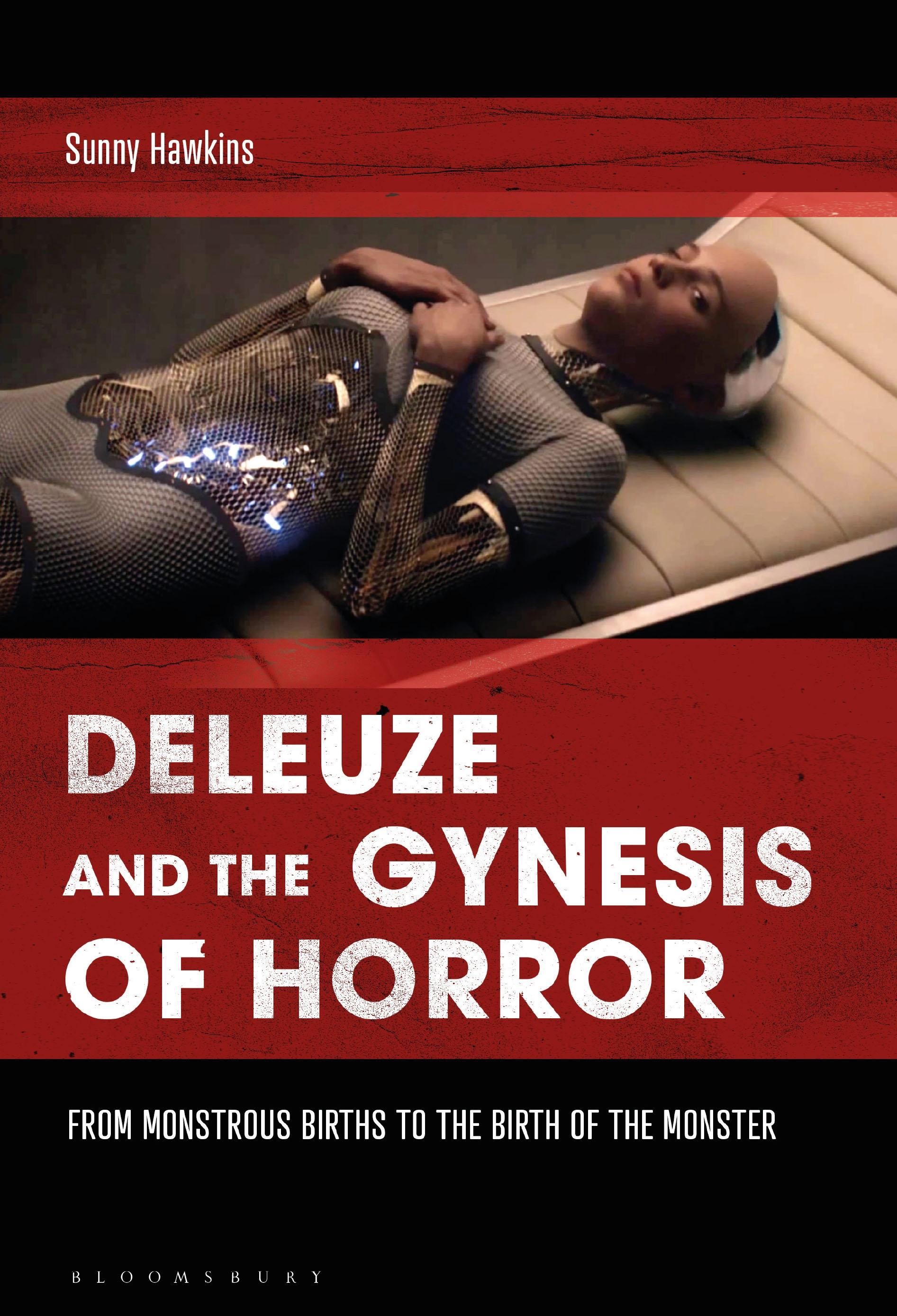
Applying Deleuze's schizoanalytic techniques to film theory, Deleuze and the Gynesis of Horror demonstrates how an embodied approach to horror film analysis can help us understand how film affects its viewers and distinguish those films which reify static, hegemonic, “molar” beings from those which prompt fluid, nonbinary, “molecular” becomings. It does so by analyzing the politics of reproduction in contemporary films such as Ex Machina; Mary Shelley's Frankenstein; Mad Max: Fury Road; the Twilight saga; and the original Alien quadrilogy and its more recent prequels, Prometheus and Alien: Covenant.
Author Sunny Hawkins argues that films which promote a “monstrous philosophy” of qualitative, affirmative difference as difference-in-itself, and which tend to be more molecular than molar in their expressions, can help us trace a “line of flight” from the gender binary in the real world. Deleuze and the Gynesis of Horror demonstrates how the techniques of horror film – editing, sound and visual effects, lighting and colour, camera movement – work in tandem with a film's content to affect the viewer's body in ways that disrupt the sense of self as a whole, unified subject with a stable, monolithic identity and, in some cases, can serve to breakdown the binary between self/Other, as we come to realize that we are none of us static, categorizable beings but are, as Henri Bergson said, “living things constantly becoming.”
Author Sunny Hawkins argues that films which promote a “monstrous philosophy” of qualitative, affirmative difference as difference-in-itself, and which tend to be more molecular than molar in their expressions, can help us trace a “line of flight” from the gender binary in the real world. Deleuze and the Gynesis of Horror demonstrates how the techniques of horror film – editing, sound and visual effects, lighting and colour, camera movement – work in tandem with a film's content to affect the viewer's body in ways that disrupt the sense of self as a whole, unified subject with a stable, monolithic identity and, in some cases, can serve to breakdown the binary between self/Other, as we come to realize that we are none of us static, categorizable beings but are, as Henri Bergson said, “living things constantly becoming.”
Pages: 208
Catégorie: Kultur-, Genus- & Postkoloniala studier
e-ISBN: 9781501358449
Poids d'expédition: 1.2 kg
Expédié sous: 1-2 jours
Payez facilement par carte, Klarna, Apple Pay ou Google Pay. Pas satisfait ? Vous avez toujours une garantie de remboursement de 14 jours. En savoir plus dans nos conditions. Si vous avez des questions, envoyez-nous un e-mail à hello@memmo.org.
Memmo facilite tes études, où que tu sois dans le monde. On rassemble tes manuels de cours et des outils d'étude intelligents au même endroit : résumés, quiz, podcasts et flashcards. Et il y a Ted, ton compagnon d'étude qui répond à toutes tes questions. Plus de 50 000 étudiants étudient déjà ici – conçu pour t'aider à apprendre plus vite et à moins stresser.