
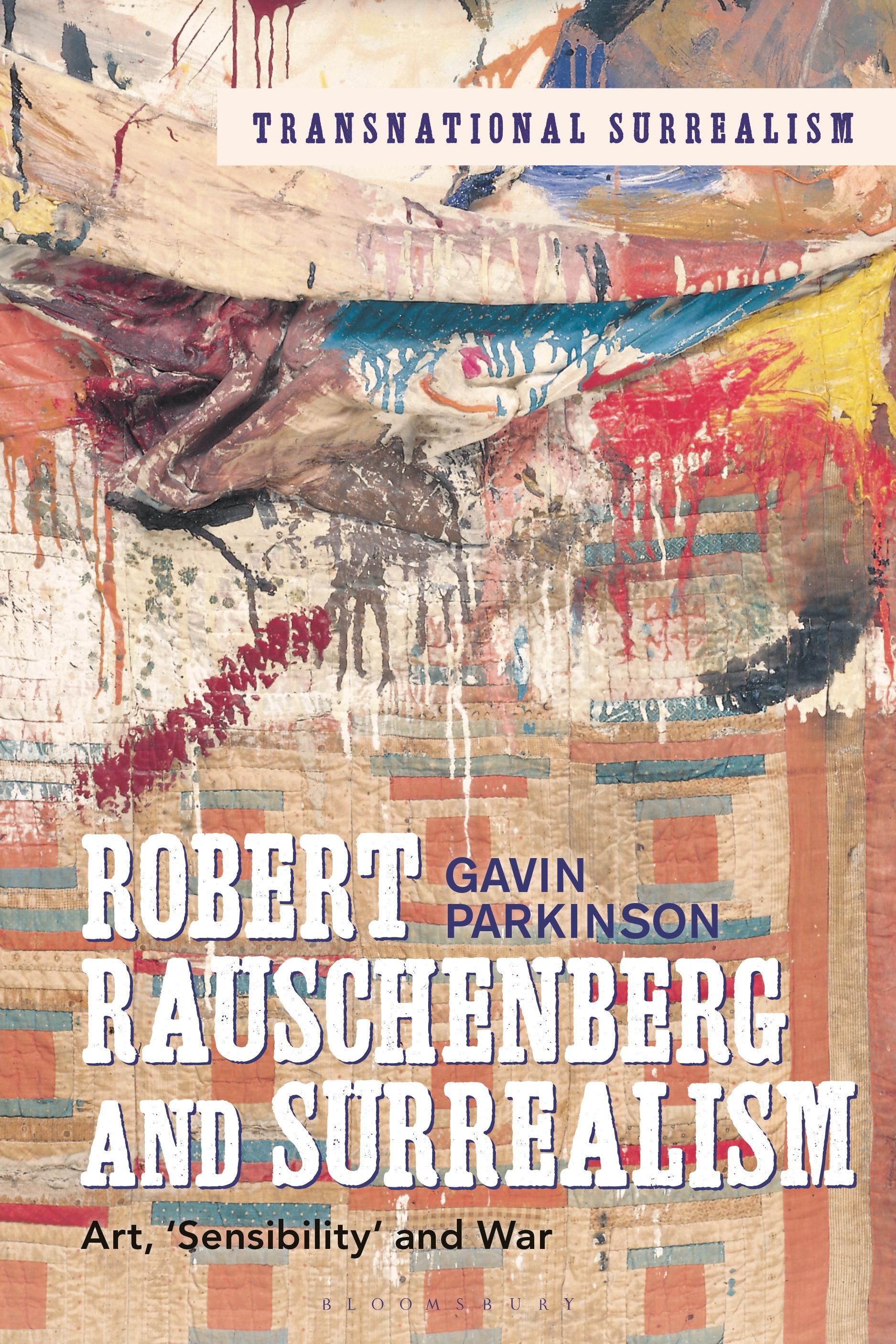
The art of Robert Rauschenberg (1925-2008) is usually viewed as quite distinct from Surrealism, a movement which the artist himself displayed some hostility towards. However, Rauschenberg had a very positive reception among Surrealists, particularly across the period 1959-69.
In the face of Rauschenberg's avowals of his own 'literalism' and insistence on his art as 'facts,' this book gathers generous evidence of the poetic, metaphorical, allusive, associative and connotative dimensions of the artist's oeuvre as identified by Surrealists, and thus extrapolates new readings from Rauschenberg's key works on that basis. By viewing Rauschenberg's art against the expansion of the cultural influence of the United States in Europe in the period after the Second World War and the increasingly politicized activities of the Surrealists in the era of the Algerian War of Independence (1954-62), Robert Rauschenberg and Surrealism shows how poetic inference of the artist's work was turned towards political interpretation. By analysing Rauschenberg's art in the context of Surrealism, and drawing from it new interpretations and perspectives, this volume simultaneously situates the Surrealist movement in 1960s American art criticism and history.
In the face of Rauschenberg's avowals of his own 'literalism' and insistence on his art as 'facts,' this book gathers generous evidence of the poetic, metaphorical, allusive, associative and connotative dimensions of the artist's oeuvre as identified by Surrealists, and thus extrapolates new readings from Rauschenberg's key works on that basis. By viewing Rauschenberg's art against the expansion of the cultural influence of the United States in Europe in the period after the Second World War and the increasingly politicized activities of the Surrealists in the era of the Algerian War of Independence (1954-62), Robert Rauschenberg and Surrealism shows how poetic inference of the artist's work was turned towards political interpretation. By analysing Rauschenberg's art in the context of Surrealism, and drawing from it new interpretations and perspectives, this volume simultaneously situates the Surrealist movement in 1960s American art criticism and history.
Payez facilement par carte, Klarna, Apple Pay ou Google Pay. Pas satisfait ? Vous avez toujours une garantie de remboursement de 14 jours. En savoir plus dans nos conditions. Si vous avez des questions, envoyez-nous un e-mail à hello@memmo.org.
Memmo facilite tes études, où que tu sois dans le monde. On rassemble tes manuels de cours et des outils d'étude intelligents au même endroit : résumés, quiz, podcasts et flashcards. Et il y a Ted, ton compagnon d'étude qui répond à toutes tes questions. Plus de 50 000 étudiants étudient déjà ici – conçu pour t'aider à apprendre plus vite et à moins stresser.