
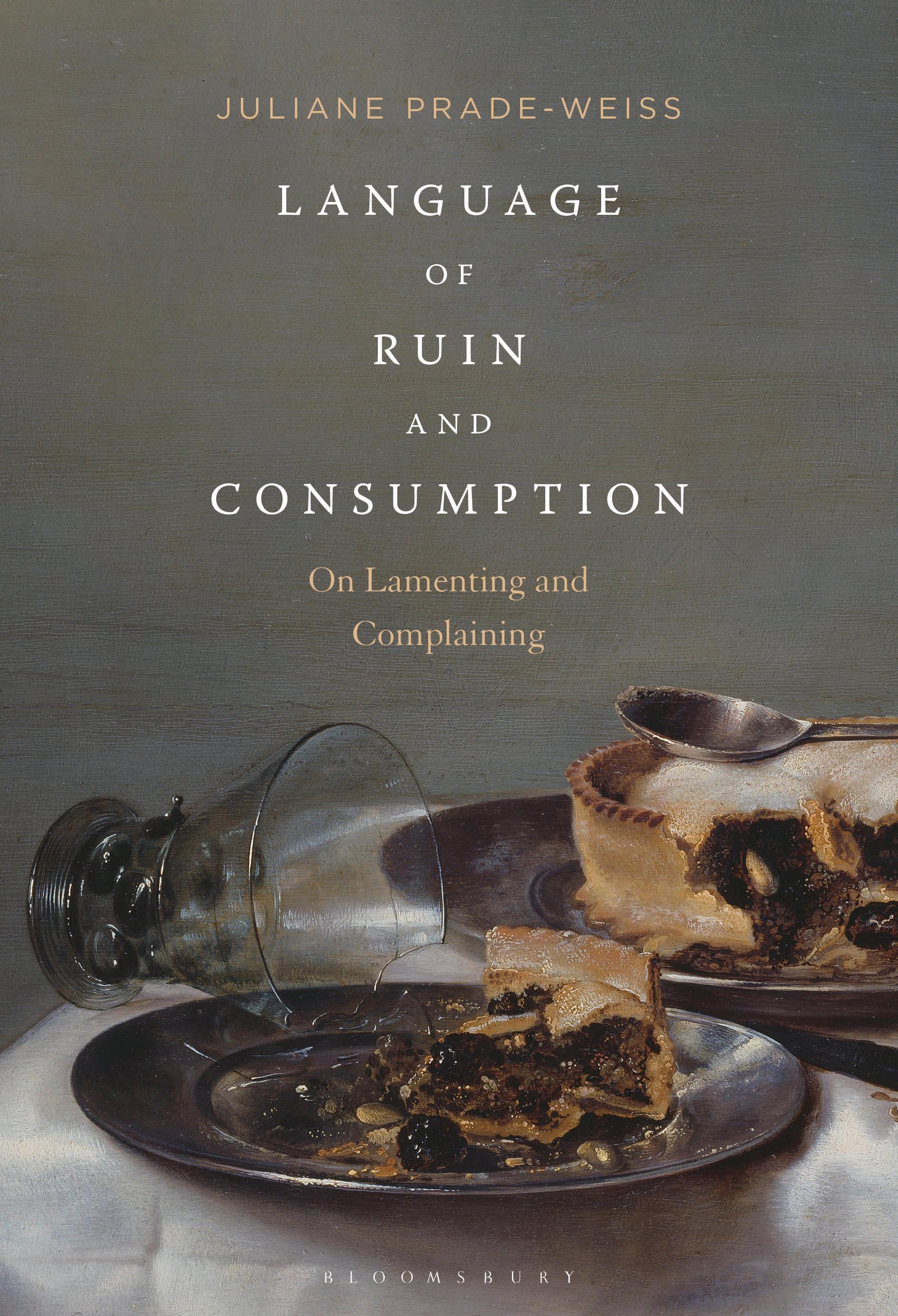
Laments and complaints are among the most ancient poetical forms and ubiquitous in everyday speech. Understanding plaintive language, however, is often prevented by the resentment and fear it evokes. Lamenting and complaining seems pointless, irreconcilable, and destructive. Language of Ruin and Consumption examines Freud's approaches to lamenting and complaining, the heart of psychoanalytic therapy and theory, and takes them as guidelines for reading key works of the modern canon. The re-negotiation of older--ritual, dramatic, and juridical--forms in Rilke, Wittgenstein, Scholem, Benjamin, and Kafka puts plaintive language in the center of modern individuality and expounds a fundamental dimension of language neglected in theory: reciprocity is at issue in plaintive language.
Language of Ruin and Consumption advocates that a fruitful reception of psychoanalysis in criticism combines the discussion of psychoanalytical concepts with an adaptation of the hermeneutical principle ignored in most philosophical approaches to language, or relegated to mere rhetoric: speech is not only by someone and on something, but also addressed to someone.
Language of Ruin and Consumption advocates that a fruitful reception of psychoanalysis in criticism combines the discussion of psychoanalytical concepts with an adaptation of the hermeneutical principle ignored in most philosophical approaches to language, or relegated to mere rhetoric: speech is not only by someone and on something, but also addressed to someone.
Pages: 296
Catégorie: Litteraturvetenskap & Teori
e-ISBN: 9781501344206
Poids d'expédition: 1.2 kg
Expédié sous: 1-2 jours
Payez facilement par carte, Klarna, Apple Pay ou Google Pay. Pas satisfait ? Vous avez toujours une garantie de remboursement de 14 jours. En savoir plus dans nos conditions. Si vous avez des questions, envoyez-nous un e-mail à hello@memmo.org.
Memmo facilite tes études, où que tu sois dans le monde. On rassemble tes manuels de cours et des outils d'étude intelligents au même endroit : résumés, quiz, podcasts et flashcards. Et il y a Ted, ton compagnon d'étude qui répond à toutes tes questions. Plus de 50 000 étudiants étudient déjà ici – conçu pour t'aider à apprendre plus vite et à moins stresser.