
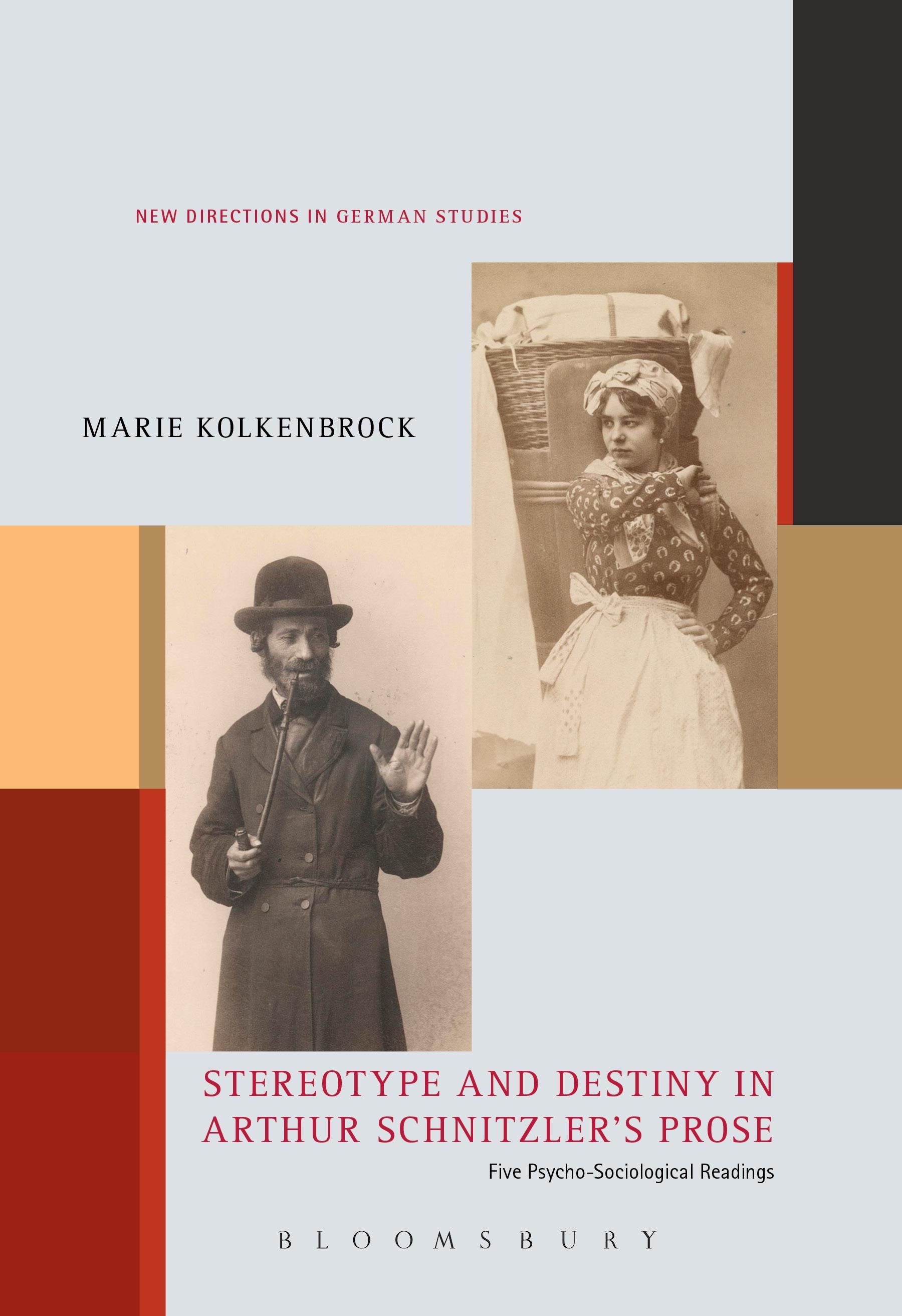
What was the function of the invocation of destiny in the increasingly secularized era of turn-of-the-century Vienna? By exploring this question, Stereotype and Destiny in Arthur Schnitzler's Prose offers a new psycho-sociological perspective on the narrative works of Arthur Schnitzler.
While Vienna 1900 as a site of crisis has been established in the scholarship, this book focuses on the presence of forces that deny the existence of said crisis and work to contain its subversive and critical potential. Stereotype and destiny emerge in Schnitzler's prose texts as a form of these counter-critical forces. In her readings, Kolkenbrock shows that stereotype and destiny serve as an interrelated coping mechanism for a central psychological conflict of modernity: the paradoxical need to be recognized as 'normal' and 'special' at the same time. While, through the complex of "stereotype and destiny," Schnitzler's prose addresses central modern questions of identity and subjecthood, Kolkenbrock's close readings also reveal how the texts inscribe themselves aesthetically in the literary tradition of Romanticism and as such offer crucial sources for understanding Schnitzler's representations of embattled subjecthood within broader social and aesthetic traditions.
While Vienna 1900 as a site of crisis has been established in the scholarship, this book focuses on the presence of forces that deny the existence of said crisis and work to contain its subversive and critical potential. Stereotype and destiny emerge in Schnitzler's prose texts as a form of these counter-critical forces. In her readings, Kolkenbrock shows that stereotype and destiny serve as an interrelated coping mechanism for a central psychological conflict of modernity: the paradoxical need to be recognized as 'normal' and 'special' at the same time. While, through the complex of "stereotype and destiny," Schnitzler's prose addresses central modern questions of identity and subjecthood, Kolkenbrock's close readings also reveal how the texts inscribe themselves aesthetically in the literary tradition of Romanticism and as such offer crucial sources for understanding Schnitzler's representations of embattled subjecthood within broader social and aesthetic traditions.
Pages: 280
Catégorie: Litteraturvetenskap & Teori
e-ISBN: 9781501330971
Poids d'expédition: 1.2 kg
Expédié sous: 1-2 jours
Payez facilement par carte, Klarna, Apple Pay ou Google Pay. Pas satisfait ? Vous avez toujours une garantie de remboursement de 14 jours. En savoir plus dans nos conditions. Si vous avez des questions, envoyez-nous un e-mail à hello@memmo.org.
Memmo facilite tes études, où que tu sois dans le monde. On rassemble tes manuels de cours et des outils d'étude intelligents au même endroit : résumés, quiz, podcasts et flashcards. Et il y a Ted, ton compagnon d'étude qui répond à toutes tes questions. Plus de 50 000 étudiants étudient déjà ici – conçu pour t'aider à apprendre plus vite et à moins stresser.