
Winner of the 2019 Robert S. Liebert Award (established jointly by the Association for Psychoanalytic Medicine and the Columbia University Center for Psychoanalytic Training and Research)
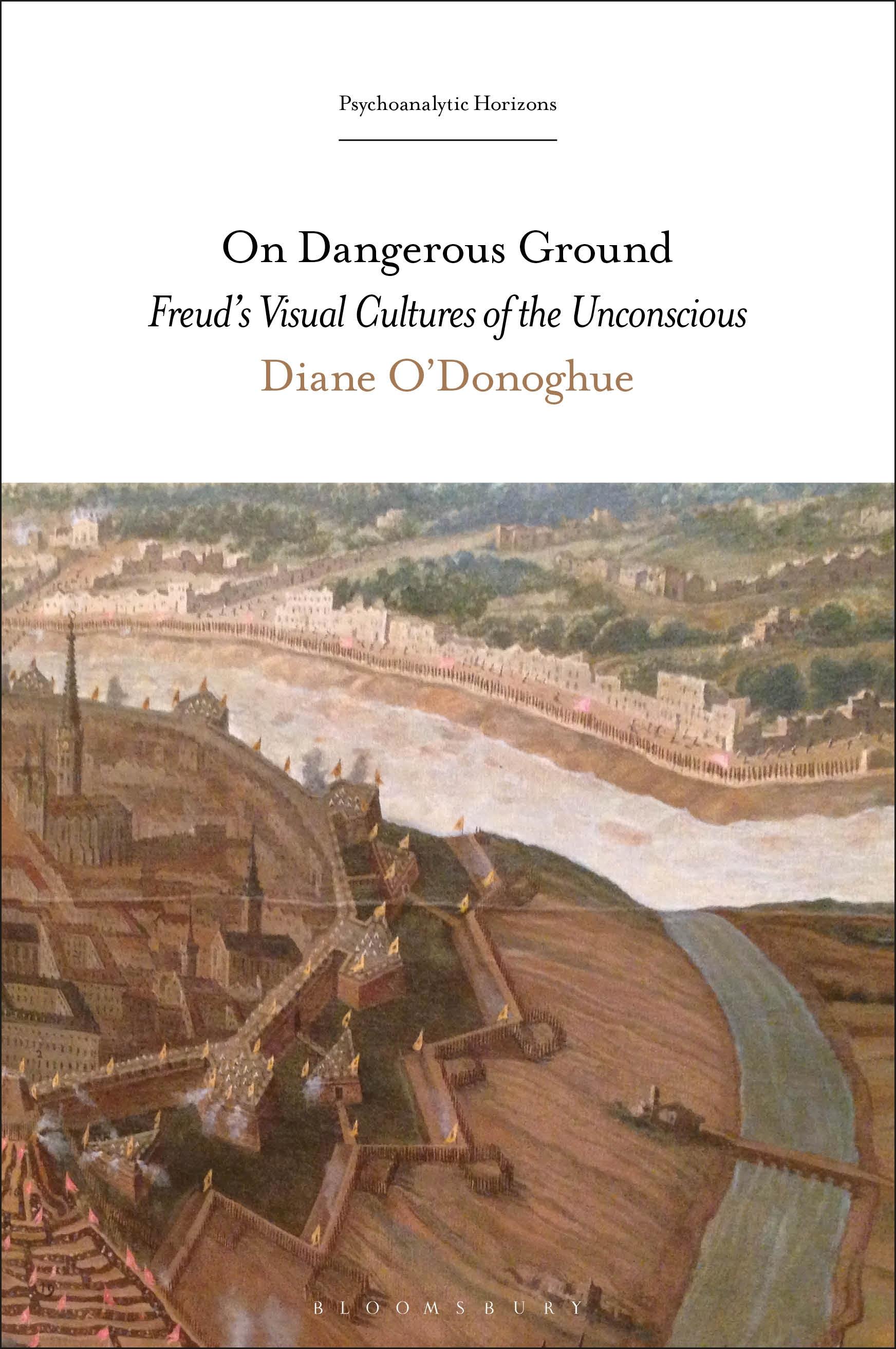
In the final years of the 19th century, Sigmund Freud began to construct evidence for the workings of an “unconscious.” On Dangerous Ground offers an innovative assessment of the complex role that his encounters with visual cultures-architecture, objects from earlier cultural epochs (“antiquities”), paintings, and illustrated books-played in that process. Diane O'Donoghue introduces, often using unpublished archival sources, the ways in which material phenomena profoundly informed Freud's decisions about what would, and would not, constitute the workings of an inner life. By returning to view content that Freud treated as forgettable, as distinct from repressed, O'Donoghue shows us a realm of experiences that Freud wished to remove from psychical meaning. These erasures form an amnesic core within Freud's psychoanalytic project, an absence that includes difficult aspects of his life narrative, beginning with the dislocations of his early childhood that he declared “not worth remembering.” What is made visible here is far from the inconsequential surface of experience; rather, we are shown a dangerous ground that exceeds the limits of what Freud wished to include within his early model of mind. In Freud's relation to visual cultures we find clues to what he attempted, in crafting his unconscious, to remove from sight.
In the final years of the 19th century, Sigmund Freud began to construct evidence for the workings of an “unconscious.” On Dangerous Ground offers an innovative assessment of the complex role that his encounters with visual cultures-architecture, objects from earlier cultural epochs (“antiquities”), paintings, and illustrated books-played in that process. Diane O'Donoghue introduces, often using unpublished archival sources, the ways in which material phenomena profoundly informed Freud's decisions about what would, and would not, constitute the workings of an inner life. By returning to view content that Freud treated as forgettable, as distinct from repressed, O'Donoghue shows us a realm of experiences that Freud wished to remove from psychical meaning. These erasures form an amnesic core within Freud's psychoanalytic project, an absence that includes difficult aspects of his life narrative, beginning with the dislocations of his early childhood that he declared “not worth remembering.” What is made visible here is far from the inconsequential surface of experience; rather, we are shown a dangerous ground that exceeds the limits of what Freud wished to include within his early model of mind. In Freud's relation to visual cultures we find clues to what he attempted, in crafting his unconscious, to remove from sight.
Pages: 400
Catégorie: Psykologi
e-ISBN: 9781501327964
Poids d'expédition: 1.2 kg
Expédié sous: 1-2 jours
Payez facilement par carte, Klarna, Apple Pay ou Google Pay. Pas satisfait ? Vous avez toujours une garantie de remboursement de 14 jours. En savoir plus dans nos conditions. Si vous avez des questions, envoyez-nous un e-mail à hello@memmo.org.
Memmo facilite tes études, où que tu sois dans le monde. On rassemble tes manuels de cours et des outils d'étude intelligents au même endroit : résumés, quiz, podcasts et flashcards. Et il y a Ted, ton compagnon d'étude qui répond à toutes tes questions. Plus de 50 000 étudiants étudient déjà ici – conçu pour t'aider à apprendre plus vite et à moins stresser.