
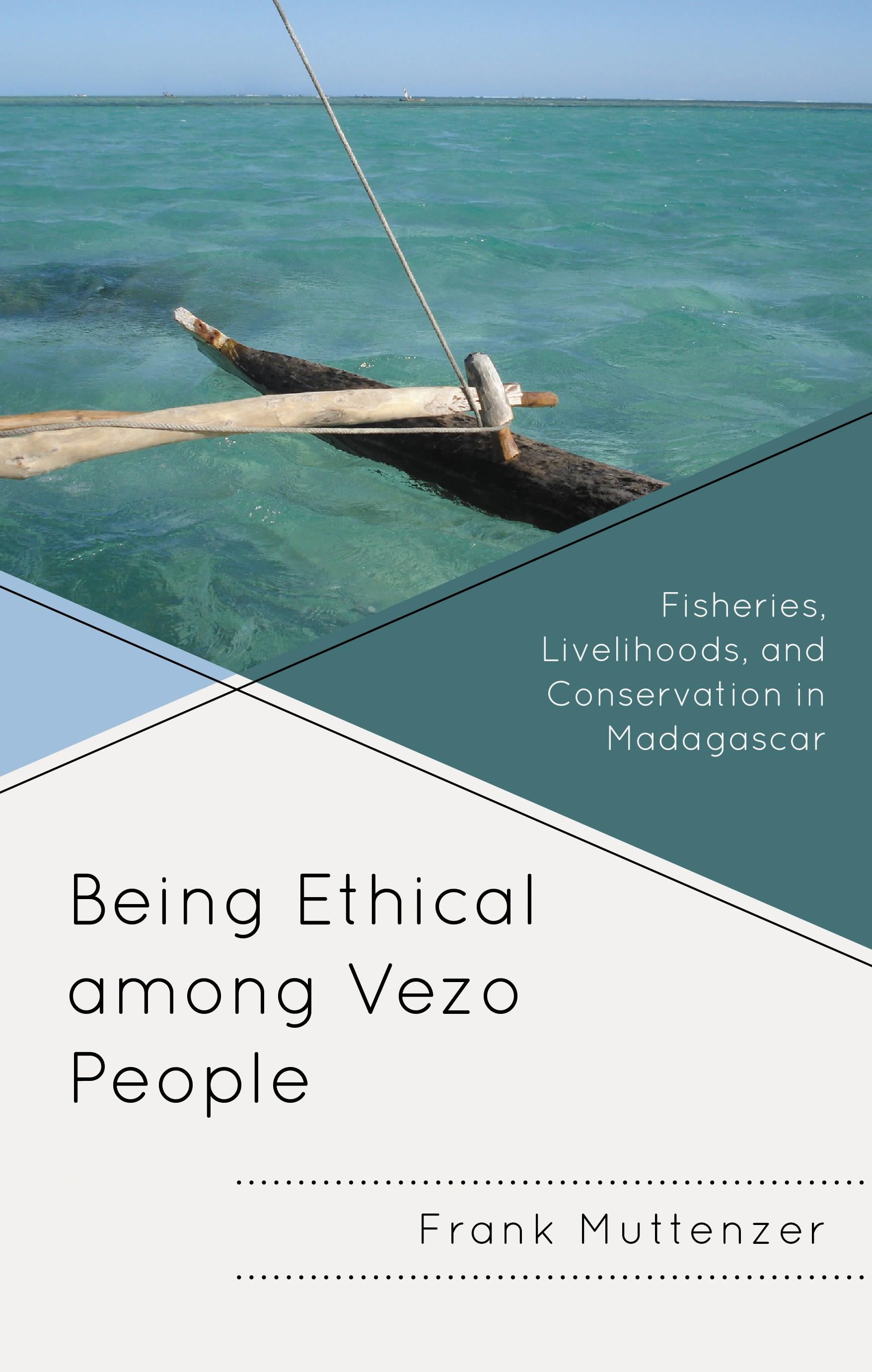
Being Ethical among Vezo People analyzes environmental change in reef ecosystems of southwest Madagascar and the impacts of global fishery markets on Vezo people’s well-being. The ethnography describes fishers’ changing perceptions of the physical environment in the context of livelihood and ritual practices and discusses their shared understandings of how Vezo persons should live.
Under new marine protected area regulations, each village is responsible for managing its octopus fishery with a temporal closure. Frank Muttenzer argues that locals’ willingness to improve well-being does not commit them to a conservationist ethos. To cope with resource depletion Vezo people migrate to distant resource-rich marine frontiers, target fast growing species, and perform rituals that purport to affect their luck in fishing and marine foraging. But they doubt conservationists’ opinion that coral reef ecosystems can be managed for sustainable yield.
The richly documented, elegantly theorized, and fresh ethnographic outlook on the Vezo addresses current issues in marine ecology and conservation, small-scale fisheries, and the semiotics of rural livelihoods and human well-being, particularly its expression in ritual. It will be of strong interest to environmental scientists, Madagascar specialists, and anthropology generalists alike; particularly those who are interested in what the modes of engagement with the environment of foraging peoples can teach us about the human condition at large, and the nature-culture debates in particular.
Under new marine protected area regulations, each village is responsible for managing its octopus fishery with a temporal closure. Frank Muttenzer argues that locals’ willingness to improve well-being does not commit them to a conservationist ethos. To cope with resource depletion Vezo people migrate to distant resource-rich marine frontiers, target fast growing species, and perform rituals that purport to affect their luck in fishing and marine foraging. But they doubt conservationists’ opinion that coral reef ecosystems can be managed for sustainable yield.
The richly documented, elegantly theorized, and fresh ethnographic outlook on the Vezo addresses current issues in marine ecology and conservation, small-scale fisheries, and the semiotics of rural livelihoods and human well-being, particularly its expression in ritual. It will be of strong interest to environmental scientists, Madagascar specialists, and anthropology generalists alike; particularly those who are interested in what the modes of engagement with the environment of foraging peoples can teach us about the human condition at large, and the nature-culture debates in particular.
Pages: 254
Catégorie: Samhällsvetenskap
e-ISBN: 9781498593304
Poids d'expédition: 1.2 kg
Expédié sous: 1-2 jours
Payez facilement par carte, Klarna, Apple Pay ou Google Pay. Pas satisfait ? Vous avez toujours une garantie de remboursement de 14 jours. En savoir plus dans nos conditions. Si vous avez des questions, envoyez-nous un e-mail à hello@memmo.org.
Memmo facilite tes études, où que tu sois dans le monde. On rassemble tes manuels de cours et des outils d'étude intelligents au même endroit : résumés, quiz, podcasts et flashcards. Et il y a Ted, ton compagnon d'étude qui répond à toutes tes questions. Plus de 50 000 étudiants étudient déjà ici – conçu pour t'aider à apprendre plus vite et à moins stresser.