
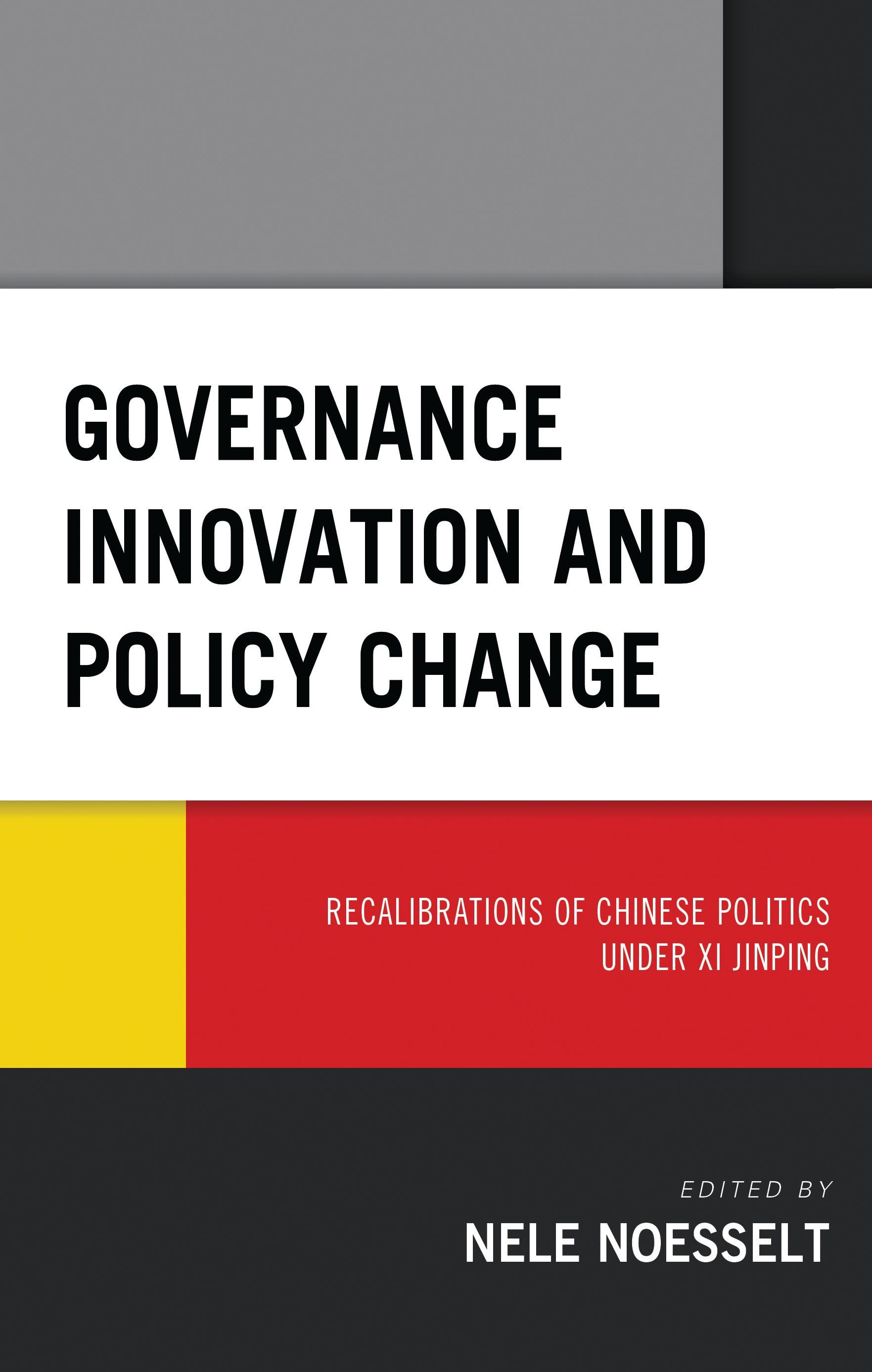
This edited volume assesses governance innovation and institutional change under the fifth generation of China’s political leaders headed by Xi Jinping. The configuration of long-term policy innovation without regime change requires skilled political actors who secure strategic majorities and set up coalitions to design and launch new policies. Recalibrations or reconfigurations of the governance model respond to domestic reform pressures or external shocks in order to secure regime survival. Given that most structural constraints and reform pressures do not arise out of a sudden, the thrilling question is why the political elites sometimes decide not to engage in institutional reforms despite of widespread societal support for major restructuring and why they suddenly launch institutional changes in times of relative stability. The authors address these issues by focusing on basic patterns and paradigms of governance and institutional change in China, the actors and drivers of governance innovation, as well as the impact of norms, values, and socio-cognitive orientations. This is added by some reflections on the interplay between abstract ideas, reform debates, and the making of concrete decisions as outlined by the Third Plenum on (socio-)economic reforms in 2013 and the Fourth Plenum on rule-based governance (fazhi) in 2014.
Payez facilement par carte, Klarna, Apple Pay ou Google Pay. Pas satisfait ? Vous avez toujours une garantie de remboursement de 14 jours. En savoir plus dans nos conditions. Si vous avez des questions, envoyez-nous un e-mail à hello@memmo.org.
Memmo facilite tes études, où que tu sois dans le monde. On rassemble tes manuels de cours et des outils d'étude intelligents au même endroit : résumés, quiz, podcasts et flashcards. Et il y a Ted, ton compagnon d'étude qui répond à toutes tes questions. Plus de 50 000 étudiants étudient déjà ici – conçu pour t'aider à apprendre plus vite et à moins stresser.