
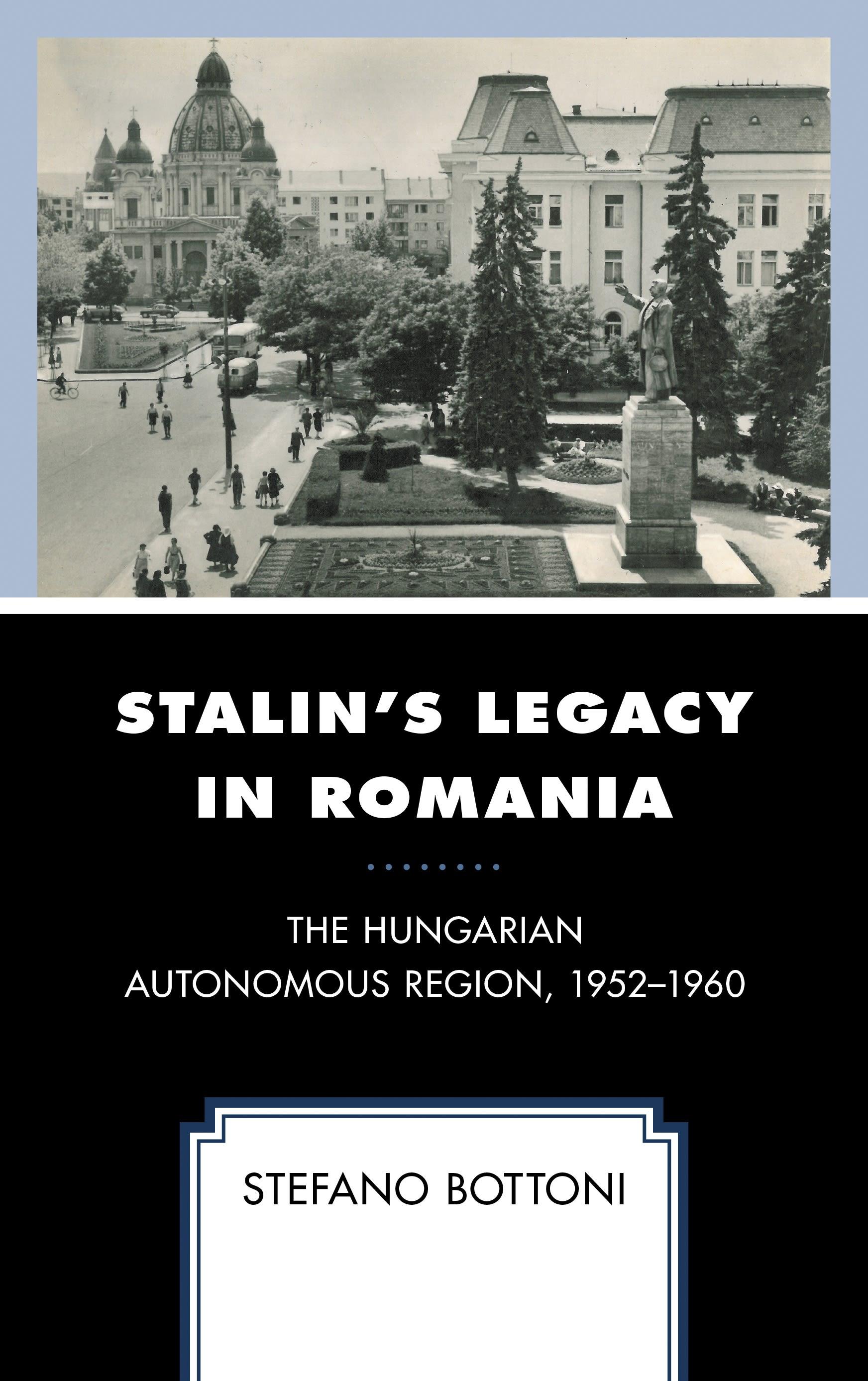
This study explores the little-known history of the Hungarian Autonomous Region (HAR), a Soviet-style territorial autonomy that was granted in Romania on Stalin’s personal advice to the Hungarian Székely community in the summer of 1952. Since 1945, a complex mechanism of ethnic balance and power-sharing helped the Romanian Communist Party (RCP) to strengthen—with Soviet assistance—its political legitimacy among different national and social groups. The communist national policy followed an integrative approach toward most minority communities, with the relevant exception of Germans, who were declared collectively responsible for the German occupation and were denied political and even civil rights until 1948. The Hungarians of Transylvania were provided with full civil, political, cultural, and linguistic rights to encourage political integration. The ideological premises of the Hungarian Autonomous Region followed the Bolshevik pattern of territorial autonomy elaborated by Lenin and Stalin in the early 1920s. The Hungarians of Székely Land would become a “titular nationality” provided with extensive cultural rights. Yet, on the other hand, the Romanian central power used the region as an instrument of political and social integration for the Hungarian minority into the communist state. The management of ethnic conflicts increased the ability of the PCR to control the territory and, at the same time, provided the ruling party with a useful precedent for the far larger “nationalization” of the Romanian communist regime which, starting from the late 1950s, resulted in “ethnicized” communism, an aim achieved without making use of pre-war nationalist discourse. After the Hungarian revolution of 1956, repression affected a great number of Hungarian individuals accused of nationalism and irredentism. In 1960 the HAR also suffered territorial reshaping, its Hungarian-born political leadership being replaced by ethnic Romanian cadres. The decisive shift from a class dictatorship toward an ethnicized totalitarian regime was the product of the Gheorghiu-Dej era and, as such, it represented the logical outcome of a long-standing ideological fouling of Romanian communism and more traditional state-building ideologies.
Payez facilement par carte, Klarna, Apple Pay ou Google Pay. Pas satisfait ? Vous avez toujours une garantie de remboursement de 14 jours. En savoir plus dans nos conditions. Si vous avez des questions, envoyez-nous un e-mail à hello@memmo.org.
Memmo facilite tes études, où que tu sois dans le monde. On rassemble tes manuels de cours et des outils d'étude intelligents au même endroit : résumés, quiz, podcasts et flashcards. Et il y a Ted, ton compagnon d'étude qui répond à toutes tes questions. Plus de 50 000 étudiants étudient déjà ici – conçu pour t'aider à apprendre plus vite et à moins stresser.