
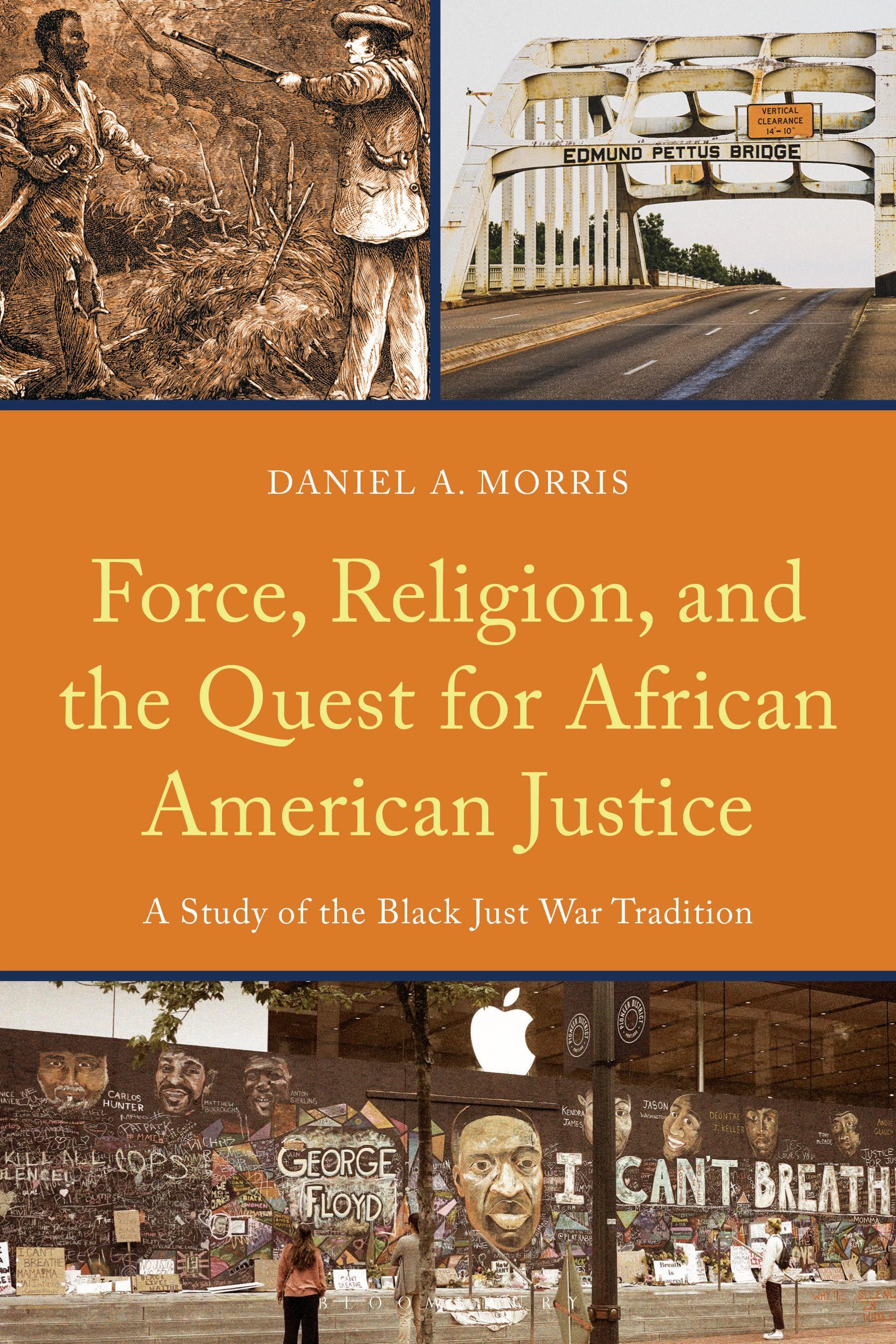
This study argues that Black calls for force in the struggle against white supremacy have echoed concepts and principles in the Western just war tradition.
After establishing that just war theory has ignored Black calls for force and that the Trans-Atlantic Slave Trade relied on just war ethics for its justification, this book turns to African American resistance rhetoric in three crucial periods of U.S. history. In the antebellum period, the Civil Rights movement, and the era of mass incarceration, African American thinkers have drawn on ideas and forms of logic that run parallel to just war ethics. This makes Black rhetoric of forceful resistance morally normal, rather than radical or extremist. Figures in the Black just war tradition such as David Walker, Henry Highland Garnet, Harriet Tubman, Huey Newton, Bree Newsome, and others should be included in the discipline of just war ethics, and white American Christians should recognize that their endorsements of force are consistent with widely accepted moral positions.
After establishing that just war theory has ignored Black calls for force and that the Trans-Atlantic Slave Trade relied on just war ethics for its justification, this book turns to African American resistance rhetoric in three crucial periods of U.S. history. In the antebellum period, the Civil Rights movement, and the era of mass incarceration, African American thinkers have drawn on ideas and forms of logic that run parallel to just war ethics. This makes Black rhetoric of forceful resistance morally normal, rather than radical or extremist. Figures in the Black just war tradition such as David Walker, Henry Highland Garnet, Harriet Tubman, Huey Newton, Bree Newsome, and others should be included in the discipline of just war ethics, and white American Christians should recognize that their endorsements of force are consistent with widely accepted moral positions.
Payez facilement par carte, Klarna, Apple Pay ou Google Pay. Pas satisfait ? Vous avez toujours une garantie de remboursement de 14 jours. En savoir plus dans nos conditions. Si vous avez des questions, envoyez-nous un e-mail à hello@memmo.org.
Memmo facilite tes études, où que tu sois dans le monde. On rassemble tes manuels de cours et des outils d'étude intelligents au même endroit : résumés, quiz, podcasts et flashcards. Et il y a Ted, ton compagnon d'étude qui répond à toutes tes questions. Plus de 50 000 étudiants étudient déjà ici – conçu pour t'aider à apprendre plus vite et à moins stresser.