
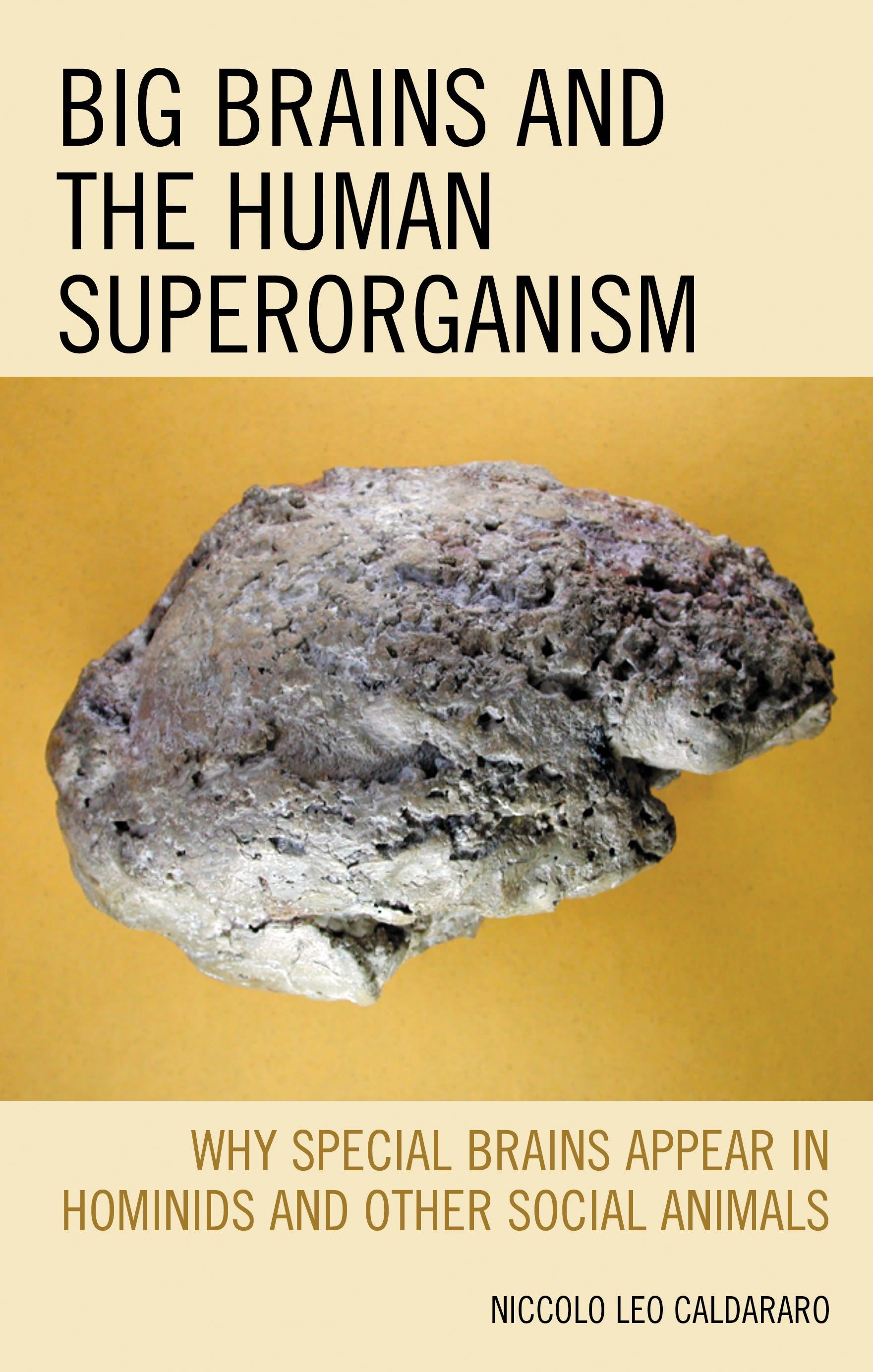
This book examines why humans have big brains, what big brains enable us to do, and how specialized brains are associated with eusociality in animals. It explores why brains expanded so slowly, and then why they stopped growing. This book whittles down the theories on brain size evolution to a few that represent testable hypotheses to identify logical and practical explanations for the phenomenon. At the core of this book is data derived from original, previously unpublished research on brain size in a number of social mammals. This data supports the idea that evolution of the brain in humans is the result of social interaction. This book also traces the products of the social brain: ideology, religion, urban life, housing, and learning and adapting to dense complex social interactions. It uniquely compares brain evolution in social animals across the animal kingdom, and examines the nature of the human brain and its evolution within the social and historical context of complex human social structures.
Payez facilement par carte, Klarna, Apple Pay ou Google Pay. Pas satisfait ? Vous avez toujours une garantie de remboursement de 14 jours. En savoir plus dans nos conditions. Si vous avez des questions, envoyez-nous un e-mail à hello@memmo.org.
Memmo facilite tes études, où que tu sois dans le monde. On rassemble tes manuels de cours et des outils d'étude intelligents au même endroit : résumés, quiz, podcasts et flashcards. Et il y a Ted, ton compagnon d'étude qui répond à toutes tes questions. Plus de 50 000 étudiants étudient déjà ici – conçu pour t'aider à apprendre plus vite et à moins stresser.