
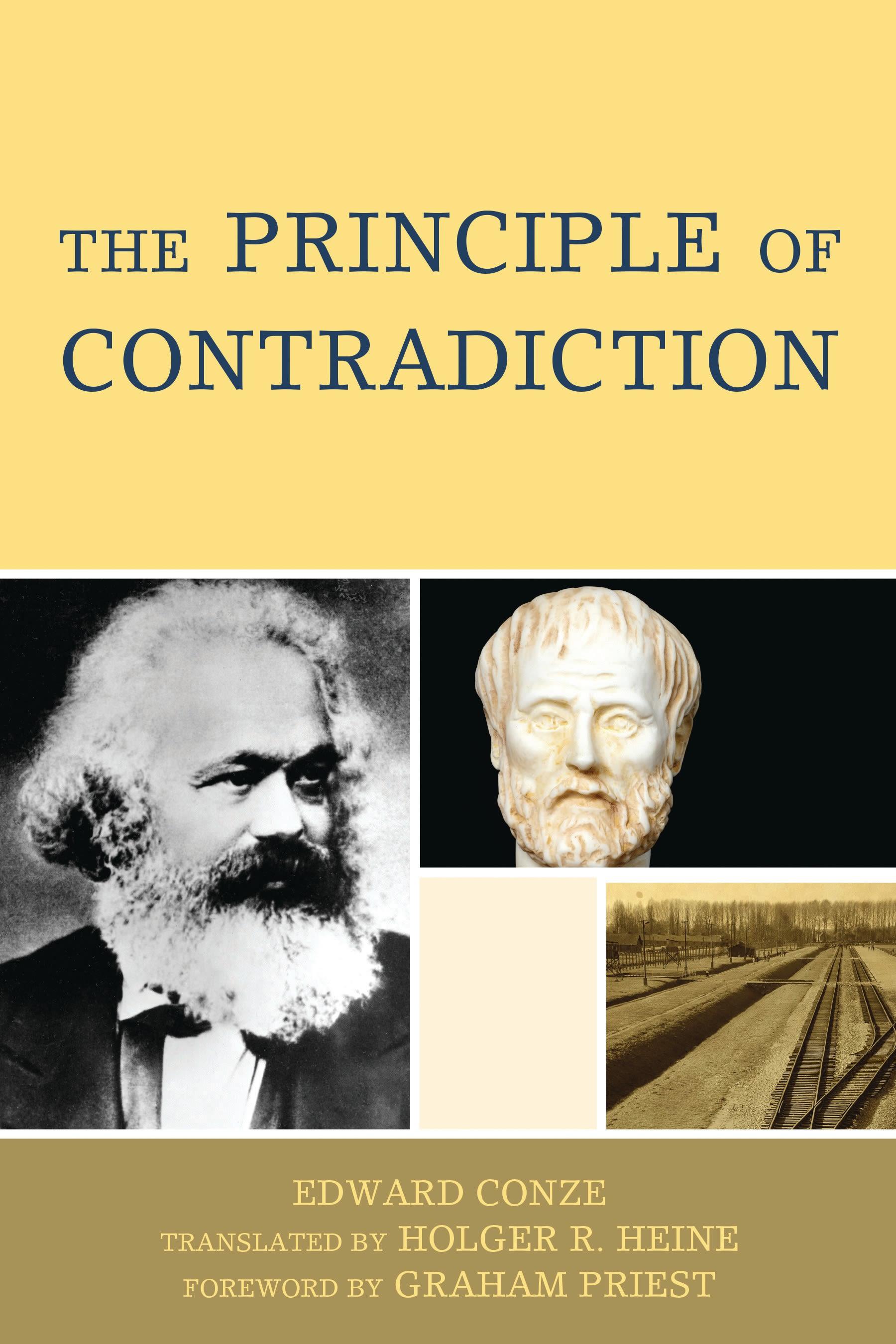
Conze’s monograph The Principle of Contradiction: On the Theory of Dialectical Materialism is his most important philosophical work and the foundation for his later publications as a Buddhist scholar and translator.
The openly Marxist work was published under considerable risk to both printer and author alike in December 1932 in Hamburg, Germany. Only months later, in May 1933, almost all of the five hundred copies of the first edition were destroyed during the Nazi book burning campaign. It is only now, more than eighty years later, that Conze’s key philosophical work is made available to a broad audience in this English translation.
In the work, Conze sets out to develop a detailed account of the historical and material conditions that support the emergence, production, and transmission of theoretical knowledge—as exemplified by the principle of contradiction—and, furthermore, to show that under different social and historical conditions the allegedly necessary truth and indubitable content of the principle would dissolve and be replaced by a radically different understanding of the principle of contradiction—a dialectic understanding of the principle that would compel a rejection of the Aristotelian dogma.
From a Marxist perspective, the analysis and critique of the principle of contradiction is a crucial and necessary step towards a dialectical understanding of philosophical (and political) theory and practice. Conze’s monograph, which attempts to clear the ground for a deeper understanding of the very foundation of classical Marxist thought, may very well be the most comprehensive Marxist critique of the Aristotelian principle of contradiction available to this day.
However, Conze’s pioneering 1932 monograph goes well beyond the constraints of an orthodox Marxist analysis. His erudite and scholarly account of the history and evolution of the principle of contradiction illuminates the thought of Aristotle, Marx, and Buddha, and provides the groundwork for a new cross-cultural and interdisciplinary approach to philosophical theory and practice.
The openly Marxist work was published under considerable risk to both printer and author alike in December 1932 in Hamburg, Germany. Only months later, in May 1933, almost all of the five hundred copies of the first edition were destroyed during the Nazi book burning campaign. It is only now, more than eighty years later, that Conze’s key philosophical work is made available to a broad audience in this English translation.
In the work, Conze sets out to develop a detailed account of the historical and material conditions that support the emergence, production, and transmission of theoretical knowledge—as exemplified by the principle of contradiction—and, furthermore, to show that under different social and historical conditions the allegedly necessary truth and indubitable content of the principle would dissolve and be replaced by a radically different understanding of the principle of contradiction—a dialectic understanding of the principle that would compel a rejection of the Aristotelian dogma.
From a Marxist perspective, the analysis and critique of the principle of contradiction is a crucial and necessary step towards a dialectical understanding of philosophical (and political) theory and practice. Conze’s monograph, which attempts to clear the ground for a deeper understanding of the very foundation of classical Marxist thought, may very well be the most comprehensive Marxist critique of the Aristotelian principle of contradiction available to this day.
However, Conze’s pioneering 1932 monograph goes well beyond the constraints of an orthodox Marxist analysis. His erudite and scholarly account of the history and evolution of the principle of contradiction illuminates the thought of Aristotle, Marx, and Buddha, and provides the groundwork for a new cross-cultural and interdisciplinary approach to philosophical theory and practice.
Payez facilement par carte, Klarna, Apple Pay ou Google Pay. Pas satisfait ? Vous avez toujours une garantie de remboursement de 14 jours. En savoir plus dans nos conditions. Si vous avez des questions, envoyez-nous un e-mail à hello@memmo.org.
Memmo facilite tes études, où que tu sois dans le monde. On rassemble tes manuels de cours et des outils d'étude intelligents au même endroit : résumés, quiz, podcasts et flashcards. Et il y a Ted, ton compagnon d'étude qui répond à toutes tes questions. Plus de 50 000 étudiants étudient déjà ici – conçu pour t'aider à apprendre plus vite et à moins stresser.