
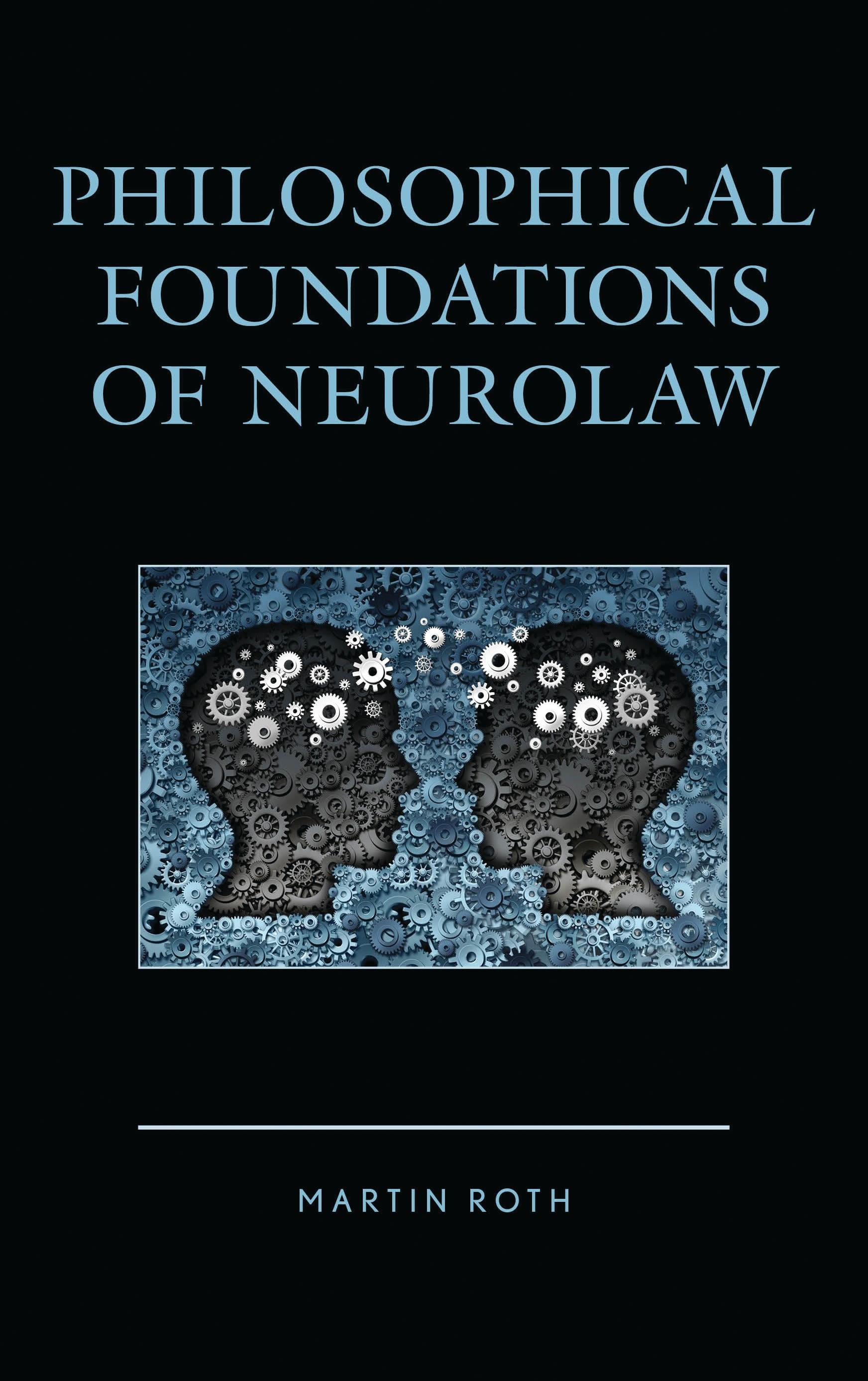
As neuroscience continues to reveal the biological basis of human thought and behavior, what impact will this have on legal theory and practice? The emerging field of neurolaw seeks to address this question, but doing so adequately requires confronting difficult philosophical issues surrounding the nature of mind, free will, rationality, and responsibility. In The Philosophical Foundations of Neurolaw, Martin Roth claims that the central philosophical issue facing neurolaw is whether we can reconcile the conception of ourselves as free, rational, and responsible agents with the conception of ourselves as complex bio-chemical machines. Roth argues that we can reconcile these conceptions. To show this, Roth develops and defends an account of free will that identifies free will with the capacity to respond to rational demands, and he argues that this capacity is at the foundation of our thinking about responsibility. Roth also shows how the mind sciences can explain this capacity, thus revealing that a purely physical system can have the kind of free will that is relevant to responsible agency. Along the way, Roth critiques a number of arguments that purport to show that the kind of reconciliation provided is not possible. Roth concludes that though we should rethink our legal system in important ways, both in light of his account of free will and what neuroscience is poised to reveal, neuroscience does not threaten the law’s core commitment to responsible agency.
Payez facilement par carte, Klarna, Apple Pay ou Google Pay. Pas satisfait ? Vous avez toujours une garantie de remboursement de 14 jours. En savoir plus dans nos conditions. Si vous avez des questions, envoyez-nous un e-mail à hello@memmo.org.
Memmo facilite tes études, où que tu sois dans le monde. On rassemble tes manuels de cours et des outils d'étude intelligents au même endroit : résumés, quiz, podcasts et flashcards. Et il y a Ted, ton compagnon d'étude qui répond à toutes tes questions. Plus de 50 000 étudiants étudient déjà ici – conçu pour t'aider à apprendre plus vite et à moins stresser.