
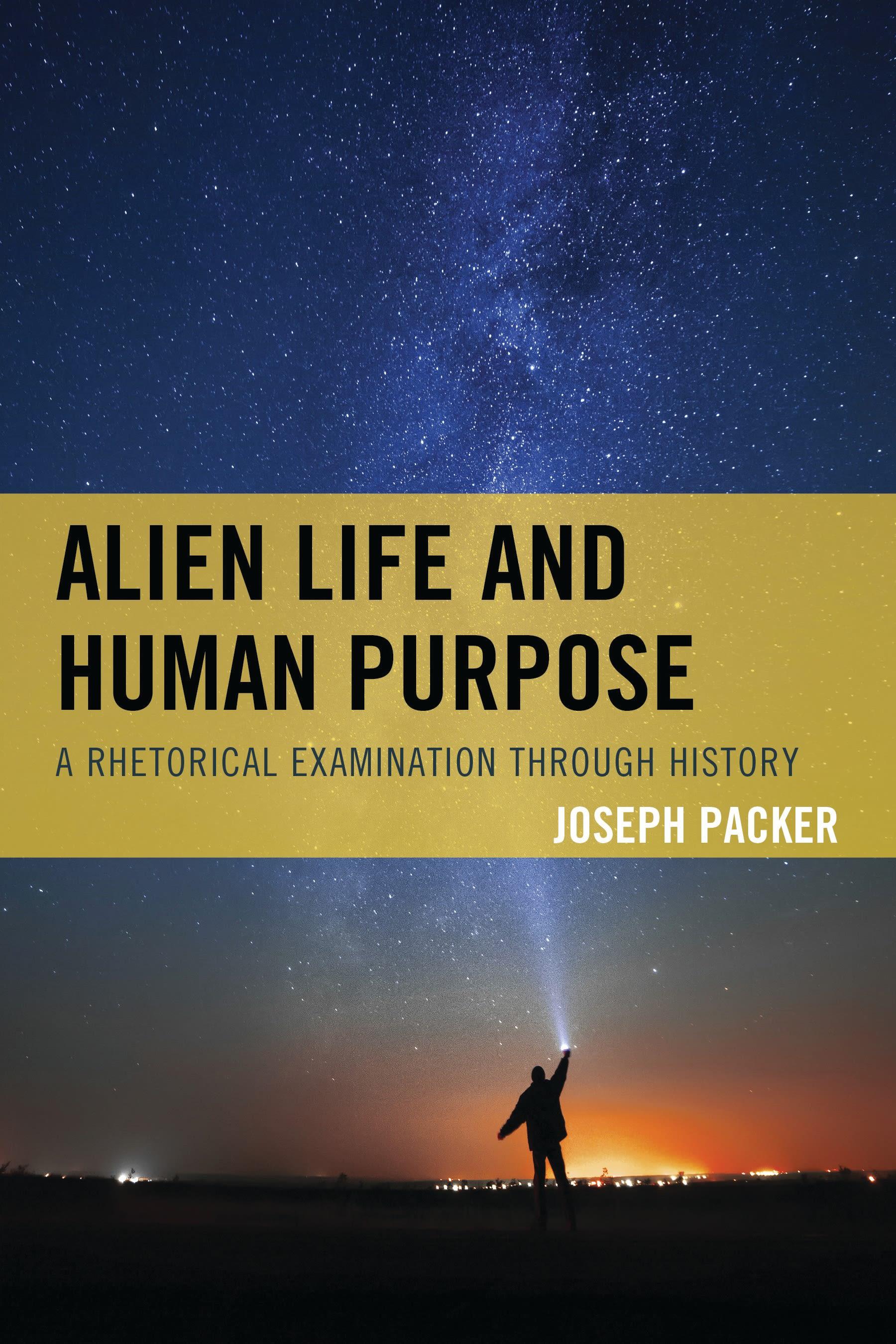
Alien Life and Human Purpose: A Rhetorical Examination through History provides a rhetorical examination of the way major historical figures connect their arguments for the absence of alien life, or “unity,” to their philosophical, religious, and ethical agendas. Although the unity myth has often existed in the background of society, shaping institutions and values, during periods where relativism gained prominence, its opponents actively wielded the unity myth as a response; Plato used the unity myth against the sophists, Anglican theologian and philosopher William Whewell against the utilitarians, co-discoverer of evolution Alfred Russell Wallace against the social Darwinists, university professors Frank J. Tipler and John D. Barrow against the postmodernists, etc. These individuals presented scientific defenses of unity and then used the “fact” of unity to claim the universe is teleological, knowable, and ordered, rather than chaotic and relativistic. This book argues that unity and its complimentary mythic function have played an important role in shaping values throughout history and more importantly continue to do so today.
Payez facilement par carte, Klarna, Apple Pay ou Google Pay. Pas satisfait ? Vous avez toujours une garantie de remboursement de 14 jours. En savoir plus dans nos conditions. Si vous avez des questions, envoyez-nous un e-mail à hello@memmo.org.
Memmo facilite tes études, où que tu sois dans le monde. On rassemble tes manuels de cours et des outils d'étude intelligents au même endroit : résumés, quiz, podcasts et flashcards. Et il y a Ted, ton compagnon d'étude qui répond à toutes tes questions. Plus de 50 000 étudiants étudient déjà ici – conçu pour t'aider à apprendre plus vite et à moins stresser.