
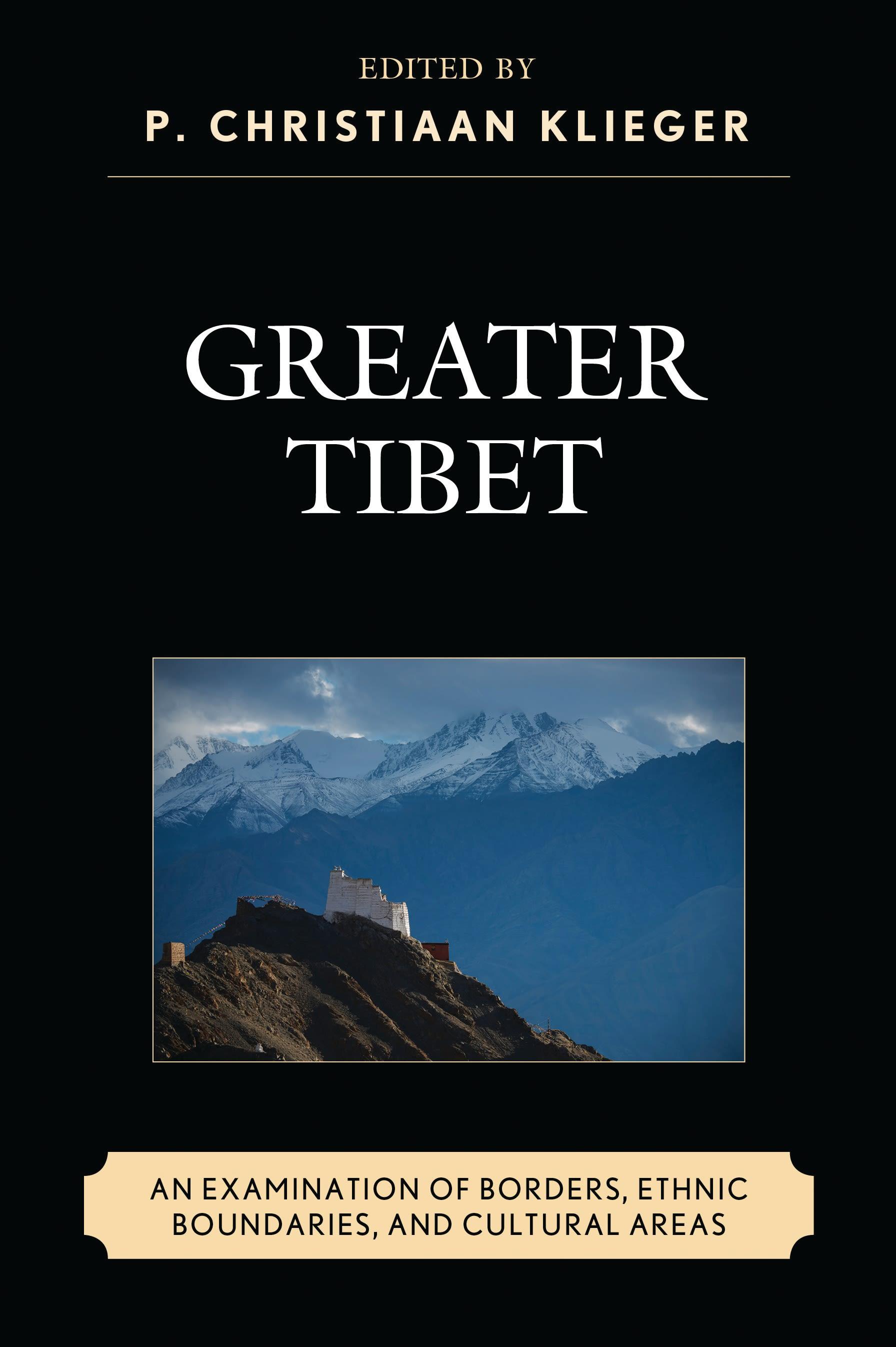
The concept of Greater Tibet has surfaced in the political and academic worlds in recent years. It is based in the inadequacies of other definitions of what constitutes the historical and modern worlds in which Tibetan people, ideas, and culture occupy. This collection of papers is inspired by a panel on Greater Tibet held at the XIIIth meeting of the International Association of Tibet Studies in Ulaan Baatar in 2013. Participants included leading Tibet scholars, experts in international law, and Tibetan officials.
Greater Tibet is inclusive of all peoples who generally speak languages from the Tibetan branch of the Tibeto-Burman family, have a concept of mutual origination, and share some common historical narratives. It includes a wide area, including peoples from the Central Asian Republics, Pakistan, India, Nepal Bhutan, Bangladesh, Myanmar, People’s Republic of China, Mongolia, Russia, and Tibetan people in diaspora abroad. It may even include practitioners of Tibetan Buddhism who are not of Tibetan origin, and Tibetan peoples who do not practice Buddhism. Most of this area corresponds to the broad expansion of Tibetan culture and political control in the 7th–9th centuries AD, and is thus many times larger than the current Tibet Autonomous Region in China—the Tibetan “culture area.”
As a conceptual framework, Greater Tibet stands in contrast to Scott’s concept of Zomia for roughly the same region, a term which defines an area of highland Asia and Southeast Asia characterized by disdain for rule from distant centers, failed state formation, anarchist, and “libertarian” individual proclivities.
Greater Tibet is inclusive of all peoples who generally speak languages from the Tibetan branch of the Tibeto-Burman family, have a concept of mutual origination, and share some common historical narratives. It includes a wide area, including peoples from the Central Asian Republics, Pakistan, India, Nepal Bhutan, Bangladesh, Myanmar, People’s Republic of China, Mongolia, Russia, and Tibetan people in diaspora abroad. It may even include practitioners of Tibetan Buddhism who are not of Tibetan origin, and Tibetan peoples who do not practice Buddhism. Most of this area corresponds to the broad expansion of Tibetan culture and political control in the 7th–9th centuries AD, and is thus many times larger than the current Tibet Autonomous Region in China—the Tibetan “culture area.”
As a conceptual framework, Greater Tibet stands in contrast to Scott’s concept of Zomia for roughly the same region, a term which defines an area of highland Asia and Southeast Asia characterized by disdain for rule from distant centers, failed state formation, anarchist, and “libertarian” individual proclivities.
Pages: 178
Catégorie: Samhällsvetenskap
e-ISBN: 9781498506458
Poids d'expédition: 1.2 kg
Expédié sous: 1-2 jours
Payez facilement par carte, Klarna, Apple Pay ou Google Pay. Pas satisfait ? Vous avez toujours une garantie de remboursement de 14 jours. En savoir plus dans nos conditions. Si vous avez des questions, envoyez-nous un e-mail à hello@memmo.org.
Memmo facilite tes études, où que tu sois dans le monde. On rassemble tes manuels de cours et des outils d'étude intelligents au même endroit : résumés, quiz, podcasts et flashcards. Et il y a Ted, ton compagnon d'étude qui répond à toutes tes questions. Plus de 50 000 étudiants étudient déjà ici – conçu pour t'aider à apprendre plus vite et à moins stresser.