
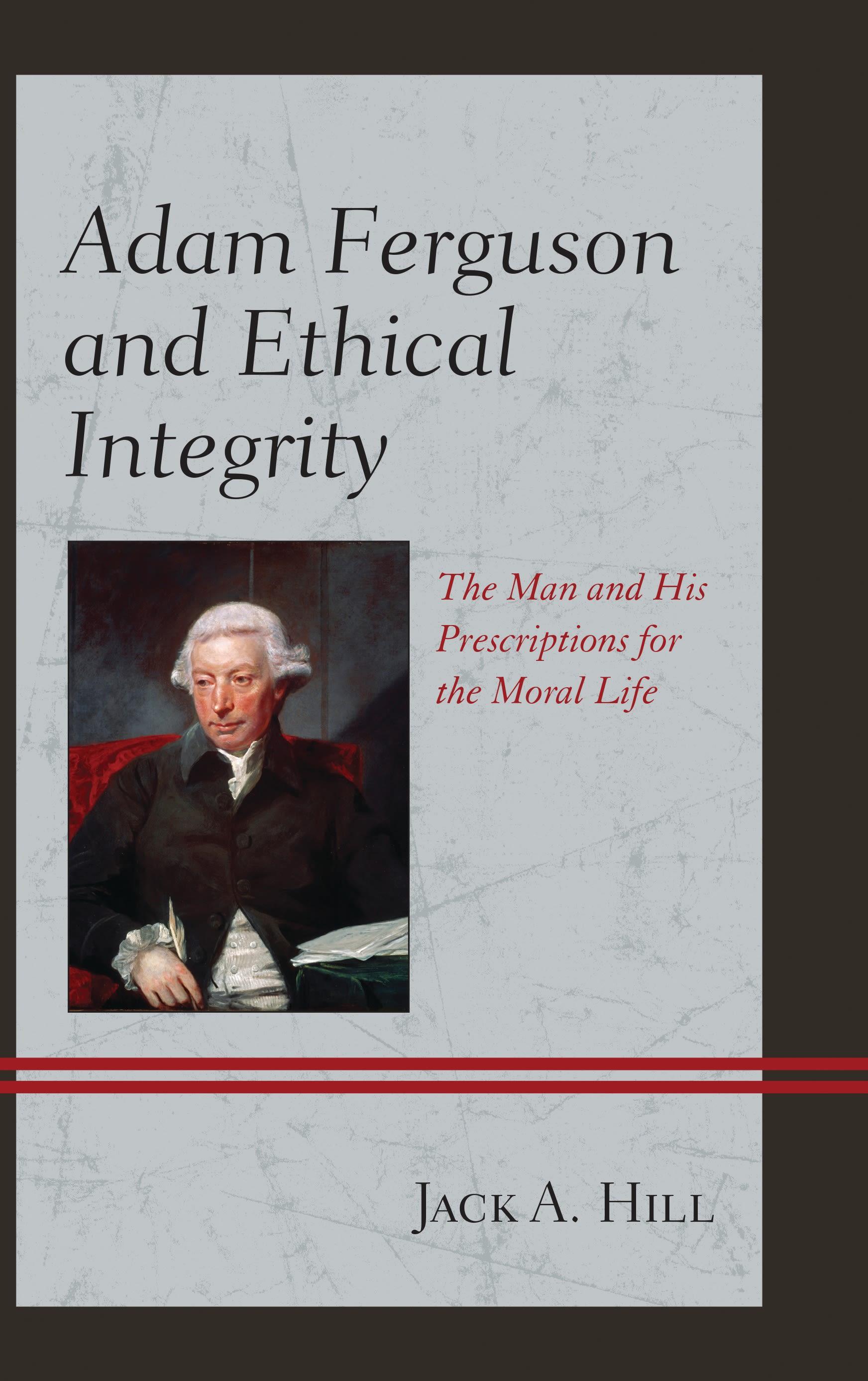
This book is about learning how to live the good life. Part biography and part philosophical inquiry, it is a fresh, original interpretation of the intellectual world of the largely forgotten, eighteenth-century professor, Adam Ferguson. Although less well-known today than his famous Scottish contemporaries, Adam Smith and David Hume, Ferguson was considered their equal in the 18th century. The book shows how Ferguson, who grew up speaking Gaelic and English, and spent a decade ministering to a Highlander regiment, developed a distinctive, cross-cultural approach to moral philosophy that is relevant for doing comparative ethics in today’s global village.
The premise is that life in the twenty-first century is plagued by a moral disorientation that has affinities with the materialism, privatization, social fragmentation and spiritual crises that were emerging in 18th-century, urban Scotland. Like his peers in medical science, Ferguson pursued what was then known as moral science with a particular concern to diagnose and treat moral “dis-ease.” The book contends that his moral philosophy lectures became strikingly modern experiments in recovering moral moorings—disclosing epitomes of moral dynamics, investigating the use of moral terms in ordinary language, and crafting moral principles, such as probity, which preserved classical moral virtues but also incorporated the practical wisdom of ‘peoples of the mountains.’
Although focused on re-discovering Ferguson as a full-blown ethicist before his time, the book is also intended as a primer for the reader’s own quest for living a life which is emblematic of ethical integrity
The primary audience for this book is philosophers, historians, religious studies scholars who specialize in ethics, eighteenth-century English literature scholars, and social scientists (anthropologists, sociologists and political scientists) who focus on the eighteenth-century.
The premise is that life in the twenty-first century is plagued by a moral disorientation that has affinities with the materialism, privatization, social fragmentation and spiritual crises that were emerging in 18th-century, urban Scotland. Like his peers in medical science, Ferguson pursued what was then known as moral science with a particular concern to diagnose and treat moral “dis-ease.” The book contends that his moral philosophy lectures became strikingly modern experiments in recovering moral moorings—disclosing epitomes of moral dynamics, investigating the use of moral terms in ordinary language, and crafting moral principles, such as probity, which preserved classical moral virtues but also incorporated the practical wisdom of ‘peoples of the mountains.’
Although focused on re-discovering Ferguson as a full-blown ethicist before his time, the book is also intended as a primer for the reader’s own quest for living a life which is emblematic of ethical integrity
The primary audience for this book is philosophers, historians, religious studies scholars who specialize in ethics, eighteenth-century English literature scholars, and social scientists (anthropologists, sociologists and political scientists) who focus on the eighteenth-century.
Payez facilement par carte, Klarna, Apple Pay ou Google Pay. Pas satisfait ? Vous avez toujours une garantie de remboursement de 14 jours. En savoir plus dans nos conditions. Si vous avez des questions, envoyez-nous un e-mail à hello@memmo.org.
Memmo facilite tes études, où que tu sois dans le monde. On rassemble tes manuels de cours et des outils d'étude intelligents au même endroit : résumés, quiz, podcasts et flashcards. Et il y a Ted, ton compagnon d'étude qui répond à toutes tes questions. Plus de 50 000 étudiants étudient déjà ici – conçu pour t'aider à apprendre plus vite et à moins stresser.