
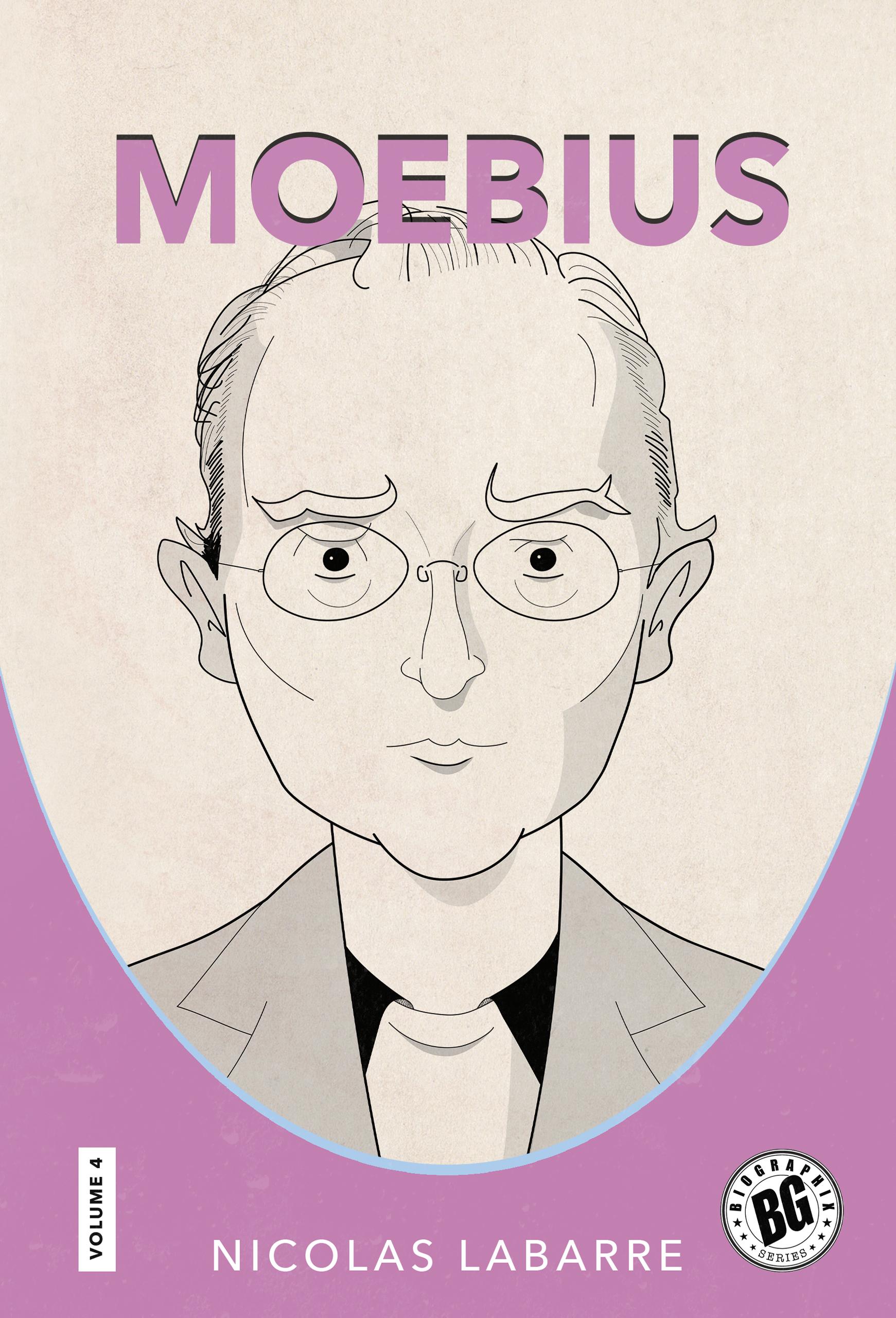
Jean Giraud (1938–2012) started drawing comics in the late 1950s for a variety of French comics magazines. Under his real name, he found success in 1963 with the western series Blueberry, written by Jean-Michel Charlier and published in Pilote magazine. In the 1970s, he started producing science fiction works under the name of Moebius, which brought him international success, and which included works such as Arzach. He died in 2012 as a global celebrity in the comics world and a major influence across visual media.
This first book-length, English-language study of Moebius finally brings international attention to an artist whose influence on the medium was profound and immediate, making him a role model for aspiring comics creators throughout his career. He was widely imitated while at Métal Hurlant in the 1970s, was “prominent among the spiritual fathers of the comic book rebels” in the 1990s, and again an example for the independent artists identified as the “new bande dessinée” in France in the early 2000s. Featuring close readings of key texts, including Blueberry, The Airtight Garage of Jerry Cornelius, and “The Long Tomorrow,” this volume examines Moebius’s style and aesthetic achievement. Notably, the volume explores the tension between Giraud and Moebius—one name for westerns, the other for science fiction; one name for the domestic market, another as a global brand; one name for the brush, another for the pen; one for the mainstream and the other for the underground. Nicolas Labarre challenges those dichotomies, especially in the later phases of Moebius’s career, unveiling the complex evolution of this understudied but influential artist.
This first book-length, English-language study of Moebius finally brings international attention to an artist whose influence on the medium was profound and immediate, making him a role model for aspiring comics creators throughout his career. He was widely imitated while at Métal Hurlant in the 1970s, was “prominent among the spiritual fathers of the comic book rebels” in the 1990s, and again an example for the independent artists identified as the “new bande dessinée” in France in the early 2000s. Featuring close readings of key texts, including Blueberry, The Airtight Garage of Jerry Cornelius, and “The Long Tomorrow,” this volume examines Moebius’s style and aesthetic achievement. Notably, the volume explores the tension between Giraud and Moebius—one name for westerns, the other for science fiction; one name for the domestic market, another as a global brand; one name for the brush, another for the pen; one for the mainstream and the other for the underground. Nicolas Labarre challenges those dichotomies, especially in the later phases of Moebius’s career, unveiling the complex evolution of this understudied but influential artist.
Payez facilement par carte, Klarna, Apple Pay ou Google Pay. Pas satisfait ? Vous avez toujours une garantie de remboursement de 14 jours. En savoir plus dans nos conditions. Si vous avez des questions, envoyez-nous un e-mail à hello@memmo.org.
Memmo facilite tes études, où que tu sois dans le monde. On rassemble tes manuels de cours et des outils d'étude intelligents au même endroit : résumés, quiz, podcasts et flashcards. Et il y a Ted, ton compagnon d'étude qui répond à toutes tes questions. Plus de 50 000 étudiants étudient déjà ici – conçu pour t'aider à apprendre plus vite et à moins stresser.
Tu pourrais aussi aimer
Acheter le livre0