
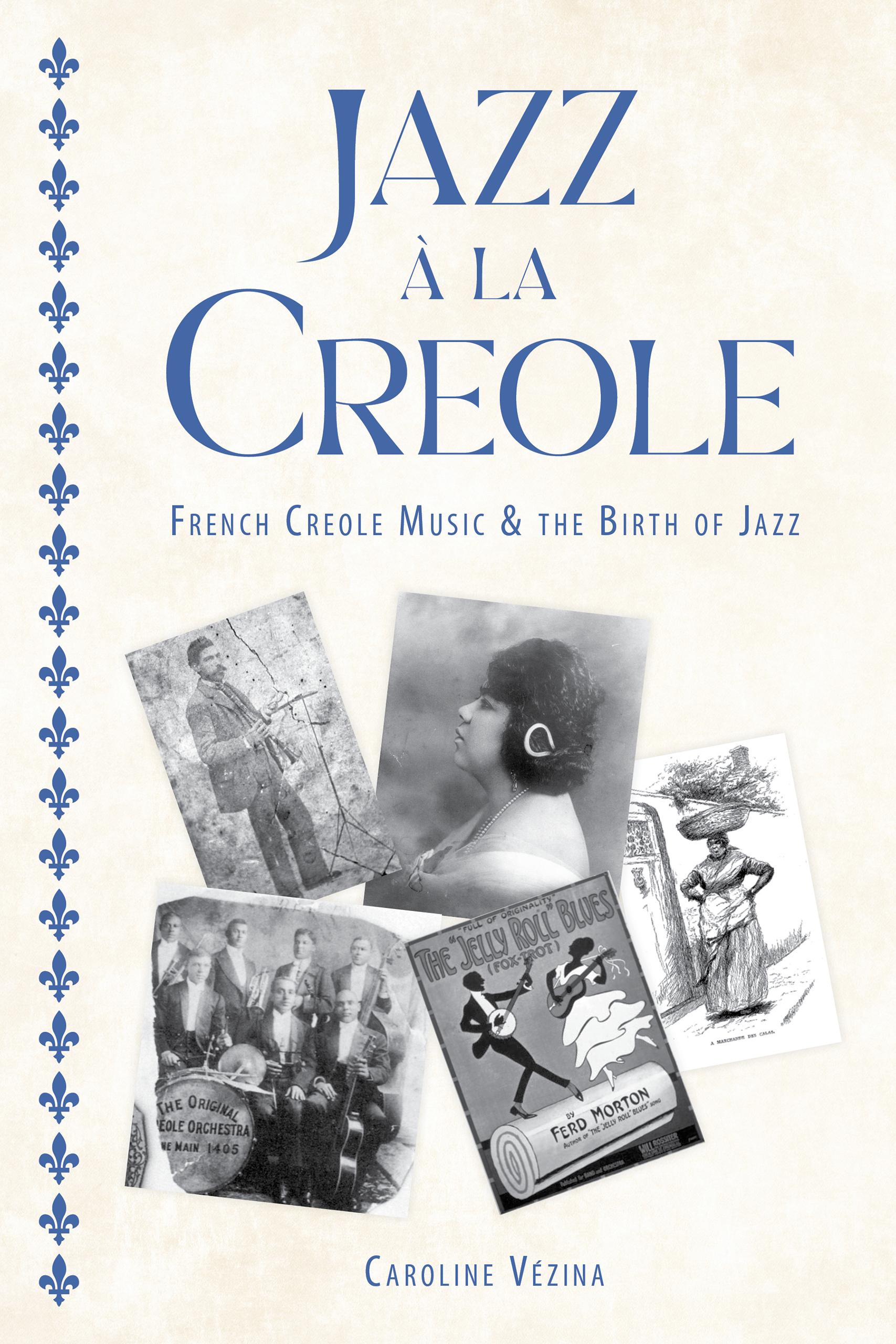
Winner of the 2023 Award for Excellence for Best Historical Research in Recorded Jazz from the Association for Recorded Sound Collections
During the formative years of jazz (1890–1917), the Creoles of Color—as they were then called—played a significant role in the development of jazz as teachers, bandleaders, instrumentalists, singers, and composers. Indeed, music penetrated all aspects of the life of this tight-knit community, proud of its French heritage and language. They played and/or sang classical, military, and dance music as well as popular songs and cantiques that incorporated African, European, and Caribbean elements decades before early jazz appeared. In Jazz à la Creole: French Creole Music and the Birth of Jazz, the author describes the music played by the Afro-Creole community since the arrival of enslaved Africans in La Louisiane, then a French colony, at the beginning of the eighteenth century, emphasizing the many cultural exchanges that led to the development of jazz.
Caroline Vézina has compiled and analyzed a broad scope of primary sources found in diverse locations from New Orleans to Quebec City, Washington, DC, New York City, and Chicago. Two previously unpublished interviews add valuable insider knowledge about the music on French plantations and the danses Créoles held in Congo Square after the Civil War. Musical and textual analyses of cantiques provide new information about the process of their appropriation by the Creole Catholics as the French counterpart of the Negro spirituals. Finally, a closer look at their musical practices indicates that the Creoles sang and improvised music and/or lyrics of Creole songs, and that some were part of their professional repertoire. As such, they belong to the Black American and the Franco-American folk music traditions that reflect the rich cultural heritage of Louisiana.
During the formative years of jazz (1890–1917), the Creoles of Color—as they were then called—played a significant role in the development of jazz as teachers, bandleaders, instrumentalists, singers, and composers. Indeed, music penetrated all aspects of the life of this tight-knit community, proud of its French heritage and language. They played and/or sang classical, military, and dance music as well as popular songs and cantiques that incorporated African, European, and Caribbean elements decades before early jazz appeared. In Jazz à la Creole: French Creole Music and the Birth of Jazz, the author describes the music played by the Afro-Creole community since the arrival of enslaved Africans in La Louisiane, then a French colony, at the beginning of the eighteenth century, emphasizing the many cultural exchanges that led to the development of jazz.
Caroline Vézina has compiled and analyzed a broad scope of primary sources found in diverse locations from New Orleans to Quebec City, Washington, DC, New York City, and Chicago. Two previously unpublished interviews add valuable insider knowledge about the music on French plantations and the danses Créoles held in Congo Square after the Civil War. Musical and textual analyses of cantiques provide new information about the process of their appropriation by the Creole Catholics as the French counterpart of the Negro spirituals. Finally, a closer look at their musical practices indicates that the Creoles sang and improvised music and/or lyrics of Creole songs, and that some were part of their professional repertoire. As such, they belong to the Black American and the Franco-American folk music traditions that reflect the rich cultural heritage of Louisiana.
Payez facilement par carte, Klarna, Apple Pay ou Google Pay. Pas satisfait ? Vous avez toujours une garantie de remboursement de 14 jours. En savoir plus dans nos conditions. Si vous avez des questions, envoyez-nous un e-mail à hello@memmo.org.
Memmo facilite tes études, où que tu sois dans le monde. On rassemble tes manuels de cours et des outils d'étude intelligents au même endroit : résumés, quiz, podcasts et flashcards. Et il y a Ted, ton compagnon d'étude qui répond à toutes tes questions. Plus de 50 000 étudiants étudient déjà ici – conçu pour t'aider à apprendre plus vite et à moins stresser.
Tu pourrais aussi aimer
Acheter le livre0