
2023 Jazz Journalists Association (JJA) Jazz Awards for Books of the Year—Honorable Mention Recipient
On December 4, 1957, Miles Davis revolutionized film soundtrack production, improvising the score for Louis Malle’s Ascenseur pour l’échafaud. A cinematic harbinger of the French New Wave, Ascenseur challenged mainstream filmmaking conventions, emphasizing experimentation and creative collaboration. It was in this environment during the late 1950s to 1960s, a brief “golden age” for jazz in film, that many independent filmmakers valued improvisational techniques, featuring soundtracks from such seminal figures as John Lewis, Thelonious Monk, and Duke Ellington. But what of jazz in film today?
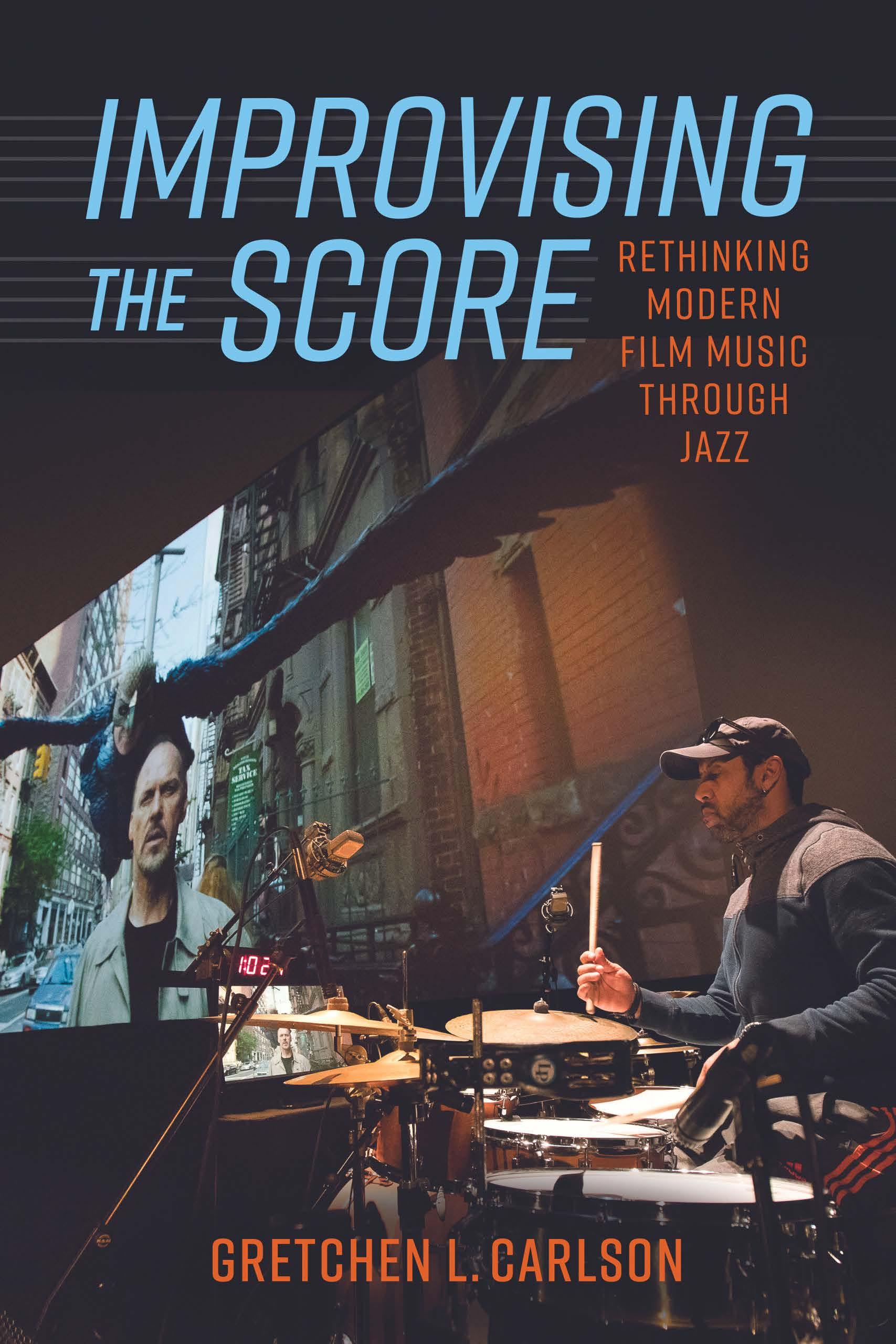
Improvising the Score: Rethinking Modern Film Music through Jazz provides an original, vivid investigation of innovative collaborations between renowned contemporary jazz artists and prominent independent filmmakers. The book explores how these integrative jazz-film productions challenge us to rethink the possibilities of cinematic music production. In-depth case studies include collaborations between Terence Blanchard and Spike Lee (Malcolm X, When the Levees Broke), Dick Hyman and Woody Allen (Hannah and Her Sisters), Antonio Sánchez and Alejandro González Iñárritu (Birdman), and Mark Isham and Alan Rudolph (Afterglow).
The first book of its kind, this study examines jazz artists’ work in film from a sociological perspective, offering rich, behind-the-scenes analyses of their unique collaborative relationships with filmmakers. It investigates how jazz artists negotiate their own “creative labor,” examining the tensions between improvisation and the conventionally highly regulated structures, hierarchies, and expectations of filmmaking. Grounded in personal interviews and detailed film production analysis, Improvising the Score illustrates the dynamic possibilities of integrative artistic collaborations between jazz, film, and other contemporary media, exemplifying its ripeness for shaping and invigorating twenty-first-century arts, media, and culture.
On December 4, 1957, Miles Davis revolutionized film soundtrack production, improvising the score for Louis Malle’s Ascenseur pour l’échafaud. A cinematic harbinger of the French New Wave, Ascenseur challenged mainstream filmmaking conventions, emphasizing experimentation and creative collaboration. It was in this environment during the late 1950s to 1960s, a brief “golden age” for jazz in film, that many independent filmmakers valued improvisational techniques, featuring soundtracks from such seminal figures as John Lewis, Thelonious Monk, and Duke Ellington. But what of jazz in film today?
Improvising the Score: Rethinking Modern Film Music through Jazz provides an original, vivid investigation of innovative collaborations between renowned contemporary jazz artists and prominent independent filmmakers. The book explores how these integrative jazz-film productions challenge us to rethink the possibilities of cinematic music production. In-depth case studies include collaborations between Terence Blanchard and Spike Lee (Malcolm X, When the Levees Broke), Dick Hyman and Woody Allen (Hannah and Her Sisters), Antonio Sánchez and Alejandro González Iñárritu (Birdman), and Mark Isham and Alan Rudolph (Afterglow).
The first book of its kind, this study examines jazz artists’ work in film from a sociological perspective, offering rich, behind-the-scenes analyses of their unique collaborative relationships with filmmakers. It investigates how jazz artists negotiate their own “creative labor,” examining the tensions between improvisation and the conventionally highly regulated structures, hierarchies, and expectations of filmmaking. Grounded in personal interviews and detailed film production analysis, Improvising the Score illustrates the dynamic possibilities of integrative artistic collaborations between jazz, film, and other contemporary media, exemplifying its ripeness for shaping and invigorating twenty-first-century arts, media, and culture.
Payez facilement par carte, Klarna, Apple Pay ou Google Pay. Pas satisfait ? Vous avez toujours une garantie de remboursement de 14 jours. En savoir plus dans nos conditions. Si vous avez des questions, envoyez-nous un e-mail à hello@memmo.org.
Memmo facilite tes études, où que tu sois dans le monde. On rassemble tes manuels de cours et des outils d'étude intelligents au même endroit : résumés, quiz, podcasts et flashcards. Et il y a Ted, ton compagnon d'étude qui répond à toutes tes questions. Plus de 50 000 étudiants étudient déjà ici – conçu pour t'aider à apprendre plus vite et à moins stresser.
Tu pourrais aussi aimer
Acheter le livre0