
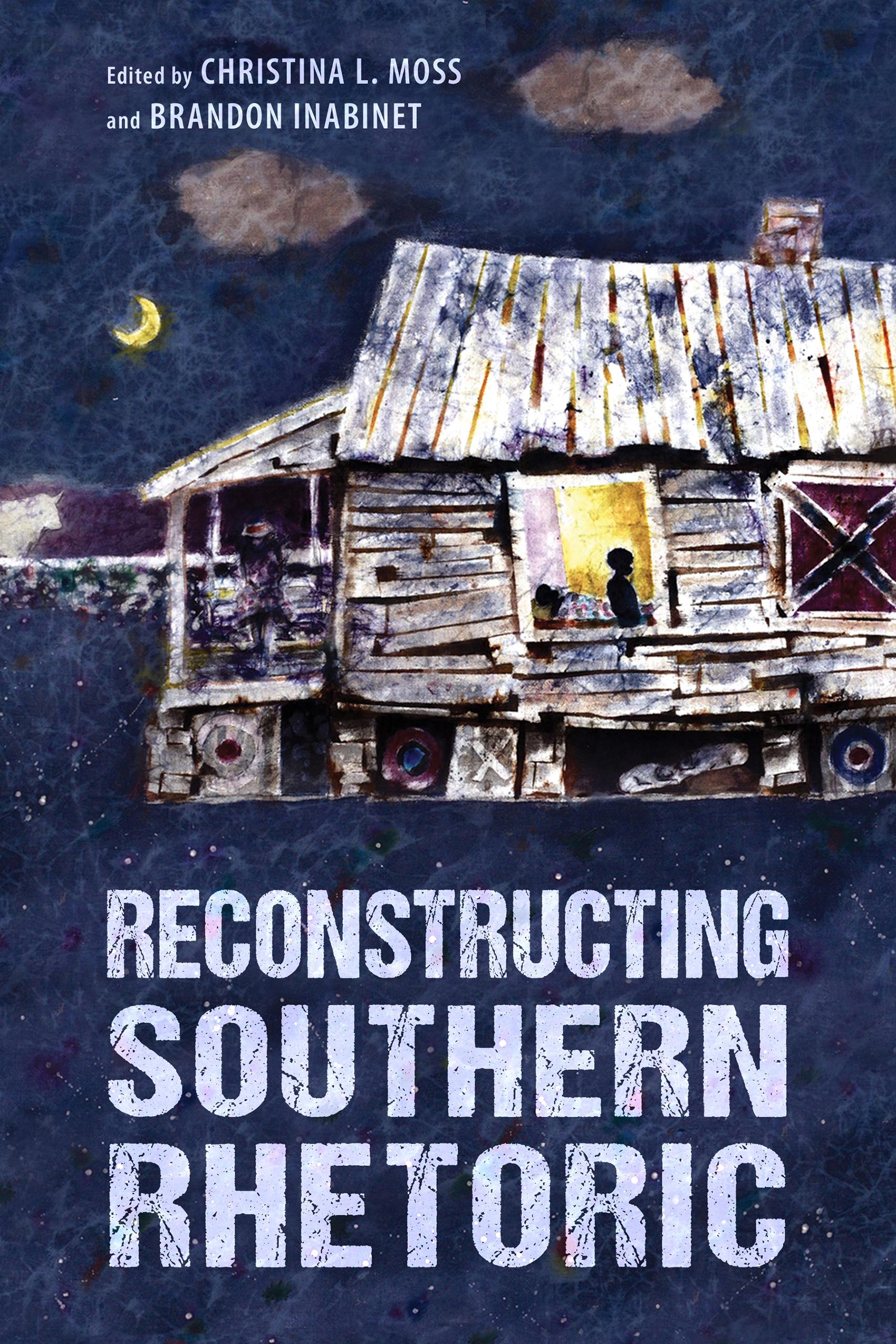
Contributions by Whitney Jordan Adams, Wendy Atkins-Sayre, Jason Edward Black, Patricia G. Davis, Cassidy D. Ellis, Megan Fitzmaurice, Michael L. Forst, Jeremy R. Grossman, Cynthia P. King, Julia M. Medhurst, Ryan Neville-Shepard, Jonathan M. Smith, Ashli Quesinberry Stokes, Dave Tell, and Carolyn Walcott
Southern rhetoric is communication’s oldest regional study. During its initial invention, the discipline was founded to justify the study of rhetoric in a field of white male scholars analyzing significant speeches by other white men, yielding research that added to myths of Lost Cause ideology and a uniquely oratorical culture. Reconstructing Southern Rhetoric takes on the much-overdue task of reconstructing the way southern rhetoric has been viewed and critiqued within the communication discipline. The collection reveals that southern rhetoric is fluid and migrates beyond geography, is constructed in weak counterpublic formation against legitimated power, creates a region that is not monolithic, and warrants activism and healing.
Contributors to the volume examine such topics as political campaign strategies, memorial and museum experiences, television and music influences, commemoration protests, and ethnographic experiences in the South. The essays cohesively illustrate southern identity as manifested in various contexts and ways, considering what it means to be a part of a region riddled with slavery, Jim Crow laws, and other expressions of racial and cultural hierarchy. Ultimately, the volume initiates a new conversation, asking what southern rhetorical critique would be like if it included the richness of the southern culture from which it came.
Southern rhetoric is communication’s oldest regional study. During its initial invention, the discipline was founded to justify the study of rhetoric in a field of white male scholars analyzing significant speeches by other white men, yielding research that added to myths of Lost Cause ideology and a uniquely oratorical culture. Reconstructing Southern Rhetoric takes on the much-overdue task of reconstructing the way southern rhetoric has been viewed and critiqued within the communication discipline. The collection reveals that southern rhetoric is fluid and migrates beyond geography, is constructed in weak counterpublic formation against legitimated power, creates a region that is not monolithic, and warrants activism and healing.
Contributors to the volume examine such topics as political campaign strategies, memorial and museum experiences, television and music influences, commemoration protests, and ethnographic experiences in the South. The essays cohesively illustrate southern identity as manifested in various contexts and ways, considering what it means to be a part of a region riddled with slavery, Jim Crow laws, and other expressions of racial and cultural hierarchy. Ultimately, the volume initiates a new conversation, asking what southern rhetorical critique would be like if it included the richness of the southern culture from which it came.
Payez facilement par carte, Klarna, Apple Pay ou Google Pay. Pas satisfait ? Vous avez toujours une garantie de remboursement de 14 jours. En savoir plus dans nos conditions. Si vous avez des questions, envoyez-nous un e-mail à hello@memmo.org.
Memmo facilite tes études, où que tu sois dans le monde. On rassemble tes manuels de cours et des outils d'étude intelligents au même endroit : résumés, quiz, podcasts et flashcards. Et il y a Ted, ton compagnon d'étude qui répond à toutes tes questions. Plus de 50 000 étudiants étudient déjà ici – conçu pour t'aider à apprendre plus vite et à moins stresser.
Tu pourrais aussi aimer
Acheter le livre0