
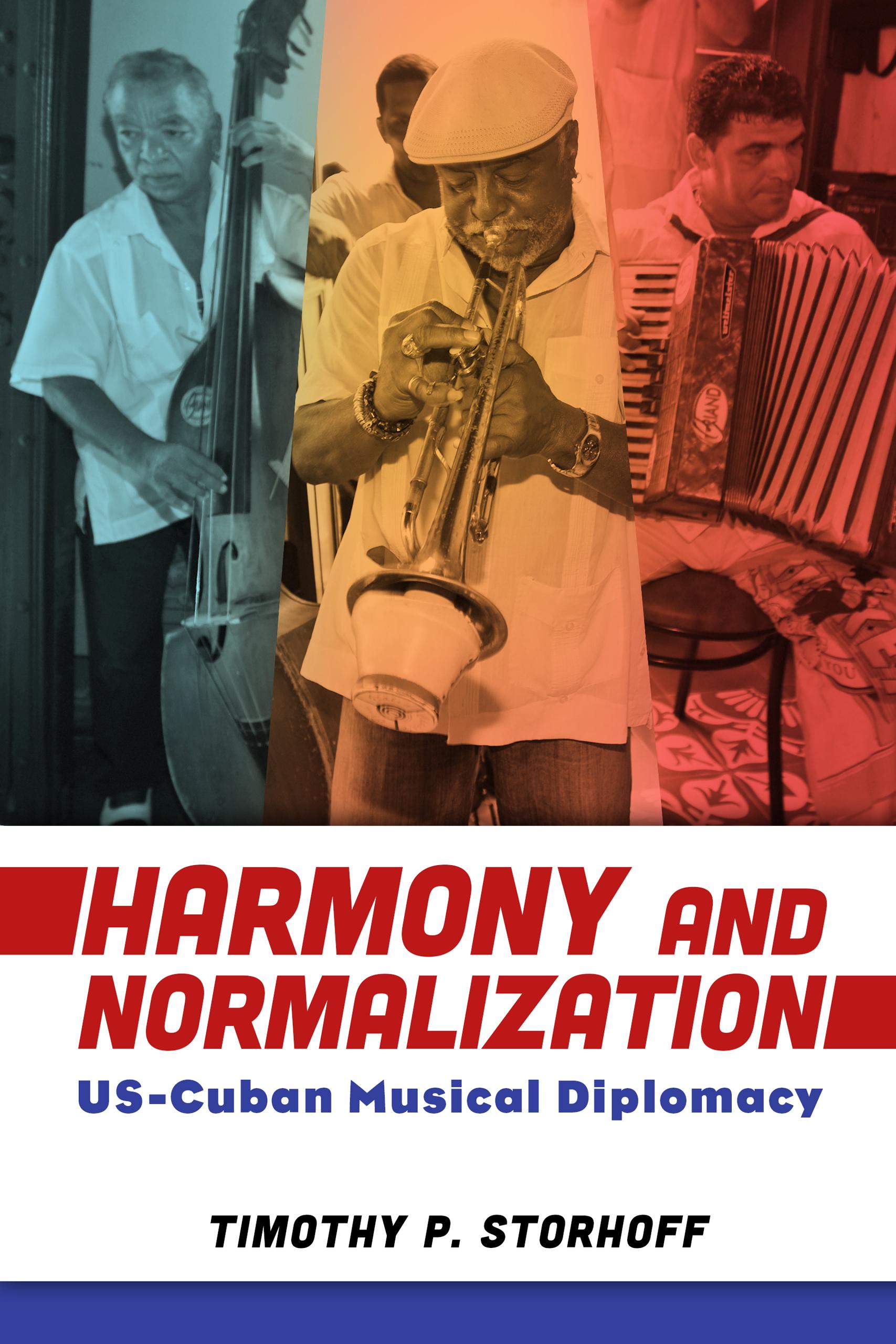
Harmony and Normalization: US-Cuban Musical Diplomacy explores the channels of musical exchange between Cuba and the United States during the eight-year presidency of Barack Obama, who eased the musical embargo of the island and restored relations with Cuba. Musical exchanges during this period act as a lens through which to view not only US-Cuban musical relations but also the larger political, economic, and cultural implications of musical dialogue between these two nations. Policy shifts in the wake of Raúl Castro assuming the Cuban presidency and the election of President Obama allowed performers to traverse the Florida Straits more easily than in the recent past and encouraged them to act as musical ambassadors. Their performances served as a testing ground for political change that anticipated normalized relations.
While government actors debated these changes, music forged connections between individuals on both sides of the Florida Straits. In this first book on the subject since Obama’s presidency, musicologist Timothy P. Storhoff describes how, after specific policy changes, musicians were some of the first to take advantage of new opportunities for travel, push the boundaries of new regulations, and expose both the possibilities and limitations of licensing musical exchange. Through the analysis of both official and unofficial musical diplomacy efforts, including the Havana Jazz Festival, the National Symphony Orchestra of Cuba’s first US tour, the Minnesota Orchestra’s trip to Havana, and the author’s own experiences in Cuba, this ethnography demonstrates how performances reflect aspirations for stronger transnational ties and a common desire to restore the once-thriving US-Cuban musical relationship.
While government actors debated these changes, music forged connections between individuals on both sides of the Florida Straits. In this first book on the subject since Obama’s presidency, musicologist Timothy P. Storhoff describes how, after specific policy changes, musicians were some of the first to take advantage of new opportunities for travel, push the boundaries of new regulations, and expose both the possibilities and limitations of licensing musical exchange. Through the analysis of both official and unofficial musical diplomacy efforts, including the Havana Jazz Festival, the National Symphony Orchestra of Cuba’s first US tour, the Minnesota Orchestra’s trip to Havana, and the author’s own experiences in Cuba, this ethnography demonstrates how performances reflect aspirations for stronger transnational ties and a common desire to restore the once-thriving US-Cuban musical relationship.
Payez facilement par carte, Klarna, Apple Pay ou Google Pay. Pas satisfait ? Vous avez toujours une garantie de remboursement de 14 jours. En savoir plus dans nos conditions. Si vous avez des questions, envoyez-nous un e-mail à hello@memmo.org.
Memmo facilite tes études, où que tu sois dans le monde. On rassemble tes manuels de cours et des outils d'étude intelligents au même endroit : résumés, quiz, podcasts et flashcards. Et il y a Ted, ton compagnon d'étude qui répond à toutes tes questions. Plus de 50 000 étudiants étudient déjà ici – conçu pour t'aider à apprendre plus vite et à moins stresser.
Tu pourrais aussi aimer
Acheter le livre0