
Contributions by Carrie Bernhard, Scott Bernhard, Marilyn R. Brown, Richard Campanella, John P. Clark, Joel Dinerstein, Pableaux Johnson, John P. Klingman, Angel Adams Parham, Bruce Boyd Raeburn, Ruth Salvaggio, Christopher Schaberg, Teresa A. Toulouse, and Beth Willinger
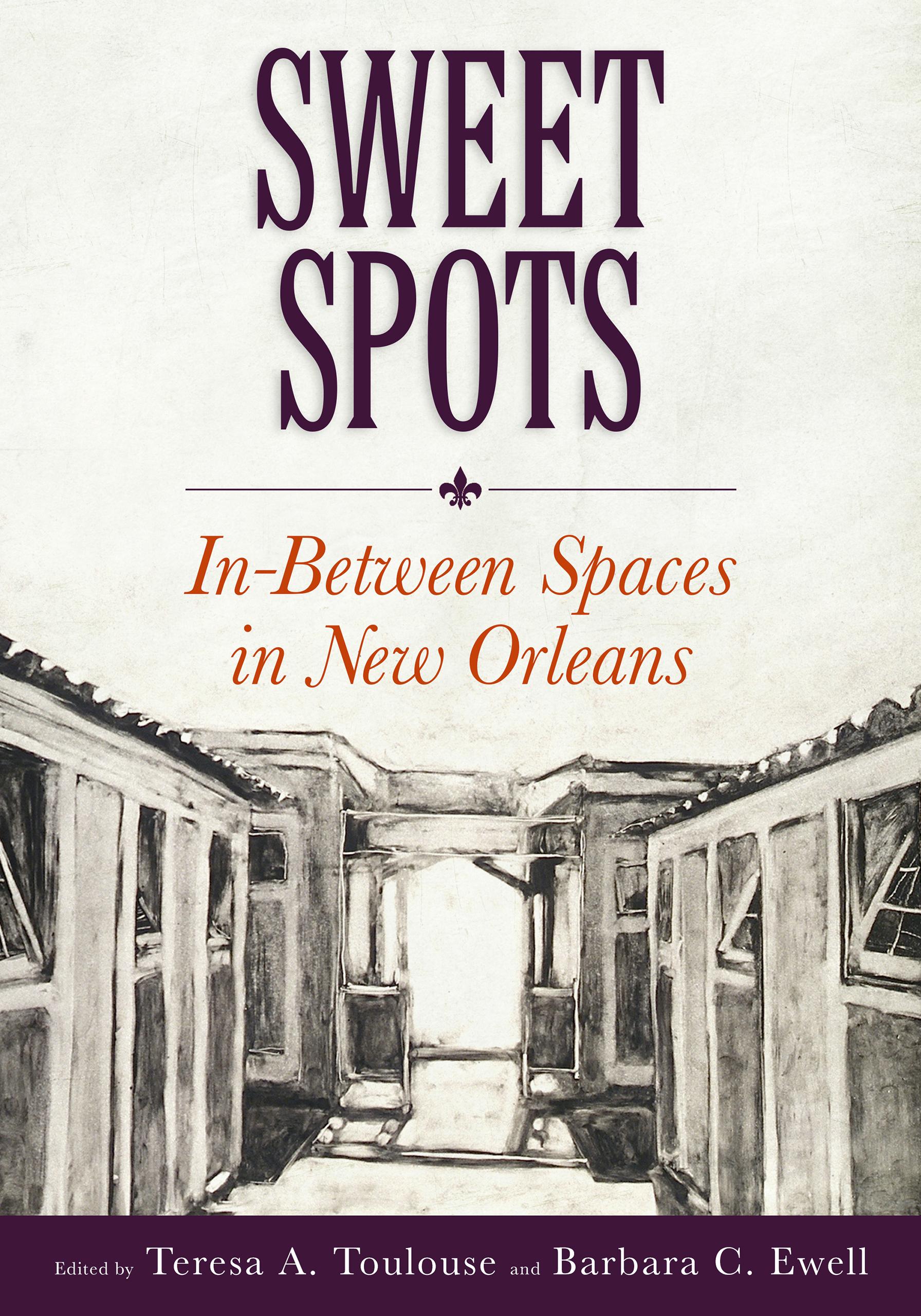
Much has been written about New Orleans's distinctive architecture and urban fabric, as well as the city's art, literature, and music. There is, however, little discussion connecting these features. Sweet Spots--a title drawn from jazz musicians' name for the space "in-between" performers and dancers where music best resonates--provides multiple connections between the city's spaces, its complex culture, and its future.
Drawing on the late Tulane architect Malcolm Heard's ideas about "interstitial" spaces, this collection examines how a variety of literal and represented "in-between" spaces in New Orleans have addressed race, class, gender, community, and environment. As scholars of architecture, art, African American studies, English, history, jazz, philosophy, and sociology, the authors incorporate materials from architectural history and practice, literary texts, paintings, drawings, music, dance, and even statistical analyses. Interstitial space refers not only to functional elements inside and outside of many New Orleans houses--high ceilings, hidden staircases, galleries, and courtyards--but also to compelling spatial relations between the city's houses, streets, and neighborhoods.
Rich with visual materials, Sweet Spots reveals the ways that diverse New Orleans spaces take on meanings and accrete stories that promote certain consequences both for those who live in them and for those who read such stories. The volume evokes, preserves, criticizes, and amends understanding of a powerful and often-missed feature of New Orleans's elusive reality.
Much has been written about New Orleans's distinctive architecture and urban fabric, as well as the city's art, literature, and music. There is, however, little discussion connecting these features. Sweet Spots--a title drawn from jazz musicians' name for the space "in-between" performers and dancers where music best resonates--provides multiple connections between the city's spaces, its complex culture, and its future.
Drawing on the late Tulane architect Malcolm Heard's ideas about "interstitial" spaces, this collection examines how a variety of literal and represented "in-between" spaces in New Orleans have addressed race, class, gender, community, and environment. As scholars of architecture, art, African American studies, English, history, jazz, philosophy, and sociology, the authors incorporate materials from architectural history and practice, literary texts, paintings, drawings, music, dance, and even statistical analyses. Interstitial space refers not only to functional elements inside and outside of many New Orleans houses--high ceilings, hidden staircases, galleries, and courtyards--but also to compelling spatial relations between the city's houses, streets, and neighborhoods.
Rich with visual materials, Sweet Spots reveals the ways that diverse New Orleans spaces take on meanings and accrete stories that promote certain consequences both for those who live in them and for those who read such stories. The volume evokes, preserves, criticizes, and amends understanding of a powerful and often-missed feature of New Orleans's elusive reality.
Payez facilement par carte, Klarna, Apple Pay ou Google Pay. Pas satisfait ? Vous avez toujours une garantie de remboursement de 14 jours. En savoir plus dans nos conditions. Si vous avez des questions, envoyez-nous un e-mail à hello@memmo.org.
Memmo facilite tes études, où que tu sois dans le monde. On rassemble tes manuels de cours et des outils d'étude intelligents au même endroit : résumés, quiz, podcasts et flashcards. Et il y a Ted, ton compagnon d'étude qui répond à toutes tes questions. Plus de 50 000 étudiants étudient déjà ici – conçu pour t'aider à apprendre plus vite et à moins stresser.
Tu pourrais aussi aimer
Acheter le livre0