
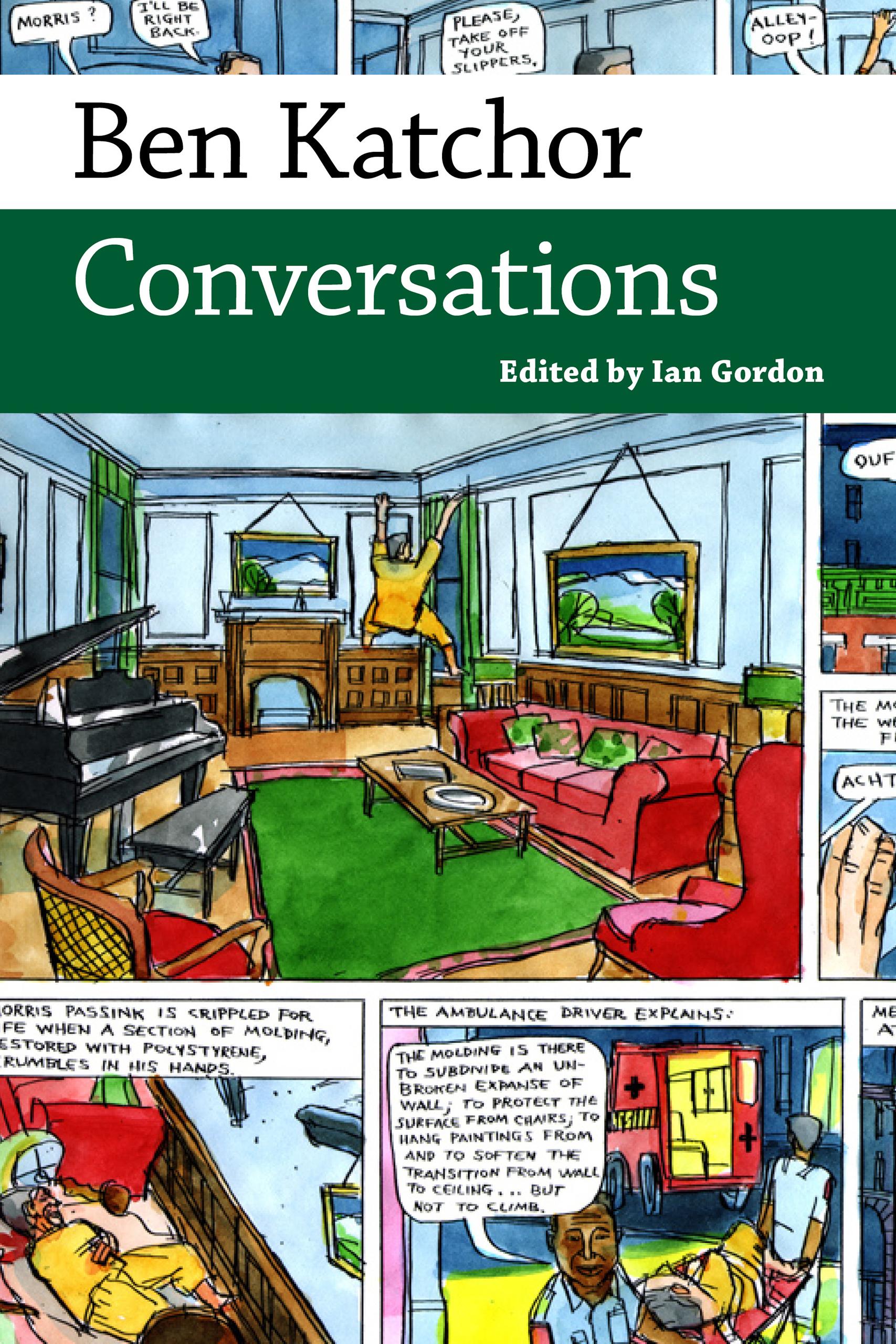
Author Michael Chabon described Ben Katchor (b. 1951) as “the creator of the last great American comic strip.” Katchor’s comic strip Julius Knipl, Real Estate Photographer, which began in 1988, brought him to the attention of the readers of alternative weekly newspapers along with a coterie of artists who have gone on to public acclaim. In the mid-1990s, NPR ran audio versions of several Julius Knipl stories, narrated by Katchor and starring Jerry Stiller in the title role.
An early contributor to RAW, Katchor also contributed to Forward, the New Yorker, Slate, and weekly newspapers. He edited and published two issues of Picture Story, which featured his own work, with articles and stories by Peter Blegvad, Jerry Moriarty, and Mark Beyer. In addition to being a dramatist, Katchor has been the subject of profiles in the New Yorker, a recipient of a MacArthur “Genius Grant” and a Guggenheim Fellowship, and a fellow at both the American Academy in Berlin and the New York Public Library.
Katchor’s work is often described as zany or bizarre, and author Douglas Wolk has characterized his work as “one or two notches too far” beyond an absurdist reality. And yet the work resonates with its audience because, as was the case with Knipl’s journey through the wilderness of a decaying city, absurdity was only what was usefully available; absurdity was the reality. Julius Knipl, Real Estate Photographer presaged the themes of Katchor’s work: a concern with the past, an interest in the intersection of Jewish identity and a secular commercial culture, and the limits and possibilities of urban life.
An early contributor to RAW, Katchor also contributed to Forward, the New Yorker, Slate, and weekly newspapers. He edited and published two issues of Picture Story, which featured his own work, with articles and stories by Peter Blegvad, Jerry Moriarty, and Mark Beyer. In addition to being a dramatist, Katchor has been the subject of profiles in the New Yorker, a recipient of a MacArthur “Genius Grant” and a Guggenheim Fellowship, and a fellow at both the American Academy in Berlin and the New York Public Library.
Katchor’s work is often described as zany or bizarre, and author Douglas Wolk has characterized his work as “one or two notches too far” beyond an absurdist reality. And yet the work resonates with its audience because, as was the case with Knipl’s journey through the wilderness of a decaying city, absurdity was only what was usefully available; absurdity was the reality. Julius Knipl, Real Estate Photographer presaged the themes of Katchor’s work: a concern with the past, an interest in the intersection of Jewish identity and a secular commercial culture, and the limits and possibilities of urban life.
Payez facilement par carte, Klarna, Apple Pay ou Google Pay. Pas satisfait ? Vous avez toujours une garantie de remboursement de 14 jours. En savoir plus dans nos conditions. Si vous avez des questions, envoyez-nous un e-mail à hello@memmo.org.
Memmo facilite tes études, où que tu sois dans le monde. On rassemble tes manuels de cours et des outils d'étude intelligents au même endroit : résumés, quiz, podcasts et flashcards. Et il y a Ted, ton compagnon d'étude qui répond à toutes tes questions. Plus de 50 000 étudiants étudient déjà ici – conçu pour t'aider à apprendre plus vite et à moins stresser.
Tu pourrais aussi aimer
Acheter le livre0