
Contributions by Jacob Agner, Sharon Deykin Baris, Carolyn J. Brown, Lee Anne Bryan, Keith Cartwright, Stuart Christie, Mae Miller Claxton, Virginia Ottley Craighill, David A. Davis, Susan V. Donaldson, Julia Eichelberger, Kevin Eyster, Dolores Flores-Silva, Sarah Gilbreath Ford, Stephen M. Fuller, Dawn Gilchrist, Rebecca L. Harrison, Casey Kayser, Michael Kreyling, Ebony Lumumba, Suzanne Marrs, Pearl Amelia McHaney, David McWhirter, Laura Sloan Patterson, Harriet Pollack, Gary Richards, Christin Marie Taylor, Annette Trefzer, Alec Valentine, Adrienne Akins Warfield, Keri Watson, and Amy Weldon
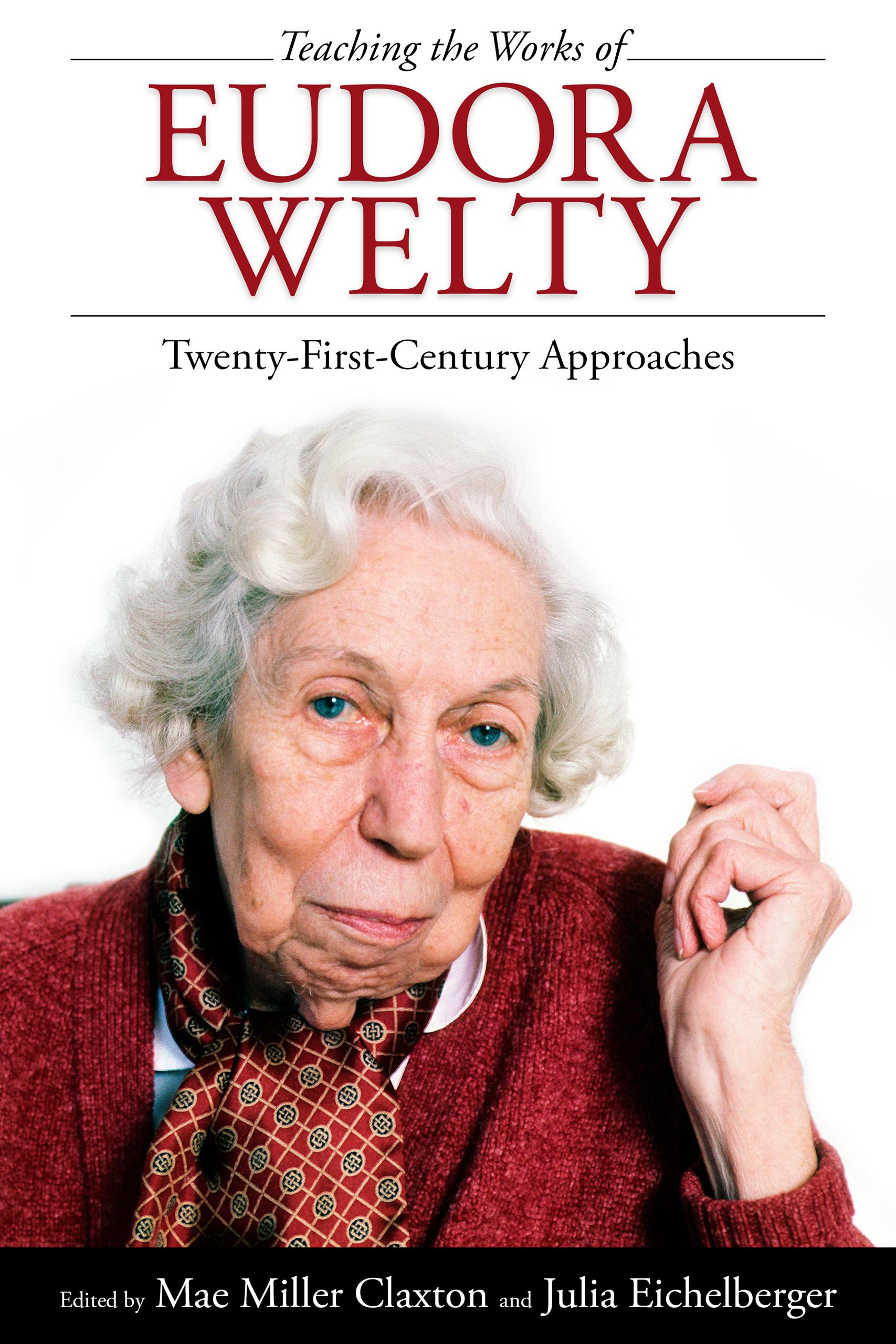
Too often Eudora Welty is known to the general public as Miss Welty, a "perfect lady" who wrote affectionate portraits of her home region. Yet recent scholarship has amply demonstrated a richer complexity. Welty was an innovative artist with cosmopolitan sensibilities and progressive politics, a woman who maintained close friendships with artists and intellectuals throughout the world, a writer as unafraid to experiment as she was to level her pen at the worst human foibles.
The essays collected in Teaching the Works of Eudora Welty seek to move Welty beyond a discussion of region and reflect new scholarship that remaps her work onto a larger canvas. The book offers ways to help twenty-first-century readers navigate Welty's challenging and intricate narratives. It provides answers to questions many teachers will have: Why should I study a writer who documents white privilege? Why should I give this "regional" writer space on an already crowded syllabus? Why should I teach Welty if I do not study the South? How can I help my students make sense of her modernist narratives? How can Welty's texts help me teach my students about literary theory, about gender and disability, about cultures and societies with which my students are unfamiliar?
Too often Eudora Welty is known to the general public as Miss Welty, a "perfect lady" who wrote affectionate portraits of her home region. Yet recent scholarship has amply demonstrated a richer complexity. Welty was an innovative artist with cosmopolitan sensibilities and progressive politics, a woman who maintained close friendships with artists and intellectuals throughout the world, a writer as unafraid to experiment as she was to level her pen at the worst human foibles.
The essays collected in Teaching the Works of Eudora Welty seek to move Welty beyond a discussion of region and reflect new scholarship that remaps her work onto a larger canvas. The book offers ways to help twenty-first-century readers navigate Welty's challenging and intricate narratives. It provides answers to questions many teachers will have: Why should I study a writer who documents white privilege? Why should I give this "regional" writer space on an already crowded syllabus? Why should I teach Welty if I do not study the South? How can I help my students make sense of her modernist narratives? How can Welty's texts help me teach my students about literary theory, about gender and disability, about cultures and societies with which my students are unfamiliar?
Payez facilement par carte, Klarna, Apple Pay ou Google Pay. Pas satisfait ? Vous avez toujours une garantie de remboursement de 14 jours. En savoir plus dans nos conditions. Si vous avez des questions, envoyez-nous un e-mail à hello@memmo.org.
Memmo facilite tes études, où que tu sois dans le monde. On rassemble tes manuels de cours et des outils d'étude intelligents au même endroit : résumés, quiz, podcasts et flashcards. Et il y a Ted, ton compagnon d'étude qui répond à toutes tes questions. Plus de 50 000 étudiants étudient déjà ici – conçu pour t'aider à apprendre plus vite et à moins stresser.
Tu pourrais aussi aimer
Acheter le livre0