
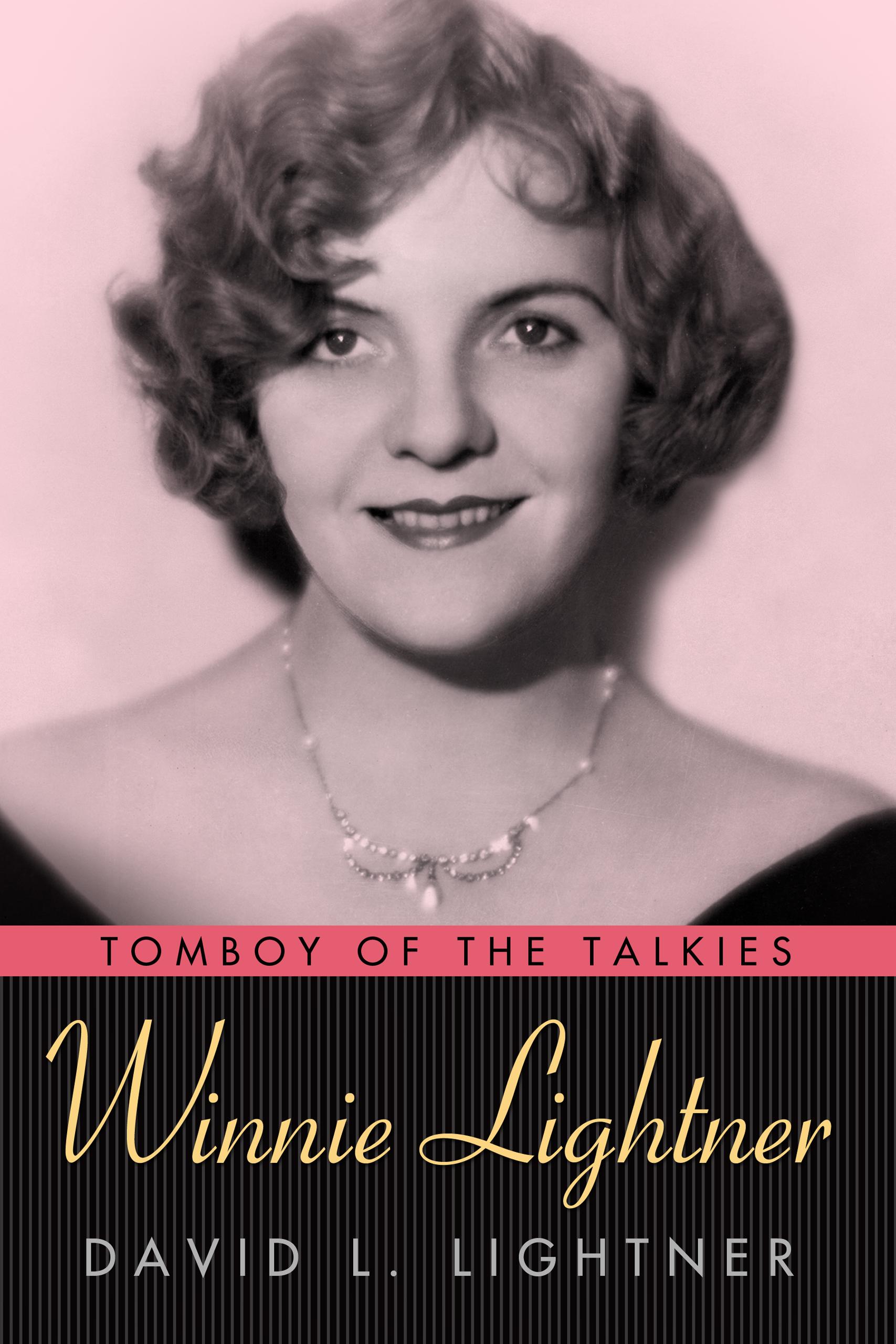
Winnie Lightner (1899–1971) stood out as the first great female comedian of the talkies. Blessed with a superb singing voice and a gift for making wisecracks and rubber faces, she rose to stardom in vaudeville and on Broadway. Then, at the dawn of the sound era, she became the first person in motion picture history to have her spoken words, the lyrics to a song, censored.
In Winnie Lightner: Tomboy of the Talkies, David L. Lightner shows how Winnie Lightner's hilarious performance in the 1929 musical comedy Gold Diggers of Broadway made her an overnight sensation. She went on to star in seven other Warner Bros. features. In the best of them, she was the comic epitome of a strident feminist, dominating men and gleefully spurning conventional gender norms and moral values. So tough was she, the studio billed her as “the tomboy of the talkies.”
When the Great Depression rendered moviegoers hostile toward feminism, Warner Bros. tried to craft a new image of her as glamorous and sexy. Executives assigned her contradictory roles in which she was empowered in the workplace but submissive to her male partner at home. The new persona flopped at the box office, and Lightner's stardom ended. In four final movies, she played supporting roles as the loudmouthed roommate and best friend of actresses Loretta Young, Joan Crawford, and Mona Barrie.
Following her retirement in 1934, Lightner faded into obscurity. Many of her films were damaged or even lost entirely. At long last, this biography gives Winnie Lightner the recognition she deserves as a notable figure in film history, in women's history, and in the history of show business.
In Winnie Lightner: Tomboy of the Talkies, David L. Lightner shows how Winnie Lightner's hilarious performance in the 1929 musical comedy Gold Diggers of Broadway made her an overnight sensation. She went on to star in seven other Warner Bros. features. In the best of them, she was the comic epitome of a strident feminist, dominating men and gleefully spurning conventional gender norms and moral values. So tough was she, the studio billed her as “the tomboy of the talkies.”
When the Great Depression rendered moviegoers hostile toward feminism, Warner Bros. tried to craft a new image of her as glamorous and sexy. Executives assigned her contradictory roles in which she was empowered in the workplace but submissive to her male partner at home. The new persona flopped at the box office, and Lightner's stardom ended. In four final movies, she played supporting roles as the loudmouthed roommate and best friend of actresses Loretta Young, Joan Crawford, and Mona Barrie.
Following her retirement in 1934, Lightner faded into obscurity. Many of her films were damaged or even lost entirely. At long last, this biography gives Winnie Lightner the recognition she deserves as a notable figure in film history, in women's history, and in the history of show business.
Payez facilement par carte, Klarna, Apple Pay ou Google Pay. Pas satisfait ? Vous avez toujours une garantie de remboursement de 14 jours. En savoir plus dans nos conditions. Si vous avez des questions, envoyez-nous un e-mail à hello@memmo.org.
Memmo facilite tes études, où que tu sois dans le monde. On rassemble tes manuels de cours et des outils d'étude intelligents au même endroit : résumés, quiz, podcasts et flashcards. Et il y a Ted, ton compagnon d'étude qui répond à toutes tes questions. Plus de 50 000 étudiants étudient déjà ici – conçu pour t'aider à apprendre plus vite et à moins stresser.
Tu pourrais aussi aimer
Acheter le livre0