
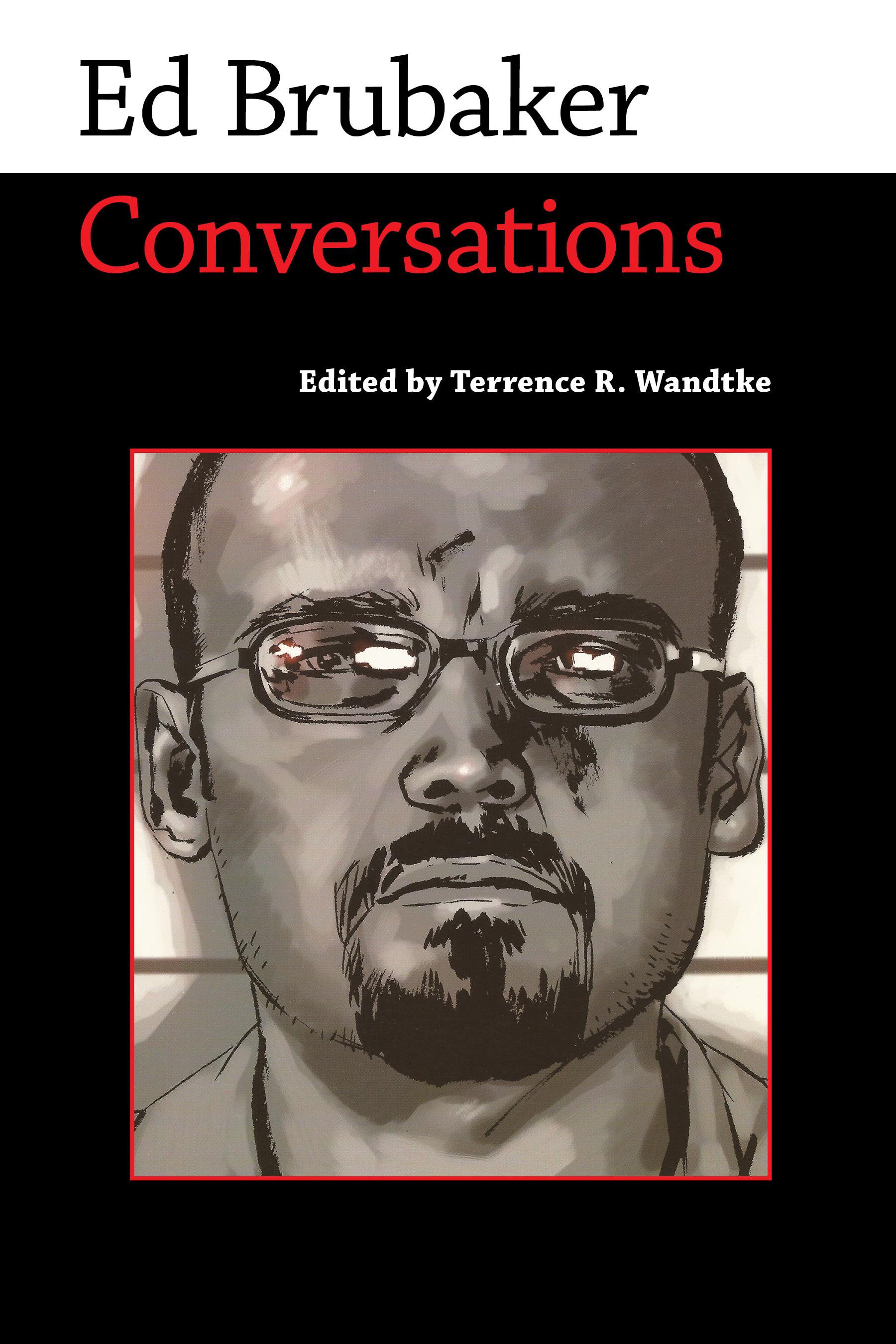
Ed Brubaker (b. 1966) has emerged as one of the most popular, significant figures in art comics since the 1990s. Most famous as the man who killed Captain America in 2007, Brubaker's work on company-owned properties such as Batman and Captain America and creator-owned series like Criminal and Fatale live up to the usual expectations for the superhero and crime genres. And yet, Brubaker layers his stories with a keen self-awareness, applying his expansive knowledge of American comic book history to invigorate his work and challenge the dividing line between popular entertainment and high art. This collection of interviews explores the sophisticated artist's work, drawing upon the entire length of the award-winning Brubaker's career.
With his stints writing Catwoman, Gotham Central, and Daredevil, Brubaker advanced the work of crime comic book writers through superhero stories informed by hard-boiled detective fiction and film noir. During his time on Captain America and his series Sleeper and Incognito, Brubaker revisited the conventions of the espionage thriller. With double agents who lose themselves in their jobs, the stories expose the arbitrary superhero standards of good and evil. In his series Criminal, Brubaker offered complex crime stories and, with a clear sense of the complicated lost world before the Comics Code, rejected crusading critic Fredric Wertham's myth of the innocence of early comics.
Overall, Brubaker demonstrates his self-conscious methodology in these often little-known and hard-to-find interviews, worthwhile conversations in their own right as well as objects of study for both scholars and researchers.
With his stints writing Catwoman, Gotham Central, and Daredevil, Brubaker advanced the work of crime comic book writers through superhero stories informed by hard-boiled detective fiction and film noir. During his time on Captain America and his series Sleeper and Incognito, Brubaker revisited the conventions of the espionage thriller. With double agents who lose themselves in their jobs, the stories expose the arbitrary superhero standards of good and evil. In his series Criminal, Brubaker offered complex crime stories and, with a clear sense of the complicated lost world before the Comics Code, rejected crusading critic Fredric Wertham's myth of the innocence of early comics.
Overall, Brubaker demonstrates his self-conscious methodology in these often little-known and hard-to-find interviews, worthwhile conversations in their own right as well as objects of study for both scholars and researchers.
Payez facilement par carte, Klarna, Apple Pay ou Google Pay. Pas satisfait ? Vous avez toujours une garantie de remboursement de 14 jours. En savoir plus dans nos conditions. Si vous avez des questions, envoyez-nous un e-mail à hello@memmo.org.
Memmo facilite tes études, où que tu sois dans le monde. On rassemble tes manuels de cours et des outils d'étude intelligents au même endroit : résumés, quiz, podcasts et flashcards. Et il y a Ted, ton compagnon d'étude qui répond à toutes tes questions. Plus de 50 000 étudiants étudient déjà ici – conçu pour t'aider à apprendre plus vite et à moins stresser.
Tu pourrais aussi aimer
Acheter le livre0