
2018 Morris Rosenberg Award, DC Sociological Society
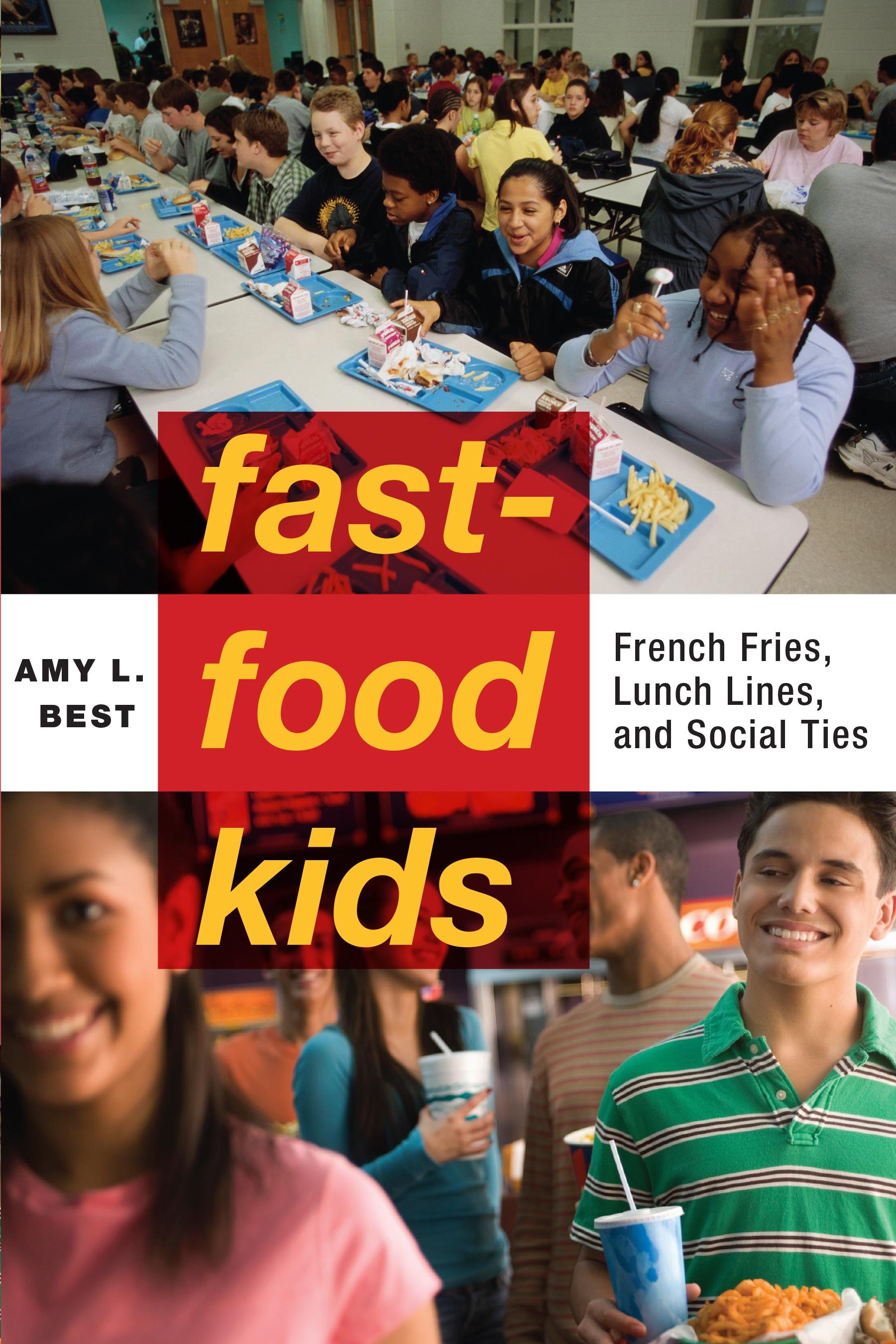
In recent years, questions such as “what are kids eating?” and “who’s feeding our kids?” have sparked a torrent of public and policy debates as we increasingly focus our attention on the issue of childhood obesity. The Centers for Disease Control and Prevention estimates that while 1 in 3 American children are either overweight or obese, that number is higher for children living in concentrated poverty. Enduring inequalities in communities, schools, and homes affect young people’s access to different types of food, with real consequences in life choices and health outcomes. Fast-Food Kids sheds light on the social contexts in which kids eat, and the broader backdrop of social change in American life, demonstrating why attention to food’s social meaning is important to effective public health policy, particularly actions that focus on behavioral change and school food reforms.
Through in-depth interviews and observation with high school and college students, Amy L. Best provides rich narratives of the everyday life of youth, highlighting young people’s voices and perspectives and the places where they eat.
The book provides a thorough account of the role that food plays in the lives of today’s youth, teasing out the many contradictions of food as a cultural object—fast food portrayed as a necessity for the poor and yet, reviled by upper-middle class parents; fast food restaurants as one of the few spaces that kids can claim and effectively ‘take over’ for several hours each day; food corporations spending millions each year to market their food to kids and to lobby Congress against regulations; schools struggling to deliver healthy food young people will actually eat, and the difficulty of arranging family dinners, which are known to promote family cohesion and stability.
A conceptually-driven, ethnographic account of youth and the places where they eat, Fast-Food Kids examines the complex relationship between youth identity and food consumption, offering answers to those straightforward questions that require crucial and comprehensive solutions.
Payez facilement par carte, Klarna, Apple Pay ou Google Pay. Pas satisfait ? Vous avez toujours une garantie de remboursement de 14 jours. En savoir plus dans nos conditions. Si vous avez des questions, envoyez-nous un e-mail à hello@memmo.org.
Memmo facilite tes études, où que tu sois dans le monde. On rassemble tes manuels de cours et des outils d'étude intelligents au même endroit : résumés, quiz, podcasts et flashcards. Et il y a Ted, ton compagnon d'étude qui répond à toutes tes questions. Plus de 50 000 étudiants étudient déjà ici – conçu pour t'aider à apprendre plus vite et à moins stresser.