
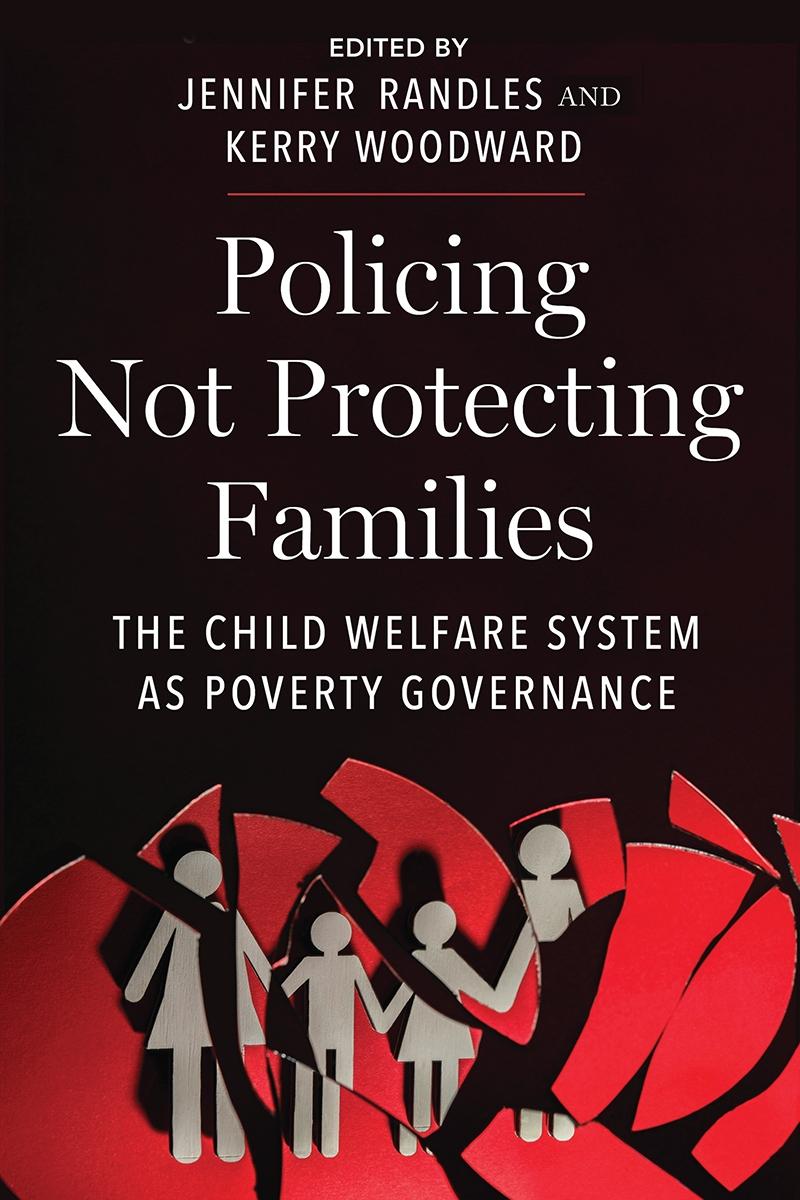
Controlling, surveilling, and punishing poor families through the child welfare system
In a typical year, one in five US children have some interaction with the child welfare system. Countless other families, particularly those who struggle to care for their children due to poverty or economic insecurity, fear child welfare system involvement. Though imagined as a system that protects children from caregivers’ maltreatment, contributors to Policing Not Protecting Families argue that the child welfare system polices and punishes poor parents who are unable to meet white, middle class parenting standards due to structural inequalities.
Bringing together scholars from anthropology, sociology, law, and social work, this collection is the first to critically examine the child welfare system’s role in governing poor, disproportionately Black and Native families. It shows that the child welfare system is a key site of poverty governance, or state control and management of poor families. Chapters bring together empirical research from diverse settings across the US, highlighting the system’s interactions with other state systems and its wide impact on marginalized families. Together the chapters illustrate the failure of the child welfare system to protect children and families from the structural inequalities that shape the lives of poor and other marginalized families.
Payez facilement par carte, Klarna, Apple Pay ou Google Pay. Pas satisfait ? Vous avez toujours une garantie de remboursement de 14 jours. En savoir plus dans nos conditions. Si vous avez des questions, envoyez-nous un e-mail à hello@memmo.org.
Memmo facilite tes études, où que tu sois dans le monde. On rassemble tes manuels de cours et des outils d'étude intelligents au même endroit : résumés, quiz, podcasts et flashcards. Et il y a Ted, ton compagnon d'étude qui répond à toutes tes questions. Plus de 50 000 étudiants étudient déjà ici – conçu pour t'aider à apprendre plus vite et à moins stresser.