
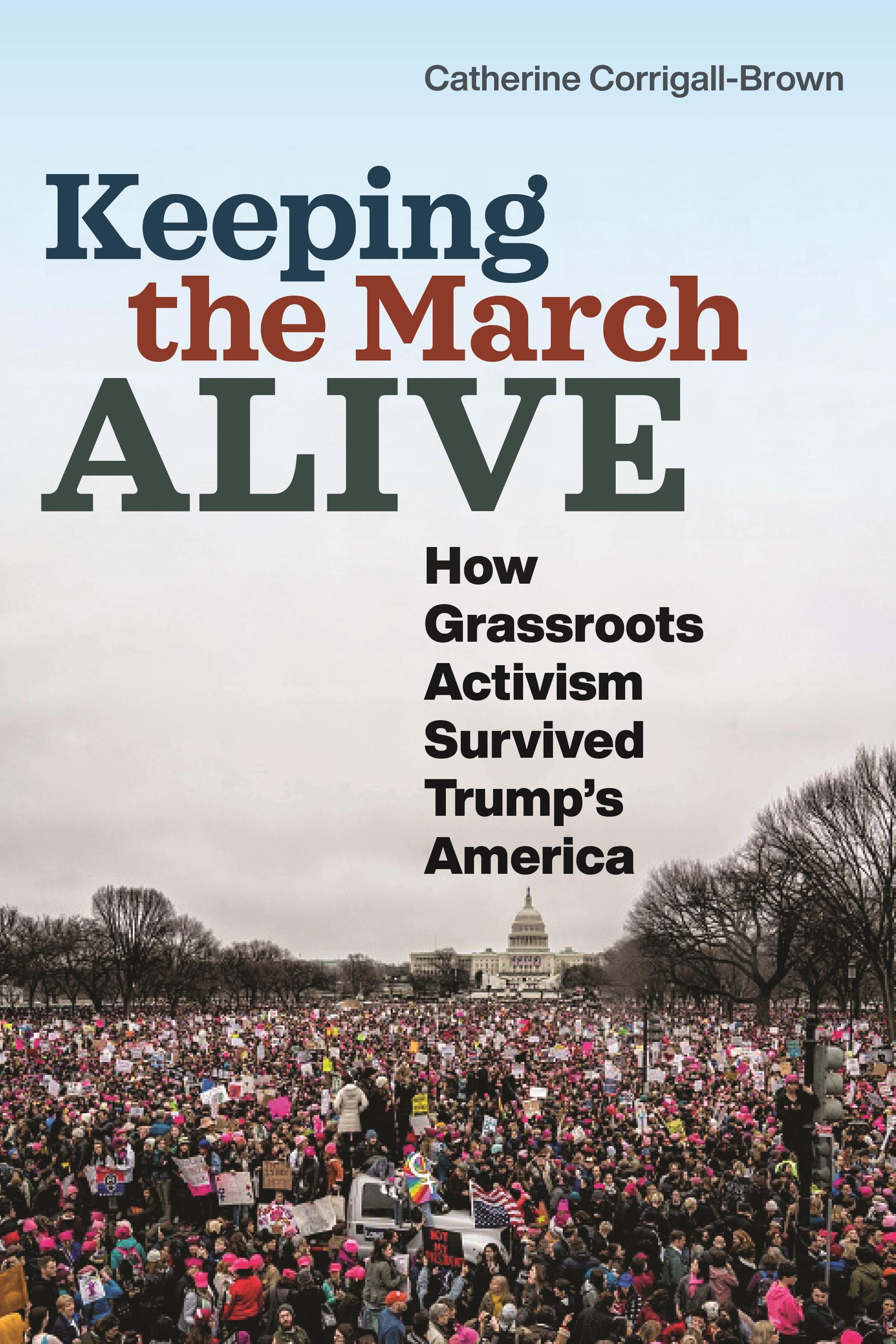
How activist groups across the country adapted their strategies and tactics to their local contexts to keep the protests alive
On January 21, 2017, the day after Trump's inauguration, feminist activists and allies across many progressive movements assembled across the United States to express their displeasure with the new President and his agenda. These marches were unprecedented in size, bringing together as many as 5.3 million Americans, with at least 408 protests in cities and towns across the country. These protests were large and dramatic, and had an outsized impact. But, they do not tell the whole story of this wave of contention.
Keeping the March Alive follows thirty-five progressive groups founded after the Women’s March across ten cities from Amarillo and Atlanta to Pasadena and Pittsburgh to tell the whole story of how some social movement organizations survive and thrive while others falter. Catherine Corrigall-Brown explains how activists navigate their local context and make strategic decisions about tactics, coalitions, individual participation, and online technologies to keep their movements alive. Movements that had the most success in keeping members engaged and active were those that were able to adjust their strategies to their particular local contexts. While in larger and more liberal cities, engaging in expressly political coalitions and cooperating only with other social movement organizations was the most successful strategy, fostering broad coalitions among churches, charities, and businesses was most successful in smaller, more conservative cities. Keeping the March Alive is instrumental in understanding how activism and activist groups can be sustained over time and how larger protest movements can last.
Payez facilement par carte, Klarna, Apple Pay ou Google Pay. Pas satisfait ? Vous avez toujours une garantie de remboursement de 14 jours. En savoir plus dans nos conditions. Si vous avez des questions, envoyez-nous un e-mail à hello@memmo.org.
Memmo facilite tes études, où que tu sois dans le monde. On rassemble tes manuels de cours et des outils d'étude intelligents au même endroit : résumés, quiz, podcasts et flashcards. Et il y a Ted, ton compagnon d'étude qui répond à toutes tes questions. Plus de 50 000 étudiants étudient déjà ici – conçu pour t'aider à apprendre plus vite et à moins stresser.