
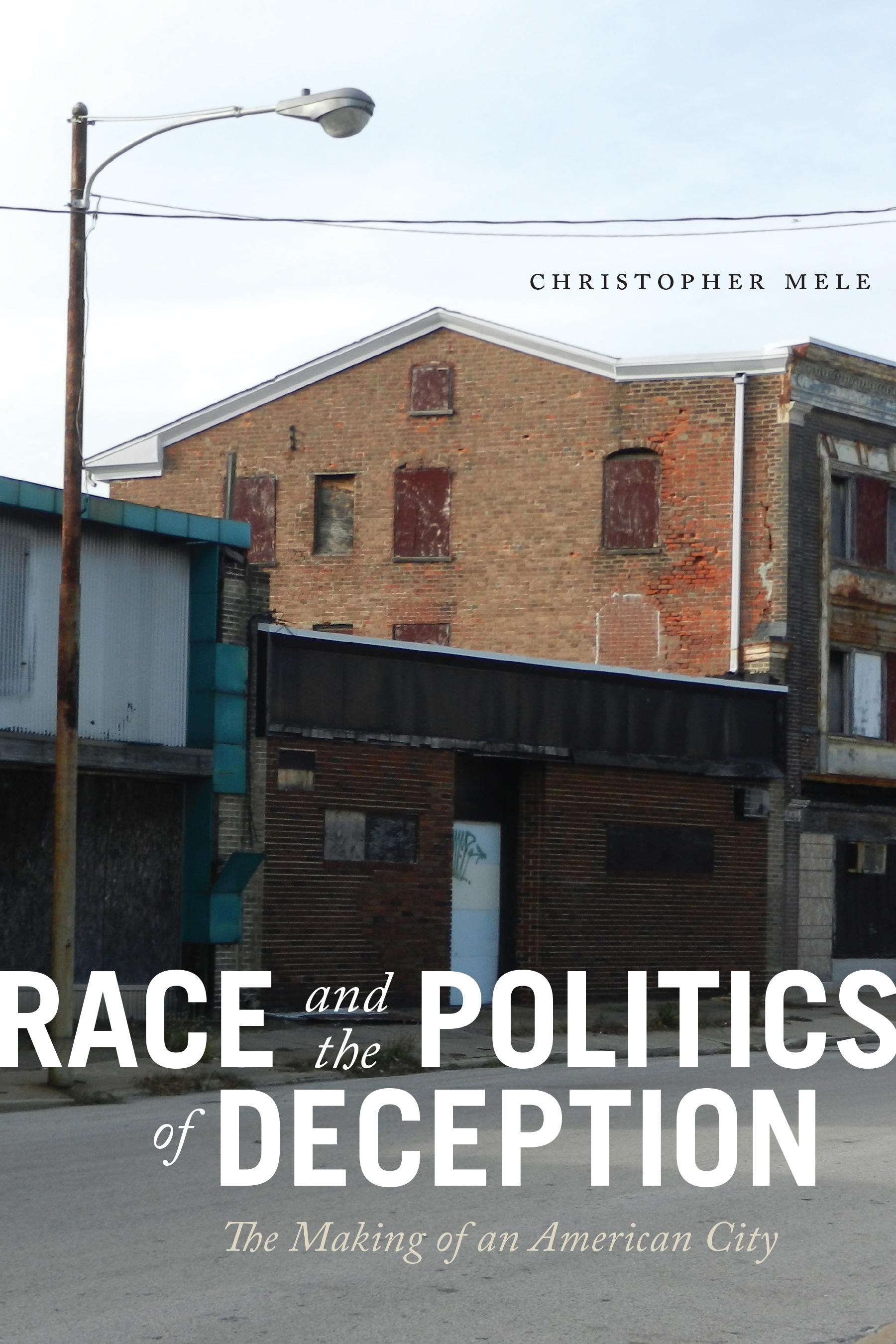
What is the relationship between race and space, and how do racial politics inform the organization and development of urban locales?
In Race and the Politics of Deception, Christopher Mele unpacks America’s history of dealing with racial problems through the inequitable use of public space. Mele focuses on Chester, Pennsylvania—a small city comprised of primarily low-income, black residents, roughly twenty miles south of Philadelphia. Like many cities throughout the United States, Chester is experiencing post-industrial decline. A development plan touted as a way to “save” the city, proposes to turn one section into a desirable waterfront destination, while leaving the rest of the struggling residents in fractured communities. Dividing the city into spaces of tourism and consumption versus the everyday spaces of low-income residents, Mele argues, segregates the community by creating a racialized divide. While these development plans are described as socially inclusive and economically revitalizing, Mele asserts that political leaders and real estate developers intentionally exclude certain types of people—most often, low-income people of color.
Race and the Politics of Deception provides a revealing look at how our ever-changing landscape is being strategically divided along lines of class and race.
Payez facilement par carte, Klarna, Apple Pay ou Google Pay. Pas satisfait ? Vous avez toujours une garantie de remboursement de 14 jours. En savoir plus dans nos conditions. Si vous avez des questions, envoyez-nous un e-mail à hello@memmo.org.
Memmo facilite tes études, où que tu sois dans le monde. On rassemble tes manuels de cours et des outils d'étude intelligents au même endroit : résumés, quiz, podcasts et flashcards. Et il y a Ted, ton compagnon d'étude qui répond à toutes tes questions. Plus de 50 000 étudiants étudient déjà ici – conçu pour t'aider à apprendre plus vite et à moins stresser.