
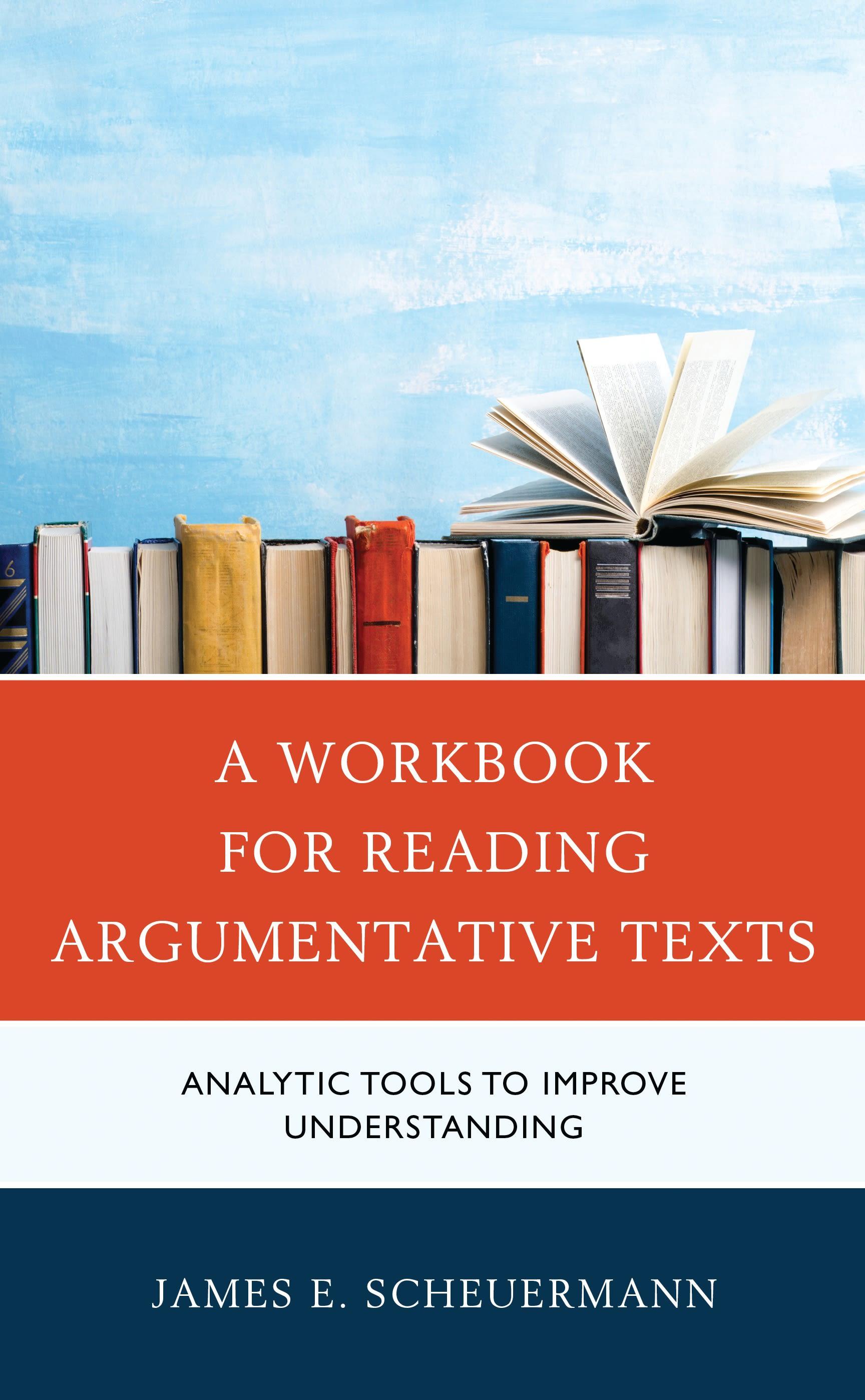
This Workbook is a collection of exercises and case studies designed to serve as a companion to Reading Argumentative Texts: Analytic Tools to Improve Understanding. The exercises and case studies track each of the chapters of Reading and provide opportunities for students to hone their skills at using the analytic tools presented in Reading, and to acquire additional analytic tools and concepts. These tools are illustrated through the analysis of complete essays from the mass media, speeches, a sermon, and passages from academic works.
The approach is flexible and practical and avoids academic jargon and specific theories of argumentation. As is the case with Reading, this Workbook is grounded in two principles. First, that the meaning of an argumentative text is to be found in the statements that constitute the argument itself, in other statements that are more or less directly related to the argument, and in the structure and context of the text. Accordingly, while this book discusses the analysis of arguments, argument-types, and errors in argumentation (fallacies), it focuses equally on the other sources of meaning of a text. Second, there is no single, authoritative reading of an argumentative text.
The interplay of these two premises informs the view that analyzing and understanding an argumentative text is an art and that, within certain well-defined parameters, there are “better” and “worse” readings of a text and not “right” or “wrong” readings.
The principal sources of meaning discussed include: (1) the structure of the text (and so the book examines six types of introductions and teaches how to outline and summarize), (2) key sentences, phrases, and words in a text (so the book discusses ambiguity, the difference between factual and normative statements, irony, and rhetoric), (3) context (intellectual, social, political, cultural, and physical context), and (4) the logical connections between terms in an argument (including the four different types of arguments, fallacies, and the distinction between necessary and sufficient conditions).
The book is designed to be used in late high school or early college critical reading, critical thinking, rhetoric, or writing courses.
The approach is flexible and practical and avoids academic jargon and specific theories of argumentation. As is the case with Reading, this Workbook is grounded in two principles. First, that the meaning of an argumentative text is to be found in the statements that constitute the argument itself, in other statements that are more or less directly related to the argument, and in the structure and context of the text. Accordingly, while this book discusses the analysis of arguments, argument-types, and errors in argumentation (fallacies), it focuses equally on the other sources of meaning of a text. Second, there is no single, authoritative reading of an argumentative text.
The interplay of these two premises informs the view that analyzing and understanding an argumentative text is an art and that, within certain well-defined parameters, there are “better” and “worse” readings of a text and not “right” or “wrong” readings.
The principal sources of meaning discussed include: (1) the structure of the text (and so the book examines six types of introductions and teaches how to outline and summarize), (2) key sentences, phrases, and words in a text (so the book discusses ambiguity, the difference between factual and normative statements, irony, and rhetoric), (3) context (intellectual, social, political, cultural, and physical context), and (4) the logical connections between terms in an argument (including the four different types of arguments, fallacies, and the distinction between necessary and sufficient conditions).
The book is designed to be used in late high school or early college critical reading, critical thinking, rhetoric, or writing courses.
Payez facilement par carte, Klarna, Apple Pay ou Google Pay. Pas satisfait ? Vous avez toujours une garantie de remboursement de 14 jours. En savoir plus dans nos conditions. Si vous avez des questions, envoyez-nous un e-mail à hello@memmo.org.
Memmo facilite tes études, où que tu sois dans le monde. On rassemble tes manuels de cours et des outils d'étude intelligents au même endroit : résumés, quiz, podcasts et flashcards. Et il y a Ted, ton compagnon d'étude qui répond à toutes tes questions. Plus de 50 000 étudiants étudient déjà ici – conçu pour t'aider à apprendre plus vite et à moins stresser.