
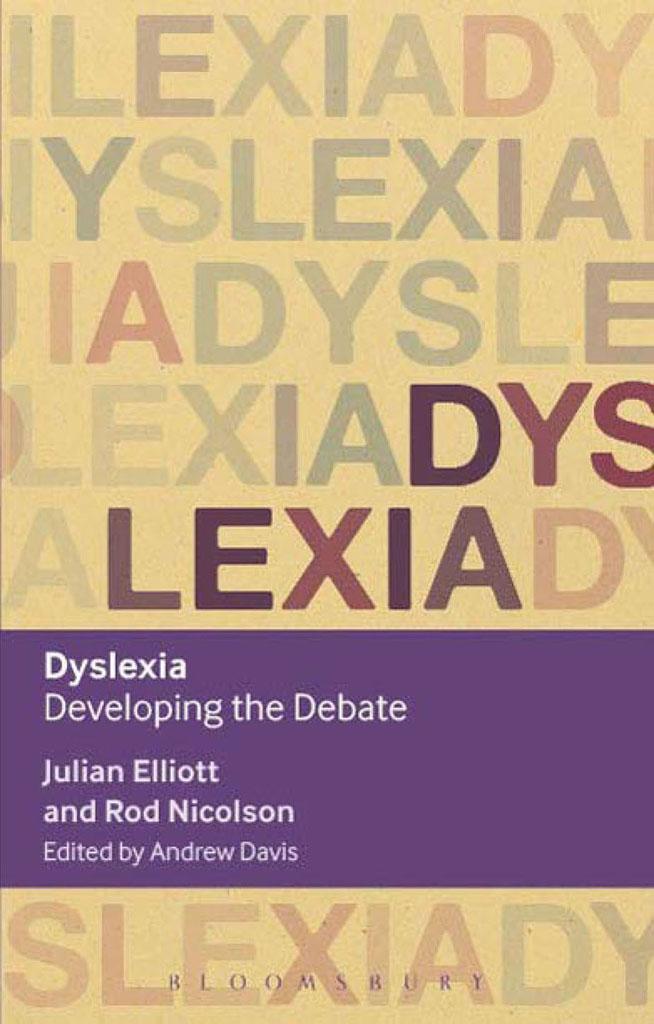
Dyslexia is often presented as a clearly delineated condition that can be diagnosed on the basis of appropriate cognitive tests with corresponding forms on intervention. However, this approachable text explores the issues behind this assertion in bringing together leading figures in the field to debate dyslexia.
Julian Elliott shows that understandings and usage of the dyslexia label vary substantially with little consensus or agreement and in putting forward his critique draws upon research in several disciplinary fields to demonstrate the irrationality of these arguments. Roderick I. Nicolson demonstrates that current approaches to understanding, identification and support of dyslexia are catastrophically flawed in terms of their failure to consider the developmental nature of dyslexia. He develops two themes: first that the underlying cause of dyslexia is 'delayed neural commitment' for skills and neural circuits, and second that the cause of the reading disability is the introduction of formal instruction before the dyslexic child's neural circuits for executive function are sufficiently developed. He argues that a more effective and cost-effective approach to identification and support involves 'assessment for dyslexia' rather than 'of dyslexia'. Elliott and Nicolson respond to the points each other raise before Andrew Davis investigates how far the key claims of Elliott and Nicolson can withstand close conceptual investigation, and explores the inherent limitations of scientific research on this topic, given the value and conceptual issues concerned.
Julian Elliott shows that understandings and usage of the dyslexia label vary substantially with little consensus or agreement and in putting forward his critique draws upon research in several disciplinary fields to demonstrate the irrationality of these arguments. Roderick I. Nicolson demonstrates that current approaches to understanding, identification and support of dyslexia are catastrophically flawed in terms of their failure to consider the developmental nature of dyslexia. He develops two themes: first that the underlying cause of dyslexia is 'delayed neural commitment' for skills and neural circuits, and second that the cause of the reading disability is the introduction of formal instruction before the dyslexic child's neural circuits for executive function are sufficiently developed. He argues that a more effective and cost-effective approach to identification and support involves 'assessment for dyslexia' rather than 'of dyslexia'. Elliott and Nicolson respond to the points each other raise before Andrew Davis investigates how far the key claims of Elliott and Nicolson can withstand close conceptual investigation, and explores the inherent limitations of scientific research on this topic, given the value and conceptual issues concerned.
Payez facilement par carte, Klarna, Apple Pay ou Google Pay. Pas satisfait ? Vous avez toujours une garantie de remboursement de 14 jours. En savoir plus dans nos conditions. Si vous avez des questions, envoyez-nous un e-mail à hello@memmo.org.
Memmo facilite tes études, où que tu sois dans le monde. On rassemble tes manuels de cours et des outils d'étude intelligents au même endroit : résumés, quiz, podcasts et flashcards. Et il y a Ted, ton compagnon d'étude qui répond à toutes tes questions. Plus de 50 000 étudiants étudient déjà ici – conçu pour t'aider à apprendre plus vite et à moins stresser.