
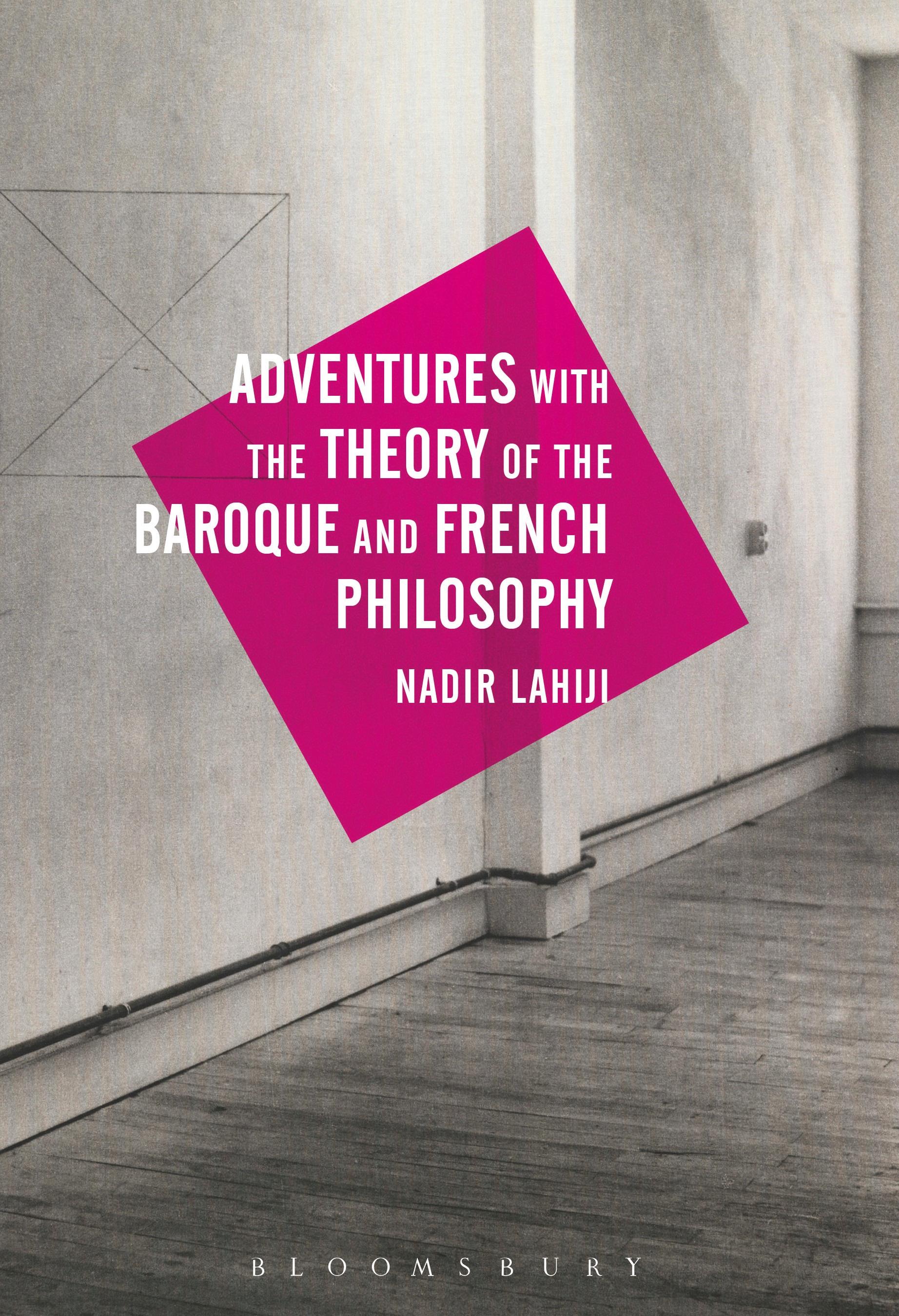
Analysing the reception of contemporary French philosophy in architecture over the last four decades, Adventures with the Theory of the Baroque and French Philosophy discusses the problematic nature of importing philosophical categories into architecture.
Focusing particularly on the philosophical notion of the Baroque in Gilles Deleuze, this study examines traditional interpretations of the concept in contemporary architecture theory, throwing up specific problems such as the aestheticization of building theory and practice. Identifying these and other issues, Nadir Lahiji constructs a concept of the baroque in contrast to the contemporary understanding in architecture discourse. Challenging the contemporary dominance of the Neo-Baroque as a phenomenon related to postmodernism and late capitalism, he establishes the Baroque as a name for the paradoxical unity of 'kitsch' and 'high' art and argues that the digital turn has enhanced the return of the Baroque in contemporary culture and architectural practice that he brands a pseudo-event in the term 'neobaroque'. Lahiji's original critique expands on the misadventure of architecture with French Philosophy and explains why the category of the Baroque, if it is still useful to keep in architecture criticism, must be tied to the notion of Post-Rationalism. Within this latter notion, he draws on the work of Alain Badiou to theorize a new concept of the Baroque as Event.
Alongside close readings of Walter Benjamin, Theodor Adorno and Michel Foucault related to the criticism of the Baroque and Modernity and discussions of the work of Frank Gehry, in particular, this study draws on Jacque Lacan's concept of the baroque and presents the first comprehensive treatment of the psychoanalytical theory of the Baroque in the work of Lacan.
Focusing particularly on the philosophical notion of the Baroque in Gilles Deleuze, this study examines traditional interpretations of the concept in contemporary architecture theory, throwing up specific problems such as the aestheticization of building theory and practice. Identifying these and other issues, Nadir Lahiji constructs a concept of the baroque in contrast to the contemporary understanding in architecture discourse. Challenging the contemporary dominance of the Neo-Baroque as a phenomenon related to postmodernism and late capitalism, he establishes the Baroque as a name for the paradoxical unity of 'kitsch' and 'high' art and argues that the digital turn has enhanced the return of the Baroque in contemporary culture and architectural practice that he brands a pseudo-event in the term 'neobaroque'. Lahiji's original critique expands on the misadventure of architecture with French Philosophy and explains why the category of the Baroque, if it is still useful to keep in architecture criticism, must be tied to the notion of Post-Rationalism. Within this latter notion, he draws on the work of Alain Badiou to theorize a new concept of the Baroque as Event.
Alongside close readings of Walter Benjamin, Theodor Adorno and Michel Foucault related to the criticism of the Baroque and Modernity and discussions of the work of Frank Gehry, in particular, this study draws on Jacque Lacan's concept of the baroque and presents the first comprehensive treatment of the psychoanalytical theory of the Baroque in the work of Lacan.
Payez facilement par carte, Klarna, Apple Pay ou Google Pay. Pas satisfait ? Vous avez toujours une garantie de remboursement de 14 jours. En savoir plus dans nos conditions. Si vous avez des questions, envoyez-nous un e-mail à hello@memmo.org.
Memmo facilite tes études, où que tu sois dans le monde. On rassemble tes manuels de cours et des outils d'étude intelligents au même endroit : résumés, quiz, podcasts et flashcards. Et il y a Ted, ton compagnon d'étude qui répond à toutes tes questions. Plus de 50 000 étudiants étudient déjà ici – conçu pour t'aider à apprendre plus vite et à moins stresser.