
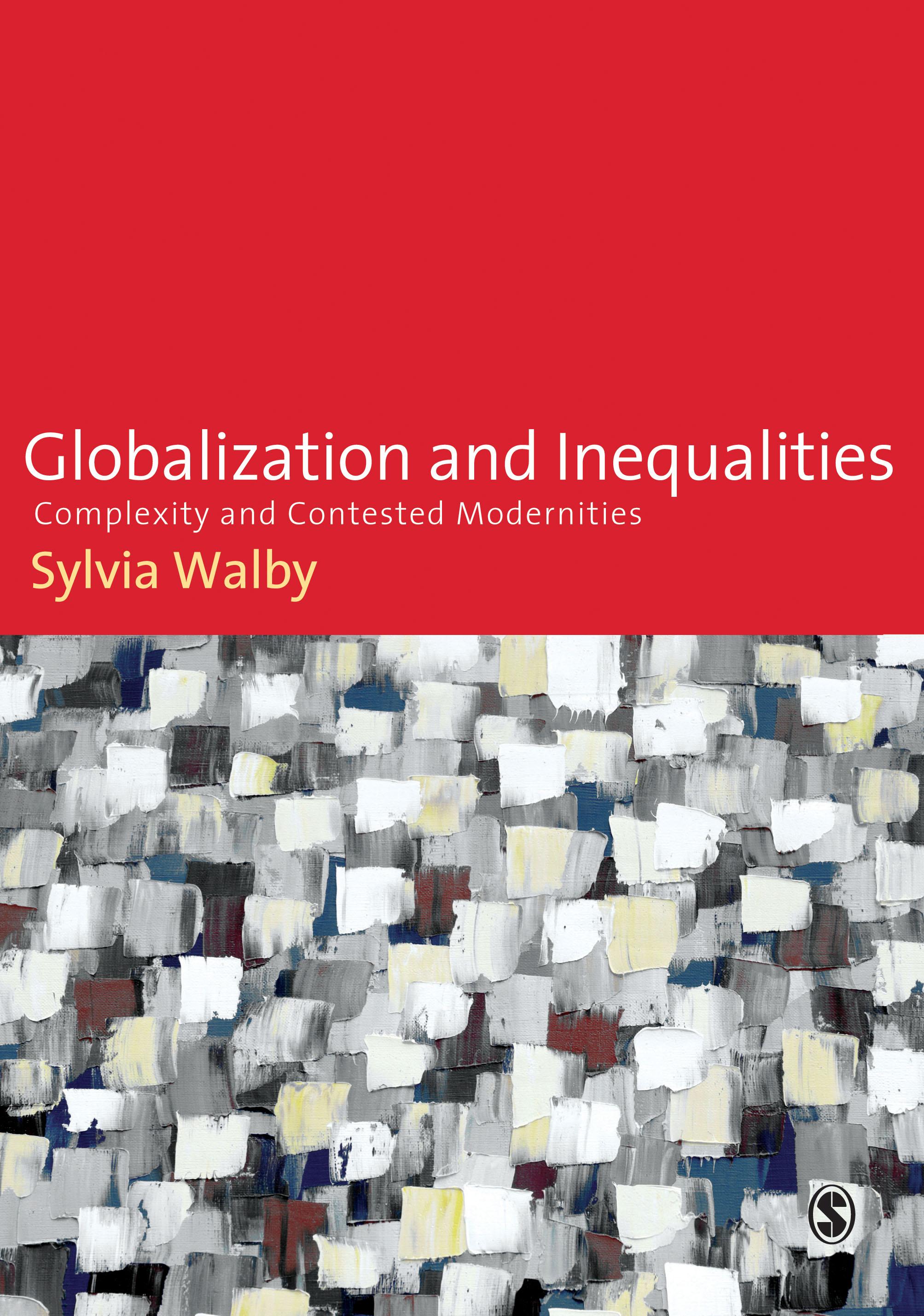
How has globalization changed social inequality? Why do Americans die younger than Europeans, despite larger incomes? Is there an alternative to neoliberalism? Who are the champions of social democracy? Why are some countries more violent than others?
In this groundbreaking book, Sylvia Walby examines the many changing forms of social inequality and their intersectionalities at both country and global levels. She shows how the contest between different modernities and conceptions of progress shape the present and future.
The book re-thinks the nature of economy, polity, civil society and violence. It places globalization and inequalities at the centre of an innovative new understanding of modernity and progress and demonstrates the power of these theoretical reformulations in practice, drawing on global data and in-depth analysis of the US and EU.
Walby analyses the tensions between the different forces that are shaping global futures. She examines the regulation and deregulation of employment and welfare; domestic and public gender regimes; secular and religious polities; path dependent trajectories and global political waves; and global inequalities and human rights.
In this groundbreaking book, Sylvia Walby examines the many changing forms of social inequality and their intersectionalities at both country and global levels. She shows how the contest between different modernities and conceptions of progress shape the present and future.
The book re-thinks the nature of economy, polity, civil society and violence. It places globalization and inequalities at the centre of an innovative new understanding of modernity and progress and demonstrates the power of these theoretical reformulations in practice, drawing on global data and in-depth analysis of the US and EU.
Walby analyses the tensions between the different forces that are shaping global futures. She examines the regulation and deregulation of employment and welfare; domestic and public gender regimes; secular and religious polities; path dependent trajectories and global political waves; and global inequalities and human rights.
Payez facilement par carte, Klarna, Apple Pay ou Google Pay. Pas satisfait ? Vous avez toujours une garantie de remboursement de 14 jours. En savoir plus dans nos conditions. Si vous avez des questions, envoyez-nous un e-mail à hello@memmo.org.
Memmo facilite tes études, où que tu sois dans le monde. On rassemble tes manuels de cours et des outils d'étude intelligents au même endroit : résumés, quiz, podcasts et flashcards. Et il y a Ted, ton compagnon d'étude qui répond à toutes tes questions. Plus de 50 000 étudiants étudient déjà ici – conçu pour t'aider à apprendre plus vite et à moins stresser.