
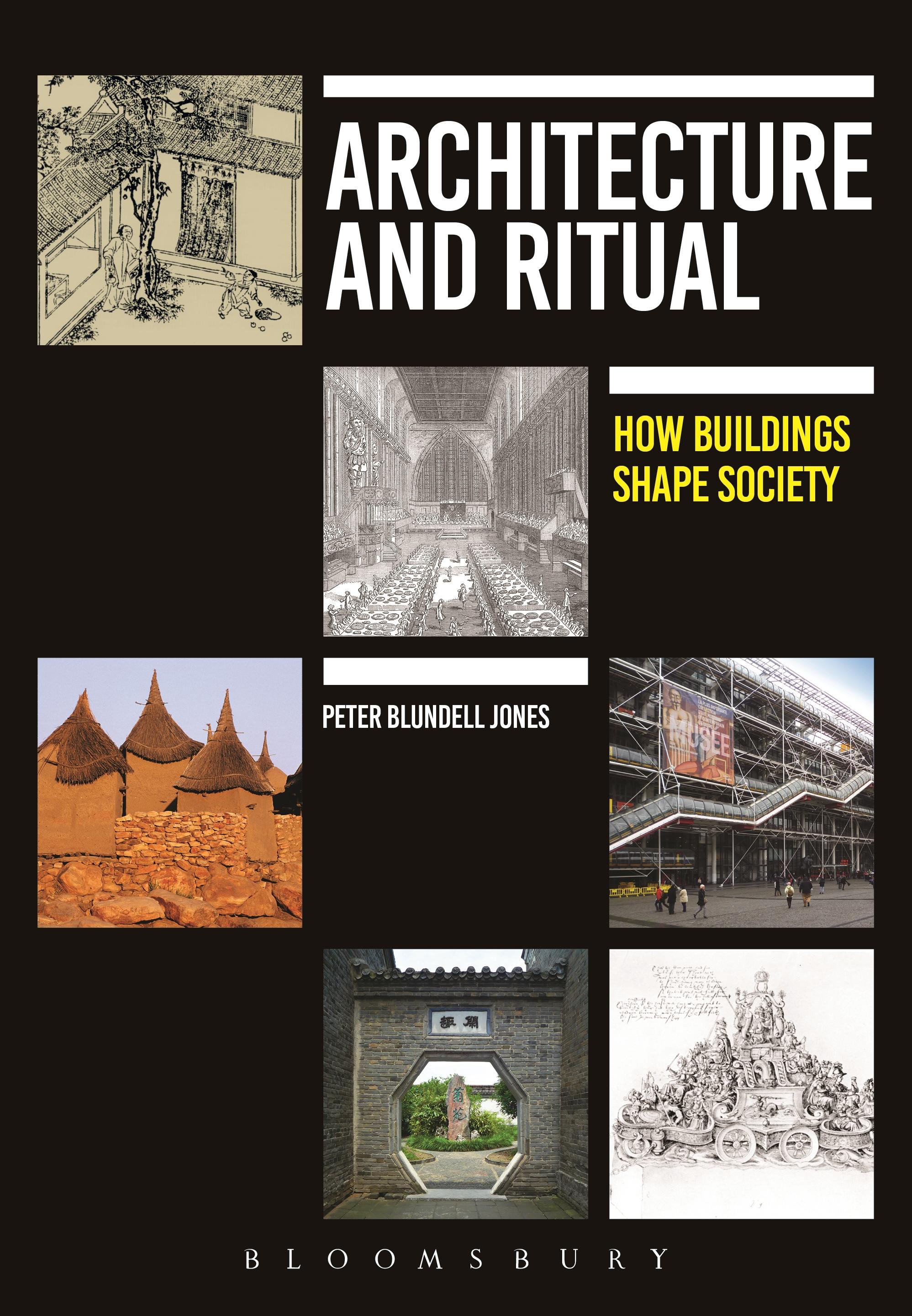
Architecture and Ritual explores how the varied rituals of everyday life are framed and defined in space by the buildings which we inhabit. It penetrates beyond traditional assumptions about architectural style, aesthetics and utility to deal with something more implicit: how buildings shape and reflect our experience in ways of which we remain unconscious.
Whether designed to house a grand ceremony or provide shelter for a daily meal, all buildings coordinate and consolidate social relations by giving orientation and focus to the spatial practices of those who use them. Peter Blundell Jones investigates these connections between the social and the spatial, providing critical insights into the capacity for architecture to structure human ritual, from the grand and formal to the mundane. This is achieved through deep readings of individual pieces of architecture, each with a detailed description of its particular social setting and use. The case studies are drawn from throughout architectural history and from around the globe, each enabling a distinct theoretical theme to emerge, and showing how social conventions vary with time and place, as well as what they have in common. Case studies range from the Nuremberg Rally to the Centre Pompidou, and from the Palace of Westminster to Dogon dwellings in Africa and a Modernist hospital.
In considering how all architecture has to mesh with the habits, beliefs, rituals and expectations of the society that created it, the book presents deep implications for our understanding of architectural history and theory. It also highlights the importance for architects of understanding how buildings frame social space before they prescribe new architectural designs of their own. The book ends with a recent example of user participation, showing how contemporary user interest and commitment to a building can be as strong as ever.
Whether designed to house a grand ceremony or provide shelter for a daily meal, all buildings coordinate and consolidate social relations by giving orientation and focus to the spatial practices of those who use them. Peter Blundell Jones investigates these connections between the social and the spatial, providing critical insights into the capacity for architecture to structure human ritual, from the grand and formal to the mundane. This is achieved through deep readings of individual pieces of architecture, each with a detailed description of its particular social setting and use. The case studies are drawn from throughout architectural history and from around the globe, each enabling a distinct theoretical theme to emerge, and showing how social conventions vary with time and place, as well as what they have in common. Case studies range from the Nuremberg Rally to the Centre Pompidou, and from the Palace of Westminster to Dogon dwellings in Africa and a Modernist hospital.
In considering how all architecture has to mesh with the habits, beliefs, rituals and expectations of the society that created it, the book presents deep implications for our understanding of architectural history and theory. It also highlights the importance for architects of understanding how buildings frame social space before they prescribe new architectural designs of their own. The book ends with a recent example of user participation, showing how contemporary user interest and commitment to a building can be as strong as ever.
Pages: 392
Catégorie: Arkitektur & Stadsplanering
e-ISBN: 9781472577498
Poids d'expédition: 1.2 kg
Expédié sous: 1-2 jours
Payez facilement par carte, Klarna, Apple Pay ou Google Pay. Pas satisfait ? Vous avez toujours une garantie de remboursement de 14 jours. En savoir plus dans nos conditions. Si vous avez des questions, envoyez-nous un e-mail à hello@memmo.org.
Memmo facilite tes études, où que tu sois dans le monde. On rassemble tes manuels de cours et des outils d'étude intelligents au même endroit : résumés, quiz, podcasts et flashcards. Et il y a Ted, ton compagnon d'étude qui répond à toutes tes questions. Plus de 50 000 étudiants étudient déjà ici – conçu pour t'aider à apprendre plus vite et à moins stresser.