
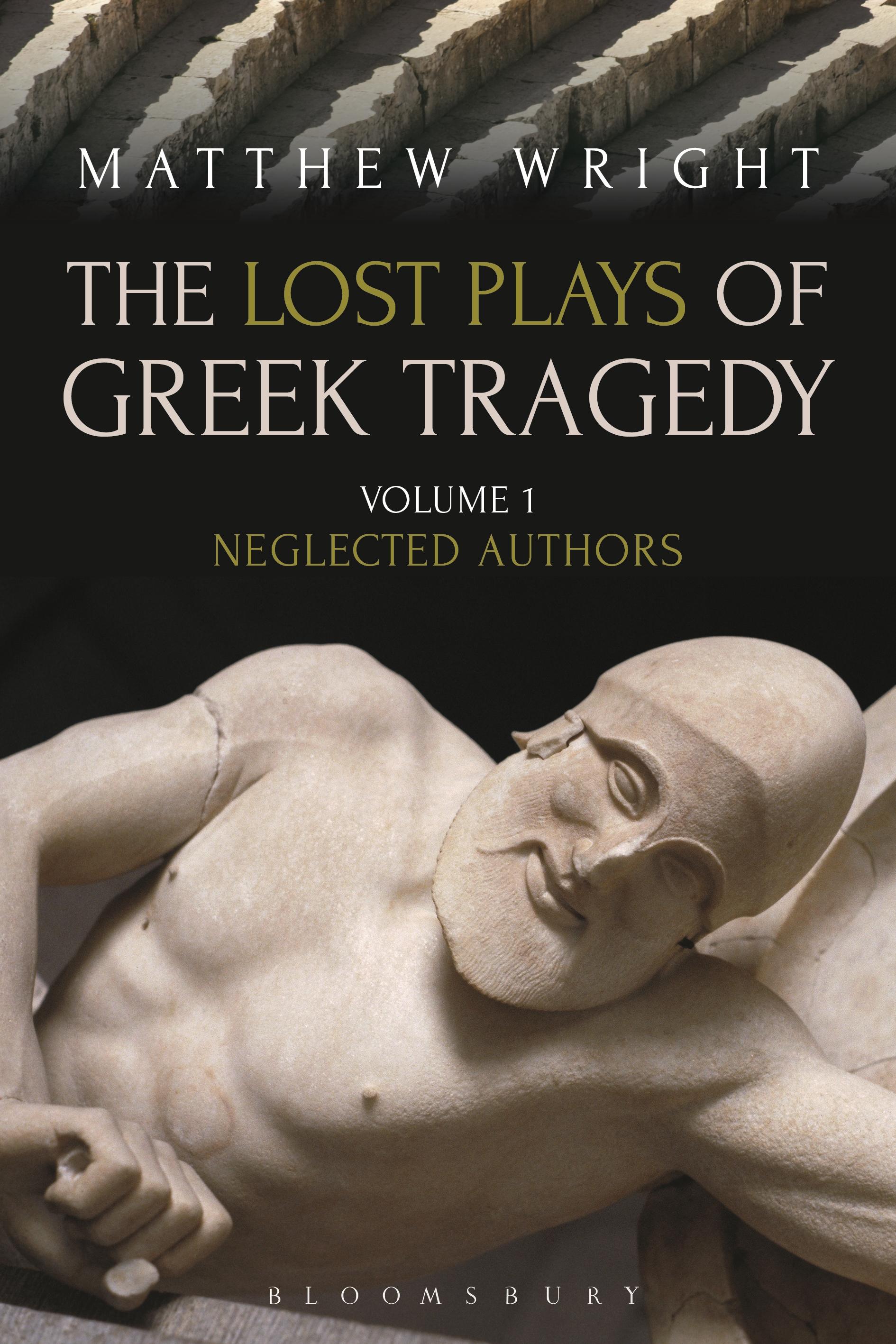
Numerous books have been written about Greek tragedy, but almost all of them are concerned with the 32 plays that still survive. This book, by contrast, concentrates on the plays that no longer exist. Hundreds of tragedies were performed in Athens and further afield during the classical period, and even though nearly all are lost, a certain amount is known about them through fragments and other types of evidence.
Matthew Wright offers an authoritative two-volume critical introduction and guide to the lost tragedies. This first volume examines the remains of works by playwrights such as Phrynichus, Agathon, Neophron, Critias, Astydamas, Chaeremon, and many others who have been forgotten or neglected. (Volume 2 explores the lost works of Aeschylus, Sophocles and Euripides.)
What types of evidence exist for lost tragedies, and how might we approach this evidence? How did these plays become lost or incompletely preserved? How can we explain why all tragedians except Aeschylus, Sophocles and Euripides became neglected or relegated to the status of 'minor' poets? What changes and continuities can be detected in tragedy after the fifth century BC? Can the study of lost works and neglected authors change our views of Greek tragedy as a genre? This book answers such questions through a detailed study of the fragments in their historical and literary context. Including English versions of previously untranslated fragments as well as in-depth discussion of their significance, The Lost Plays of Greek Tragedy makes these works accessible for the first time.
Matthew Wright offers an authoritative two-volume critical introduction and guide to the lost tragedies. This first volume examines the remains of works by playwrights such as Phrynichus, Agathon, Neophron, Critias, Astydamas, Chaeremon, and many others who have been forgotten or neglected. (Volume 2 explores the lost works of Aeschylus, Sophocles and Euripides.)
What types of evidence exist for lost tragedies, and how might we approach this evidence? How did these plays become lost or incompletely preserved? How can we explain why all tragedians except Aeschylus, Sophocles and Euripides became neglected or relegated to the status of 'minor' poets? What changes and continuities can be detected in tragedy after the fifth century BC? Can the study of lost works and neglected authors change our views of Greek tragedy as a genre? This book answers such questions through a detailed study of the fragments in their historical and literary context. Including English versions of previously untranslated fragments as well as in-depth discussion of their significance, The Lost Plays of Greek Tragedy makes these works accessible for the first time.
Pages: 312
Catégorie: Arkeologi & Antikvetenskap
e-ISBN: 9781472567772
Poids d'expédition: 1.2 kg
Expédié sous: 1-2 jours
Payez facilement par carte, Klarna, Apple Pay ou Google Pay. Pas satisfait ? Vous avez toujours une garantie de remboursement de 14 jours. En savoir plus dans nos conditions. Si vous avez des questions, envoyez-nous un e-mail à hello@memmo.org.
Memmo facilite tes études, où que tu sois dans le monde. On rassemble tes manuels de cours et des outils d'étude intelligents au même endroit : résumés, quiz, podcasts et flashcards. Et il y a Ted, ton compagnon d'étude qui répond à toutes tes questions. Plus de 50 000 étudiants étudient déjà ici – conçu pour t'aider à apprendre plus vite et à moins stresser.