
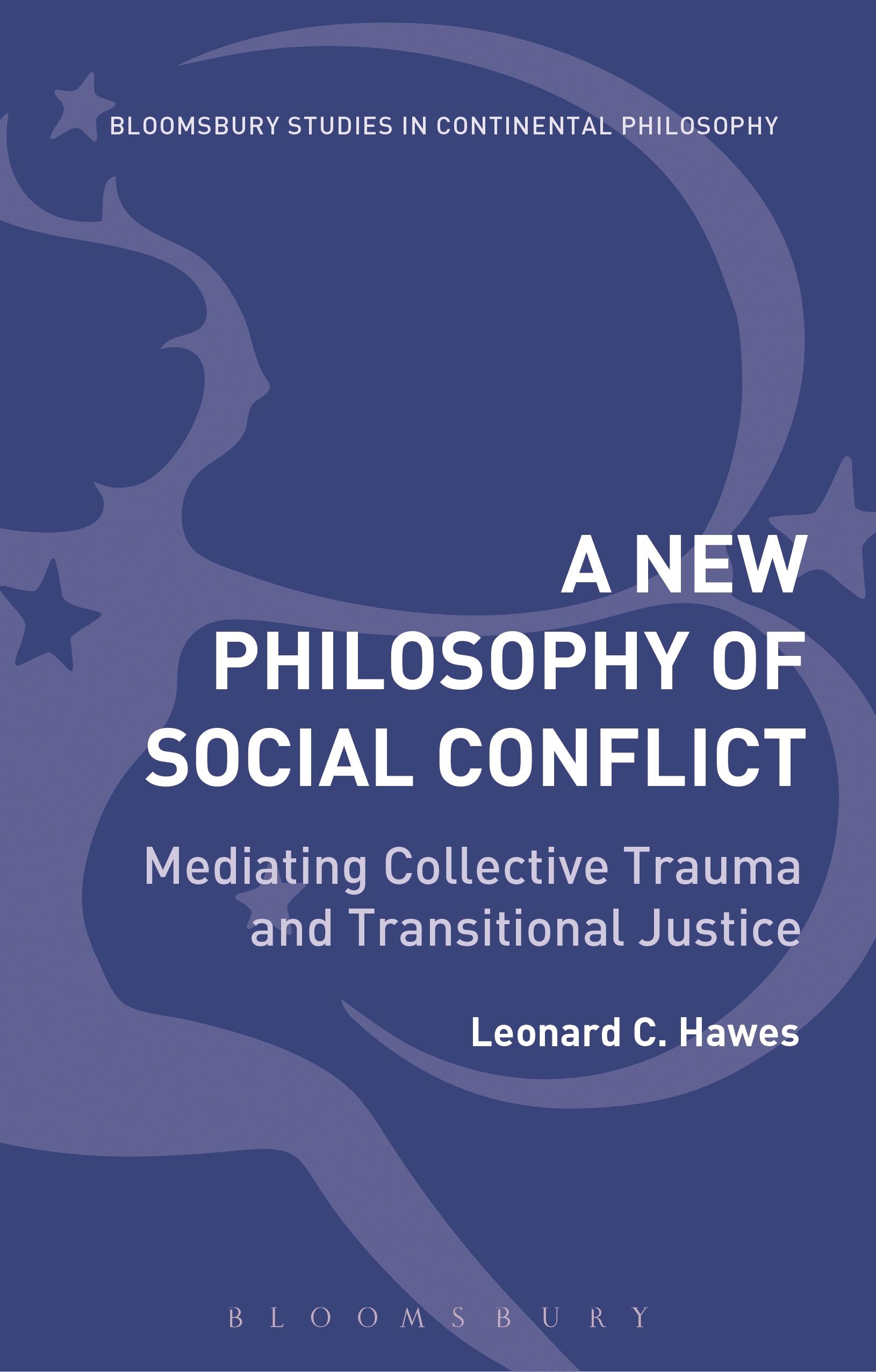
A New Philosophy of Social Conflict joins in the contemporary conflict resolution and transitional justice debates by contributing a Deleuze-Guattarian reading of the post-genocide justice and reconciliation experiment in Rwanda -the Gacaca courts. In doing so, Hawes addresses two significant problems for which the work of Deleuze and Guattari provides invaluable insight: how to live ethically with the consequences of conflict and trauma and how to negotiate the chaos of living through trauma, in ways that create self-organizing, discursive processes for resolving and reconciling these ontological dilemmas in life-affirming ways.
Hawes draws on Deleuze-Guattarian thinking to create new concepts that enable us to think more productively and to live more ethically in a world increasingly characterized by sociocultural trauma and conflict, and to imagine alternative ways of resolving and reconciling trauma and conflict.
Hawes draws on Deleuze-Guattarian thinking to create new concepts that enable us to think more productively and to live more ethically in a world increasingly characterized by sociocultural trauma and conflict, and to imagine alternative ways of resolving and reconciling trauma and conflict.
Payez facilement par carte, Klarna, Apple Pay ou Google Pay. Pas satisfait ? Vous avez toujours une garantie de remboursement de 14 jours. En savoir plus dans nos conditions. Si vous avez des questions, envoyez-nous un e-mail à hello@memmo.org.
Memmo facilite tes études, où que tu sois dans le monde. On rassemble tes manuels de cours et des outils d'étude intelligents au même endroit : résumés, quiz, podcasts et flashcards. Et il y a Ted, ton compagnon d'étude qui répond à toutes tes questions. Plus de 50 000 étudiants étudient déjà ici – conçu pour t'aider à apprendre plus vite et à moins stresser.