
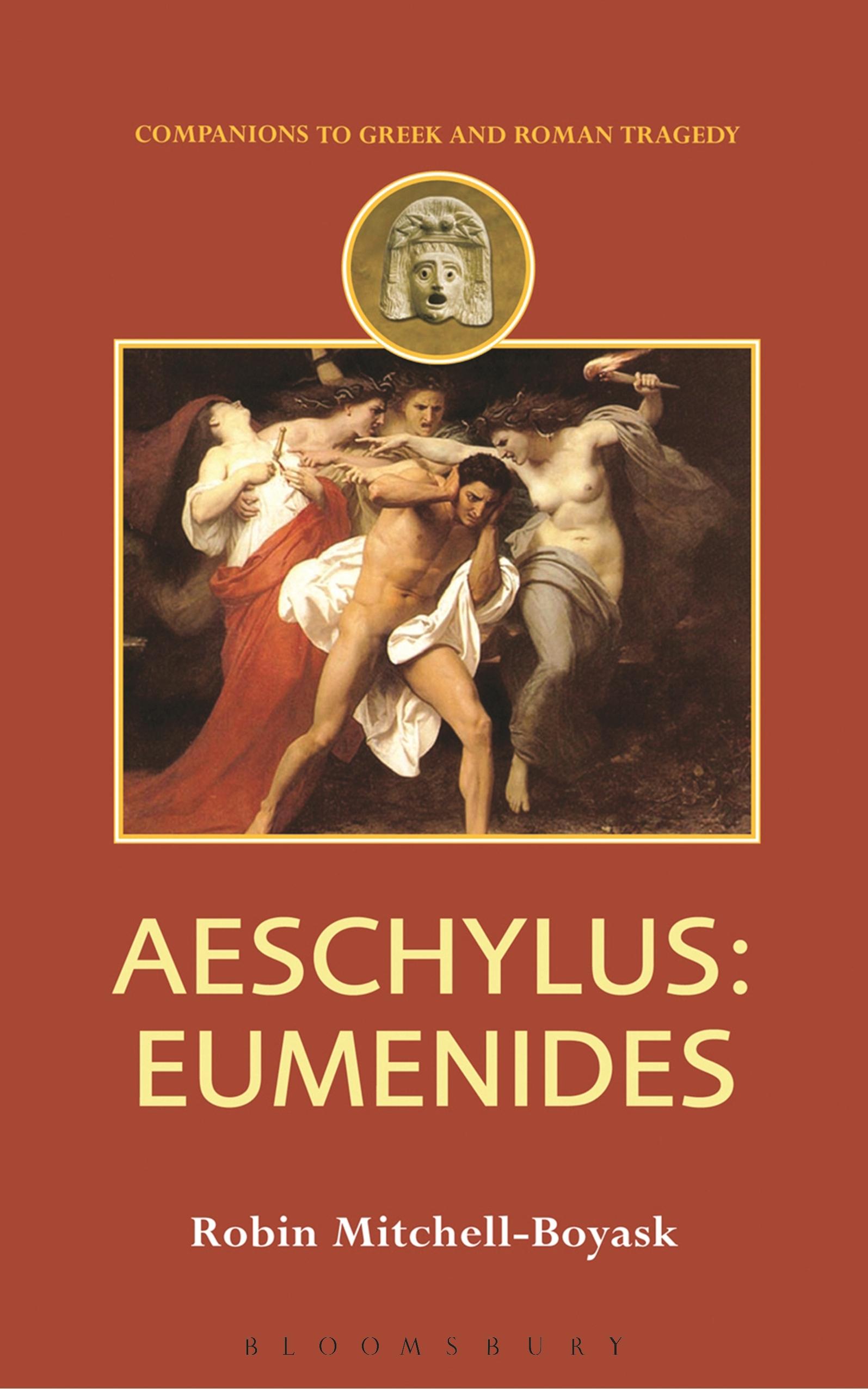
The "Eumenides", the concluding drama in Aeschylus' sole surviving trilogy, the "Oresteia", is not only one of the most admired Greek tragedies, but also one of the most controversial and contested, both to specialist scholars and public intellectuals. It stands at the crux of the controversies over the relationship between the fledgling democracy of Athens and the dramas it produced during the City Dionysia, and over the representation of women in the theatre and their implied status in Athenian society. The "Eumenides" enacts the trial of Agamemnon's son Orestes, who had been ordered under the threat of punishment by the god Apollo to murder his mother Clytemnestra, who had earlier killed Agamemnon.In the "Eumenides", Orestes, hounded by the Eumenides (Furies), travels first to Delphi to obtain ritual purgation of his mother's blood, and then, at Apollo's urging, to Athens to seek the help of Athena, who then decides herself that an impartial jury of Athenians should decide the matter. Aeschylus thus presents a drama that shows a growing awareness of the importance of free will in Athenian thought through the mythologized institution of the first jury trial.
Payez facilement par carte, Klarna, Apple Pay ou Google Pay. Pas satisfait ? Vous avez toujours une garantie de remboursement de 14 jours. En savoir plus dans nos conditions. Si vous avez des questions, envoyez-nous un e-mail à hello@memmo.org.
Memmo facilite tes études, où que tu sois dans le monde. On rassemble tes manuels de cours et des outils d'étude intelligents au même endroit : résumés, quiz, podcasts et flashcards. Et il y a Ted, ton compagnon d'étude qui répond à toutes tes questions. Plus de 50 000 étudiants étudient déjà ici – conçu pour t'aider à apprendre plus vite et à moins stresser.