
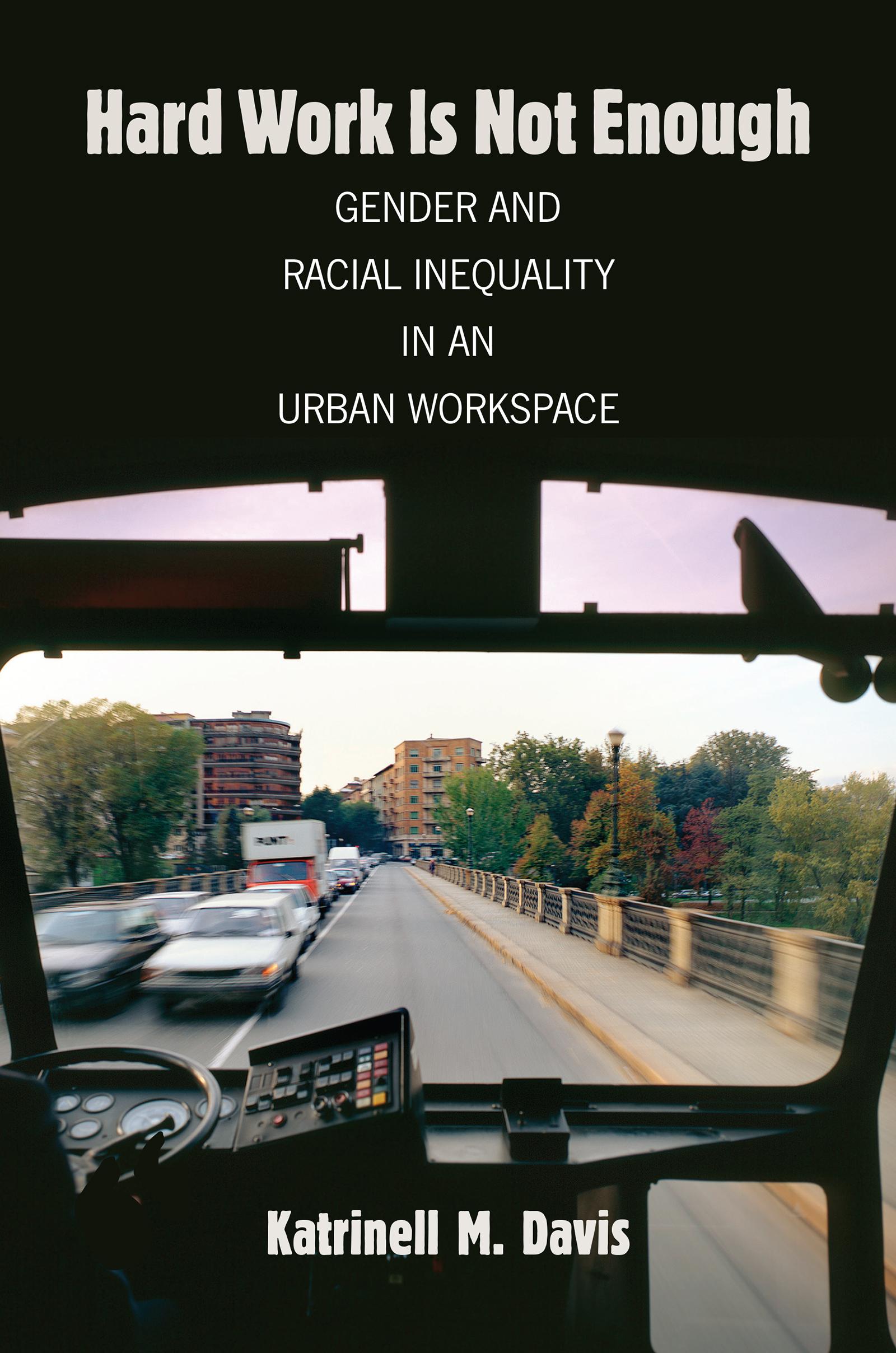
The Great Recession punished American workers, leaving many underemployed or trapped in jobs that did not provide the income or opportunities they needed. Moreover, the gap between the wealthy and the poor had widened in past decades as mobility remained stubbornly unchanged. Against this deepening economic divide, a dominant cultural narrative took root: immobility, especially for the working class, is driven by shifts in demand for labor. In this context, and with right-to-work policies proliferating nationwide, workers are encouraged to avoid government dependency by arming themselves with education and training.
Drawing on archival material and interviews with African American women transit workers in the San Francisco Bay Area, Katrinell Davis grapples with our understanding of mobility as it intersects with race and gender in the postindustrial and post–civil rights United States. Considering the consequences of declining working conditions within the public transit workplace of Alameda County, Davis illustrates how worker experience — on and off the job — has been undermined by workplace norms and administrative practices designed to address flagging worker commitment and morale. Providing a comprehensive account of how political, social, and economic factors work together to shape the culture of opportunity in a postindustrial workplace, she shows how government manpower policies, administrative policies, and drastic shifts in unionization have influenced the prospects of low-skilled workers.
Drawing on archival material and interviews with African American women transit workers in the San Francisco Bay Area, Katrinell Davis grapples with our understanding of mobility as it intersects with race and gender in the postindustrial and post–civil rights United States. Considering the consequences of declining working conditions within the public transit workplace of Alameda County, Davis illustrates how worker experience — on and off the job — has been undermined by workplace norms and administrative practices designed to address flagging worker commitment and morale. Providing a comprehensive account of how political, social, and economic factors work together to shape the culture of opportunity in a postindustrial workplace, she shows how government manpower policies, administrative policies, and drastic shifts in unionization have influenced the prospects of low-skilled workers.
Payez facilement par carte, Klarna, Apple Pay ou Google Pay. Pas satisfait ? Vous avez toujours une garantie de remboursement de 14 jours. En savoir plus dans nos conditions. Si vous avez des questions, envoyez-nous un e-mail à hello@memmo.org.
Memmo facilite tes études, où que tu sois dans le monde. On rassemble tes manuels de cours et des outils d'étude intelligents au même endroit : résumés, quiz, podcasts et flashcards. Et il y a Ted, ton compagnon d'étude qui répond à toutes tes questions. Plus de 50 000 étudiants étudient déjà ici – conçu pour t'aider à apprendre plus vite et à moins stresser.
Tu pourrais aussi aimer
Acheter le livre0