
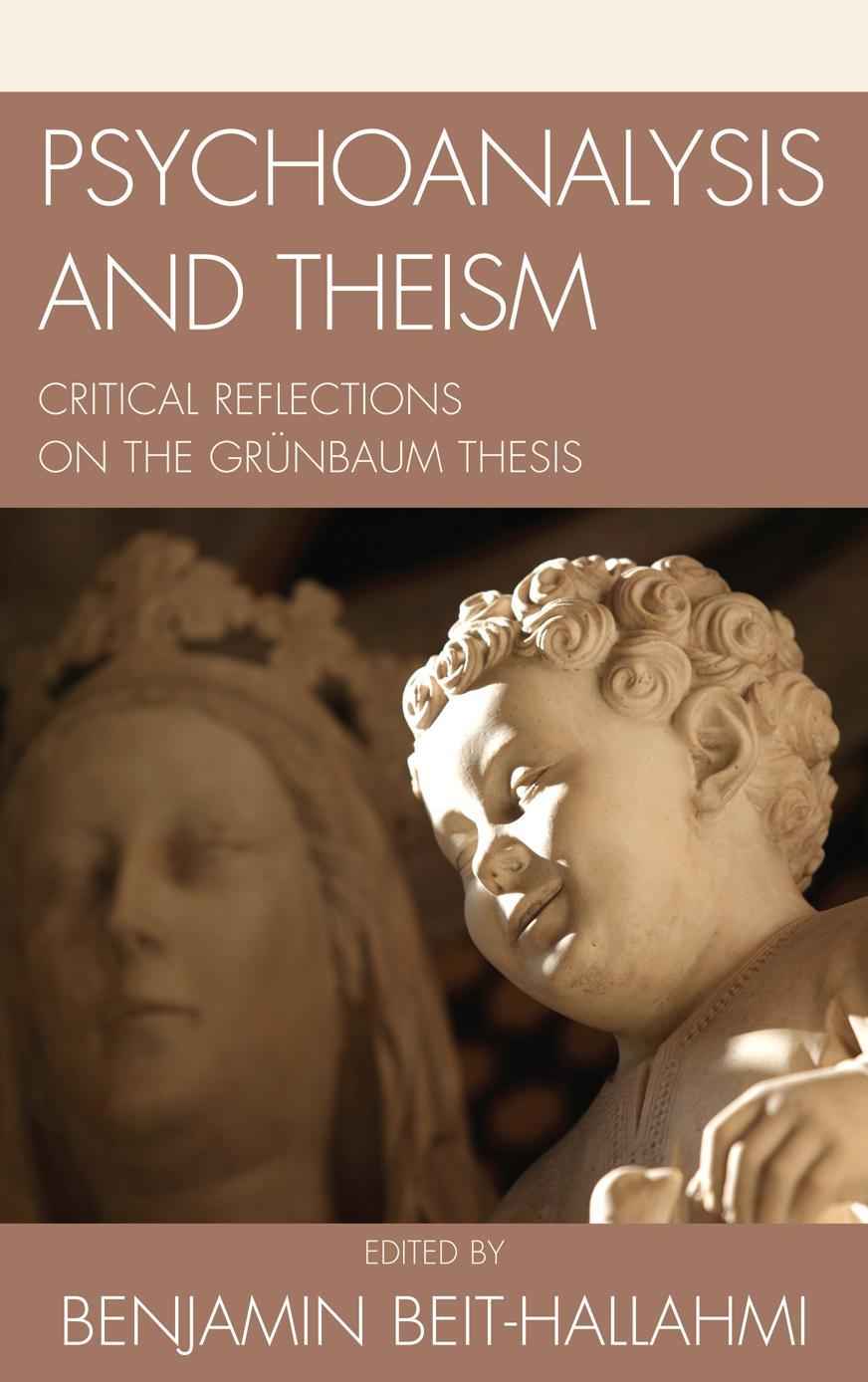
How should we approach the psychological study of religion, and how relevant is classical psychoanalysis, identified with the writings of Sigmund Freud, to the understanding of religion? Freud's writings on religion have been discussed often and continue to attract attention and debate. Psychoanalysis and Theism starts with an essay by Adolf Grünbaum, one of the world's leading philosophers of science and an incisive critic of Freud's work. Grünbaum looks at Freud's general claims about the psychological mechanisms involved in religion and finds them lacking. Then, in a surprising turn, Grünbaum judges some of Freud's interpretations of concrete religious ideas and practices to be not only cogent, but indispensable. When it comes to the case of the belief in Virgin Birth, Grünbaum finds an Oedipal interpretation to be our only choice.
This remarkable essay is the stimulus for a symposium with nine senior scholars, coming from the fields of philosophy, psychology, sociology, and psychoanalysis, who present their critical reflections on how we should study religion, how we should treat Freud's ideas, and what the future directions in psychological research on concrete religious behavior should be. The contributors bring to this effort their varied fields of expertise, from analytical philosophy to experimental psychology. Of special interest are essays which deal with the Virgin Birth doctrine and its possible psychological sources and with the potential for future psychoanalytic studies of faith and ritual. Other essays focus on Freud's conscious and unconscious motivations for studying religion as well as the hidden biases and lacunae found in the social science literature on religious practices.
This volume adds a unique combination of critical and knowledgeable voices to the debate on Sigmund Freud's legacy.
This remarkable essay is the stimulus for a symposium with nine senior scholars, coming from the fields of philosophy, psychology, sociology, and psychoanalysis, who present their critical reflections on how we should study religion, how we should treat Freud's ideas, and what the future directions in psychological research on concrete religious behavior should be. The contributors bring to this effort their varied fields of expertise, from analytical philosophy to experimental psychology. Of special interest are essays which deal with the Virgin Birth doctrine and its possible psychological sources and with the potential for future psychoanalytic studies of faith and ritual. Other essays focus on Freud's conscious and unconscious motivations for studying religion as well as the hidden biases and lacunae found in the social science literature on religious practices.
This volume adds a unique combination of critical and knowledgeable voices to the debate on Sigmund Freud's legacy.
Payez facilement par carte, Klarna, Apple Pay ou Google Pay. Pas satisfait ? Vous avez toujours une garantie de remboursement de 14 jours. En savoir plus dans nos conditions. Si vous avez des questions, envoyez-nous un e-mail à hello@memmo.org.
Memmo facilite tes études, où que tu sois dans le monde. On rassemble tes manuels de cours et des outils d'étude intelligents au même endroit : résumés, quiz, podcasts et flashcards. Et il y a Ted, ton compagnon d'étude qui répond à toutes tes questions. Plus de 50 000 étudiants étudient déjà ici – conçu pour t'aider à apprendre plus vite et à moins stresser.