
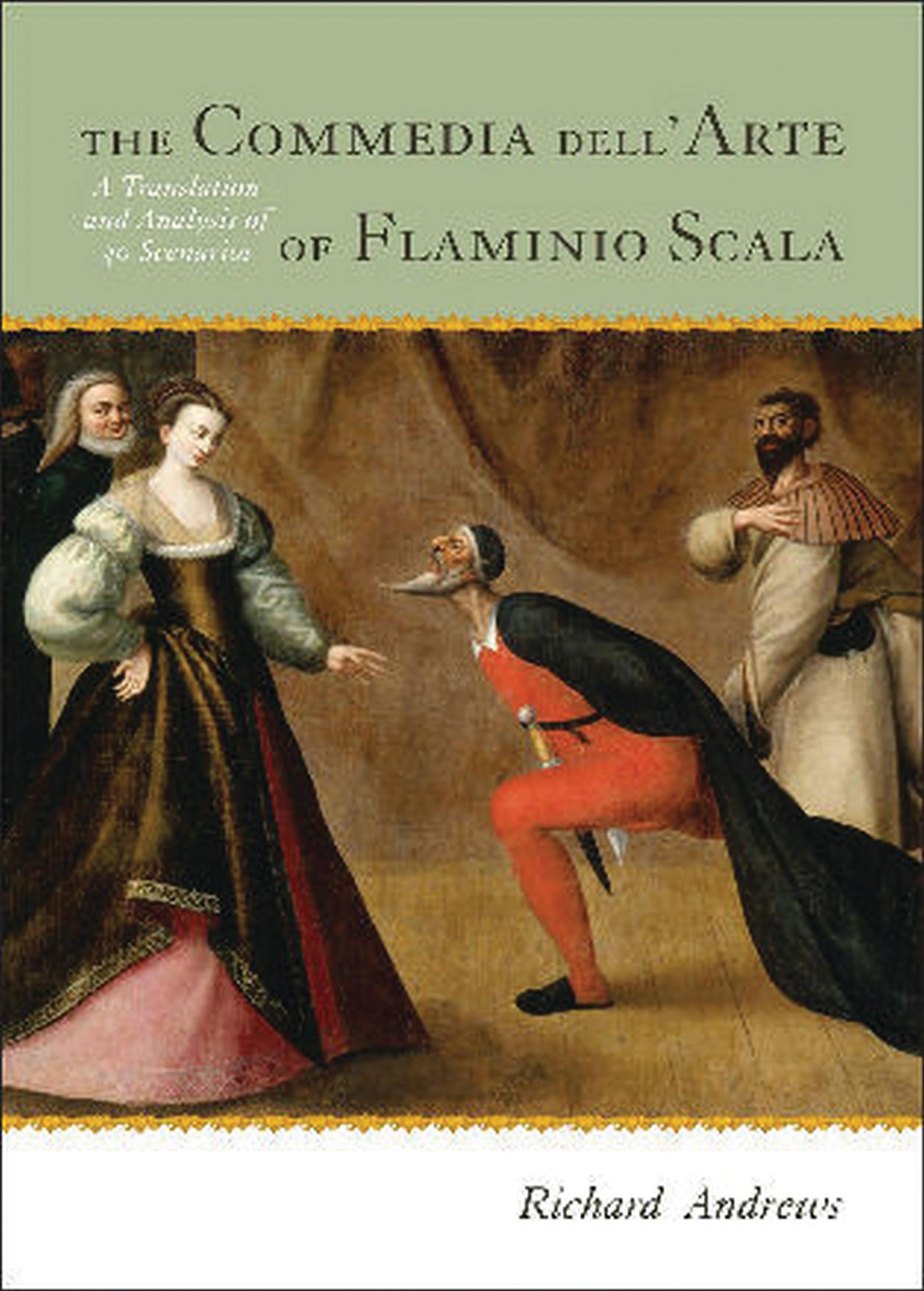
The Commedia dell'Arte of Flaminio Scala presents a translation and commentary of selected scenarios composed or collected by the actor-manager Flaminio Scala that were first published in 1611. Thirty of Scala's 50 scenarios are included, complete with a detailed scene-by-scene analysis that demonstrates the methodology of Italian improvised theatre in the early modern period for the purposes of study as well as re-creation.
Taking into consideration previous translations of the work, Richard Andrews's English translation and lengthy analytic commentary of the scenarios provide an overview of the commedia dell'arte style, describing how actors fleshed out scenes by inserting existing material from their repertoire into a plot framework and demonstrating a constant interchange of plot, characterization, and scene structure that moved between scripted and improvised comedy. Andrews points out similarities between the scenarios, borrowings from earlier Italian scripted comedies, analogies with other early modern drama including Shakespeare, and the re-use of these components by later dramatists such as Molière and Goldoni.
An extensive introduction sets the parameters for the commentaries, giving a description of commedia dell'arte as a phenomenon, explaining the categories of masked characters, and describing the nature and structure of the genre. A comprehensive index is organized for quick reference and lists which characters and masks appear in which scenarios, as well as frequent scenic components that recur, such as types of speeches, relationships, and emotional situations.
Taking into consideration previous translations of the work, Richard Andrews's English translation and lengthy analytic commentary of the scenarios provide an overview of the commedia dell'arte style, describing how actors fleshed out scenes by inserting existing material from their repertoire into a plot framework and demonstrating a constant interchange of plot, characterization, and scene structure that moved between scripted and improvised comedy. Andrews points out similarities between the scenarios, borrowings from earlier Italian scripted comedies, analogies with other early modern drama including Shakespeare, and the re-use of these components by later dramatists such as Molière and Goldoni.
An extensive introduction sets the parameters for the commentaries, giving a description of commedia dell'arte as a phenomenon, explaining the categories of masked characters, and describing the nature and structure of the genre. A comprehensive index is organized for quick reference and lists which characters and masks appear in which scenarios, as well as frequent scenic components that recur, such as types of speeches, relationships, and emotional situations.
Pages: 398
Catégorie: Drama, Teater & Scenkonst
e-ISBN: 9781461672616
Poids d'expédition: 1.2 kg
Expédié sous: 1-2 jours
Payez facilement par carte, Klarna, Apple Pay ou Google Pay. Pas satisfait ? Vous avez toujours une garantie de remboursement de 14 jours. En savoir plus dans nos conditions. Si vous avez des questions, envoyez-nous un e-mail à hello@memmo.org.
Memmo facilite tes études, où que tu sois dans le monde. On rassemble tes manuels de cours et des outils d'étude intelligents au même endroit : résumés, quiz, podcasts et flashcards. Et il y a Ted, ton compagnon d'étude qui répond à toutes tes questions. Plus de 50 000 étudiants étudient déjà ici – conçu pour t'aider à apprendre plus vite et à moins stresser.