
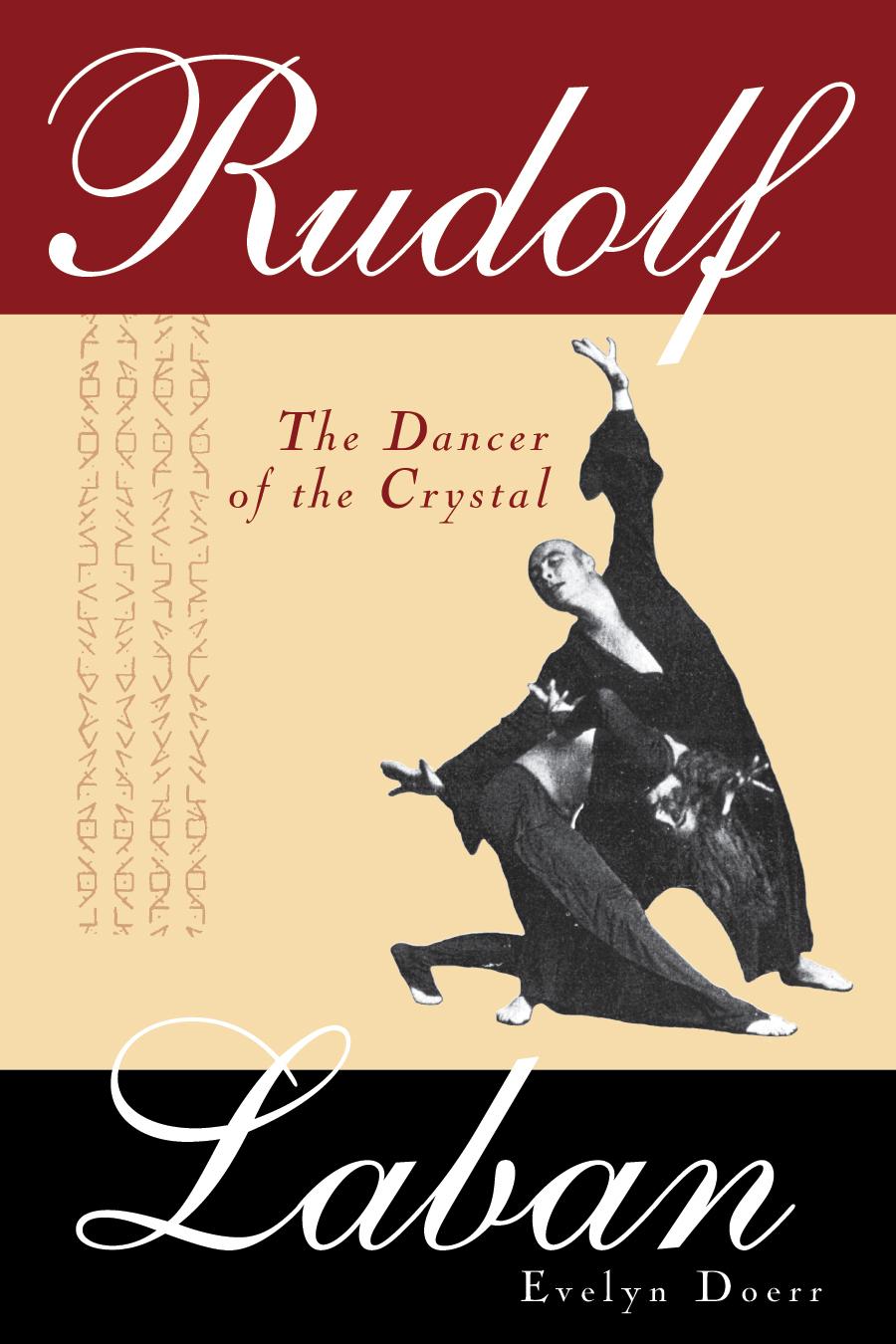
Rudolf Laban, the famed dancer-choreographer and 'founding father' of modern dance, also had experience as a painter, sculptor, and architect, and allowed those skills to influence his innovative choreographic techniques. His important works and his creation of one of the most significant forms of dance notation make him an essential component of dance history. Rudolf Laban: The Dancer of the Crystal examines Laban's training, his teaching experiences, and the discovery and development of his principles of form and movement, paying special attention to his choreographic and philosophical work. Author Evelyn Doerr presents intriguing tidbits of the artist's experience, such as Laban's ambivalent position as the 'dance organizer' of the Nazi party in Germany, embedded in a historical and philosophical context, offering insights to his choreographic processes and the events that shaped his life.
The book presents the different stages and elements of Laban's choreography discussing, for example, Laban's "dance-sound-word" instructional approach, his concept of the "movement choir" and examples of its realization, the concepts of eukinetics and choreutics, and a description of how these subjects were taught in Laban's school. Doerr also analyzes important elements in Laban's theories of spatial harmony and of effort, and she investigates his various early systems of dance notation, leading to a detailed explanation of kinetography, Laban's final notational system. A complete bibliography and an appendix of works choreographed between 1897 and 1936 help make this book an important contribution to Laban scholarship and to the dance, theater, and cultural history of Europe in the first half of the 20th century.
The book presents the different stages and elements of Laban's choreography discussing, for example, Laban's "dance-sound-word" instructional approach, his concept of the "movement choir" and examples of its realization, the concepts of eukinetics and choreutics, and a description of how these subjects were taught in Laban's school. Doerr also analyzes important elements in Laban's theories of spatial harmony and of effort, and she investigates his various early systems of dance notation, leading to a detailed explanation of kinetography, Laban's final notational system. A complete bibliography and an appendix of works choreographed between 1897 and 1936 help make this book an important contribution to Laban scholarship and to the dance, theater, and cultural history of Europe in the first half of the 20th century.
Pages: 312
Catégorie: Drama, Teater & Scenkonst
e-ISBN: 9781461670926
Poids d'expédition: 1.2 kg
Expédié sous: 1-2 jours
Payez facilement par carte, Klarna, Apple Pay ou Google Pay. Pas satisfait ? Vous avez toujours une garantie de remboursement de 14 jours. En savoir plus dans nos conditions. Si vous avez des questions, envoyez-nous un e-mail à hello@memmo.org.
Memmo facilite tes études, où que tu sois dans le monde. On rassemble tes manuels de cours et des outils d'étude intelligents au même endroit : résumés, quiz, podcasts et flashcards. Et il y a Ted, ton compagnon d'étude qui répond à toutes tes questions. Plus de 50 000 étudiants étudient déjà ici – conçu pour t'aider à apprendre plus vite et à moins stresser.