
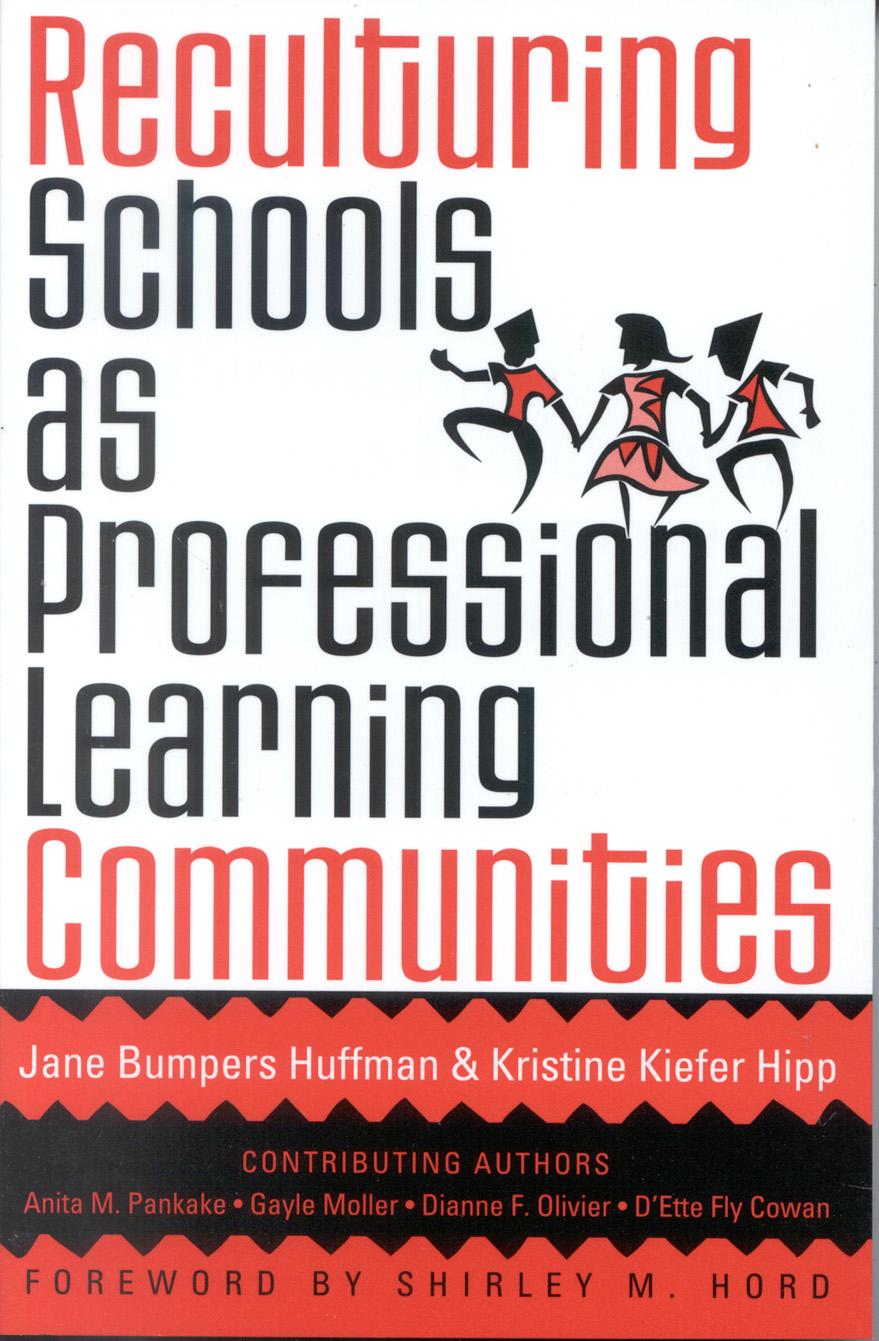
This important work documents and examines evidence of efforts taking place in rural, urban, and suburban Pre-K-12 schools that are actively engaged in creating professional learning communities (PLCs). Literature is reviewed that defines and identifies the distinguishing dimensions of PLCs. A five-year, federally funded research study is explained including the methodology and demographics of the six study schools and a synthesis of the 64 interviews.
A PLC organizer (PLCO) is introduced, which realigns with Shirley Hord's original 1997 research. The organizer provides the framework to explain the five PLC dimensions and related critical attributes. The PLCO also merges Fullan's model, Phases of Change (1985), which includes initiation, implementation, and institutionalization.
The authors provide extensive evidence of the progressive development of a PLC from initiation to implementation using exemplars and non-exemplars from interviews that either hinder or facilitate creating and sustaining PLCs. A new assessment tool, the Professional Learning Community Assessment (PLCA), is also presented and can be used for diagnosis and evaluation of schools as they work toward school reform efforts. Readers are also presented with information that connects professional learning community work to a new approach to school improvement. Five case studies are included that can be used in schools and university classrooms for the purpose of engaging educators in reflection, open dialogue, problem finding, and problem solving. This first-hand documented information provides readers with unique issues as they wrestle with the challenges of transforming schools into organizations that meet diverse students needs.
Lessons learned from this problem-based learning can easily transfer to the readers' own experiences and schools. The authors conclude by highlighting significant findings, reviewing the most recent related research that addresses sustaining such efforts, and offering suggestions for school leaders to
A PLC organizer (PLCO) is introduced, which realigns with Shirley Hord's original 1997 research. The organizer provides the framework to explain the five PLC dimensions and related critical attributes. The PLCO also merges Fullan's model, Phases of Change (1985), which includes initiation, implementation, and institutionalization.
The authors provide extensive evidence of the progressive development of a PLC from initiation to implementation using exemplars and non-exemplars from interviews that either hinder or facilitate creating and sustaining PLCs. A new assessment tool, the Professional Learning Community Assessment (PLCA), is also presented and can be used for diagnosis and evaluation of schools as they work toward school reform efforts. Readers are also presented with information that connects professional learning community work to a new approach to school improvement. Five case studies are included that can be used in schools and university classrooms for the purpose of engaging educators in reflection, open dialogue, problem finding, and problem solving. This first-hand documented information provides readers with unique issues as they wrestle with the challenges of transforming schools into organizations that meet diverse students needs.
Lessons learned from this problem-based learning can easily transfer to the readers' own experiences and schools. The authors conclude by highlighting significant findings, reviewing the most recent related research that addresses sustaining such efforts, and offering suggestions for school leaders to
Payez facilement par carte, Klarna, Apple Pay ou Google Pay. Pas satisfait ? Vous avez toujours une garantie de remboursement de 14 jours. En savoir plus dans nos conditions. Si vous avez des questions, envoyez-nous un e-mail à hello@memmo.org.
Memmo facilite tes études, où que tu sois dans le monde. On rassemble tes manuels de cours et des outils d'étude intelligents au même endroit : résumés, quiz, podcasts et flashcards. Et il y a Ted, ton compagnon d'étude qui répond à toutes tes questions. Plus de 50 000 étudiants étudient déjà ici – conçu pour t'aider à apprendre plus vite et à moins stresser.