
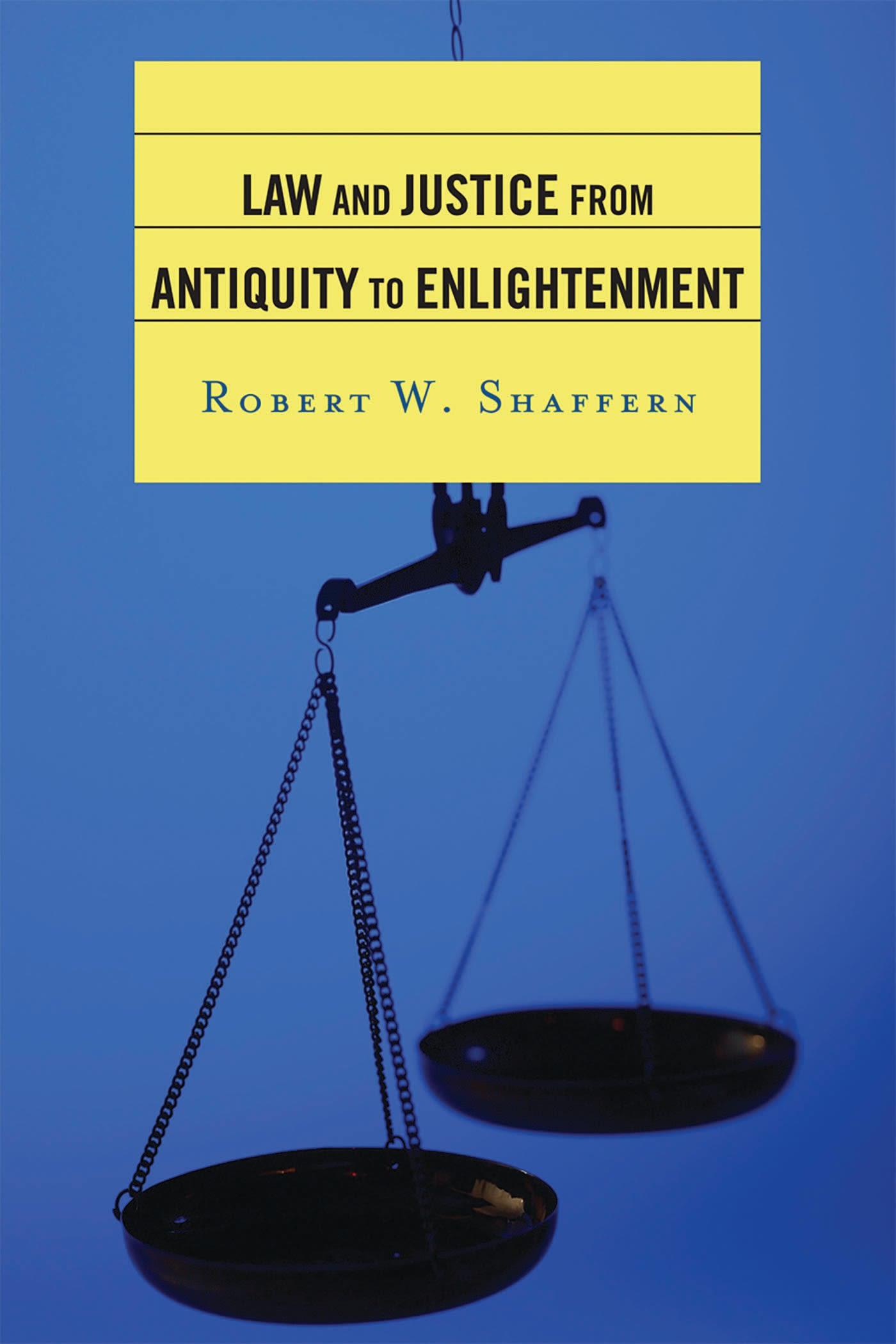
This concise intellectual history of the law offers an accessible introduction to the ideas and contexts of law from ancient Babylon to eighteenth-century Europe. Robert W. Shaffern examines a rich array of sources to illuminate ideas about law and justice in Western civilization. He identifies four main sources for traditional jurisprudence—the civilizations of the Fertile Crescent and classical Athens, the legal legacy of ancient Rome, the legal traditions of the Middle Ages, and developments in early modern Europe.
By focusing on the recurring issues and historical contexts of the law, the author shows the extensive influence earlier sources had on the later development of Western law. For instance, the ancient code of Hammurabi pledged to obtain justice for the "widow and the orphan," a phrase that appeared again in later laws. Also, the tragedies of Aeschylus insisted that private individuals pursue vengeance, but government judiciaries upheld justice, an idea that the early modern European monarchies advanced when they promulgated new codes of criminal law. Additionally, Roman, medieval, and modern jurists all believed that natural law theory served as a rational criterion for legislators and judges. Throughout the span of centuries covered in the text, governments used law to regulate or monopolize the employment of violence.
Designed to introduce undergraduates to the significant developments and ideas about the law and justice, this book will be invaluable for courses on the history of law and jurisprudence.
By focusing on the recurring issues and historical contexts of the law, the author shows the extensive influence earlier sources had on the later development of Western law. For instance, the ancient code of Hammurabi pledged to obtain justice for the "widow and the orphan," a phrase that appeared again in later laws. Also, the tragedies of Aeschylus insisted that private individuals pursue vengeance, but government judiciaries upheld justice, an idea that the early modern European monarchies advanced when they promulgated new codes of criminal law. Additionally, Roman, medieval, and modern jurists all believed that natural law theory served as a rational criterion for legislators and judges. Throughout the span of centuries covered in the text, governments used law to regulate or monopolize the employment of violence.
Designed to introduce undergraduates to the significant developments and ideas about the law and justice, this book will be invaluable for courses on the history of law and jurisprudence.
Payez facilement par carte, Klarna, Apple Pay ou Google Pay. Pas satisfait ? Vous avez toujours une garantie de remboursement de 14 jours. En savoir plus dans nos conditions. Si vous avez des questions, envoyez-nous un e-mail à hello@memmo.org.
Memmo facilite tes études, où que tu sois dans le monde. On rassemble tes manuels de cours et des outils d'étude intelligents au même endroit : résumés, quiz, podcasts et flashcards. Et il y a Ted, ton compagnon d'étude qui répond à toutes tes questions. Plus de 50 000 étudiants étudient déjà ici – conçu pour t'aider à apprendre plus vite et à moins stresser.