
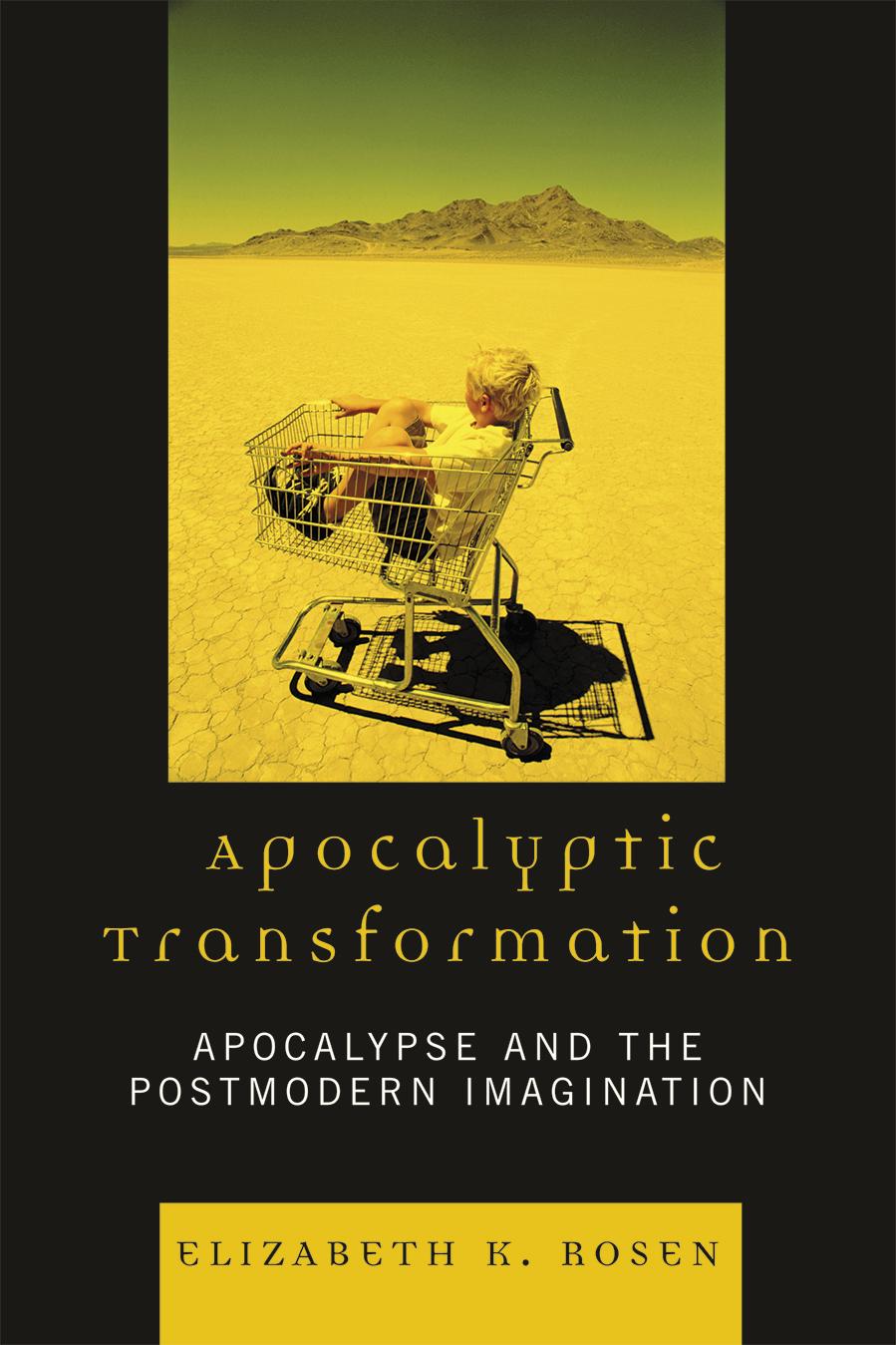
Since its inception, the story of the apocalypse has been used as a means by which to understand the world and one's place in it. The appeal of the apocalyptic myth is largely rooted in its ability to make sense of instances of crisis by incorporating those crises into a larger plan for history and an end of time that God has planned. Apocalypse is both an organizing principle to be imposed on an overwhelming, seemingly-disordered universe and a fundamentally moral story which offers hope of a new world where good and evil can be clearly delineated and addressed. But all of the traditional functions and comforts of the apocalyptic myth are challenged when the myth collides with postmodernism. The characteristics that define a work as postmodern ultimately destabilize the traits that make the apocalyptic myth unique. Using the work of Terry Gilliam, Don DeLillo, Kurt Vonnegut, and other writers in the genre, Apocalyptic Transformation examines the collision of the postmodern mode and the apocalyptic myth, explores the process of secularizing this religious story and the reasons for doing so, and asks the question: What happens when an author undermines the grand narrative of the apocalypse?
Payez facilement par carte, Klarna, Apple Pay ou Google Pay. Pas satisfait ? Vous avez toujours une garantie de remboursement de 14 jours. En savoir plus dans nos conditions. Si vous avez des questions, envoyez-nous un e-mail à hello@memmo.org.
Memmo facilite tes études, où que tu sois dans le monde. On rassemble tes manuels de cours et des outils d'étude intelligents au même endroit : résumés, quiz, podcasts et flashcards. Et il y a Ted, ton compagnon d'étude qui répond à toutes tes questions. Plus de 50 000 étudiants étudient déjà ici – conçu pour t'aider à apprendre plus vite et à moins stresser.