
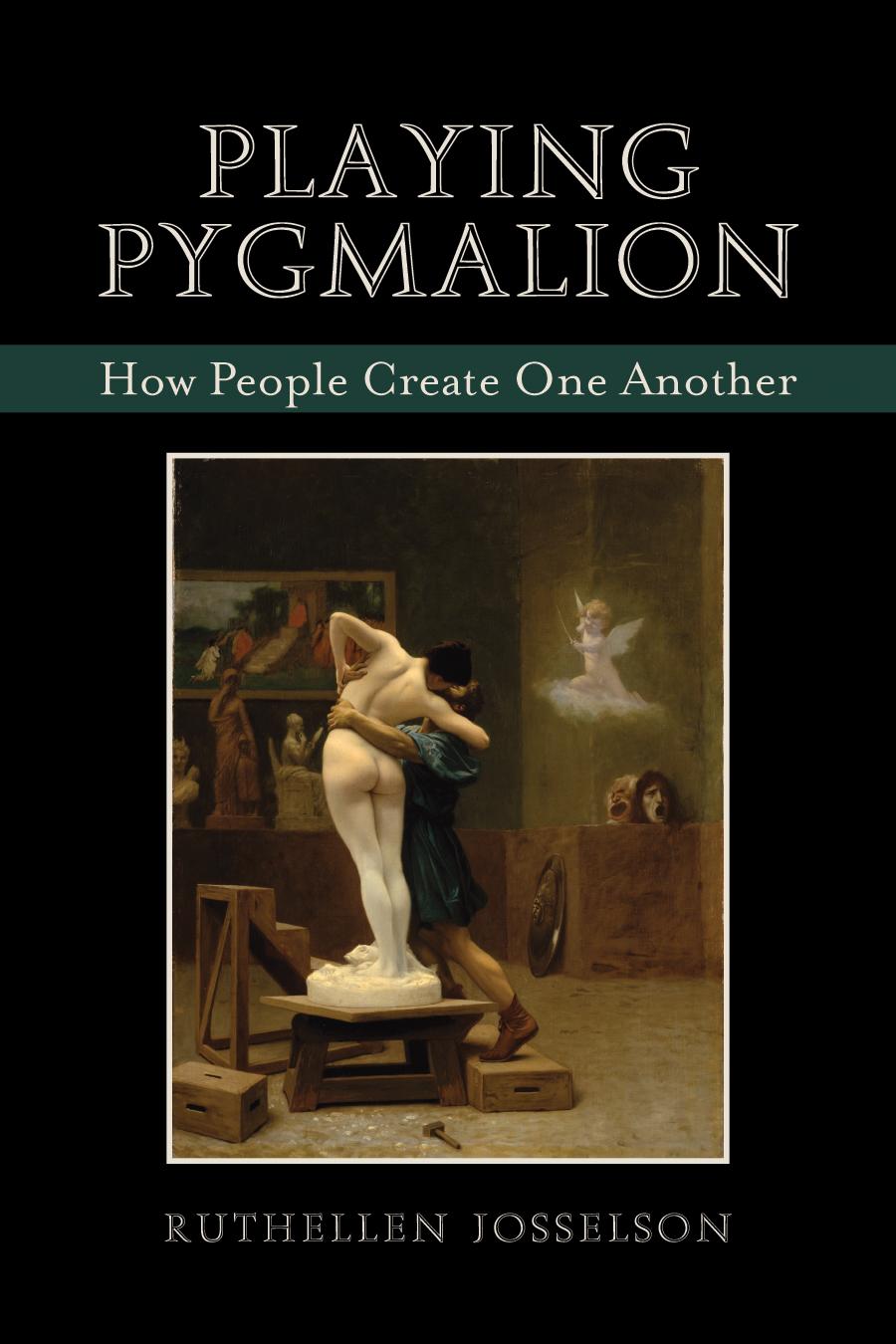
Like Pygmalion with his Galatea, we create the characters of people in our lives. Although others appear to us to be who they just "are", there are complicated psychological processes, outside of our awareness, that lead us to experience people in ways that we ourselves construct.
Psychoanalytic theory offers a wealth of understanding of how people unconsciously create what they both need and dread. But these processes are not well understood by most therapists. Too often, therapists join their patients in overlooking their own role in creating the relationships in their lives, such that it seems that patients were simply unfortunate to "have" an un-giving mother or to "find" an unloving spouse. Because processes of creation in relationship are largely unconscious, they are much harder to see. As a result, most theorists of relationships acknowledge that they exist, but offer little language or explication for how they unfold or manifest themselves. Playing Pygmalion is an effort to trace in psychological terms the subtle interplay by which people create the other.
This book adapts the psychoanalytic concepts of transitional object usage and projective identification to show their importance and applicability beyond the therapeutic situation to the understanding of people's relational lives. Using examples from literature, film and clinical work to illustrate the theory, the book goes on to consider in depth the relationship narratives of four pairs of ordinary people to demonstrate how people unconsciously "create" one another.
The stories demonstrate that the "other" is always more than one conceives him or her to be. Readers inevitably rethink some of their important relationships in terms of how they are creating people or being created by them. This may lead them to take in other aspects of the person, to see how they are looking very selectively at a human being who exists beyond their relationship. These stories also provide cautionary tales to therapists who begin to believe in the simpl
Psychoanalytic theory offers a wealth of understanding of how people unconsciously create what they both need and dread. But these processes are not well understood by most therapists. Too often, therapists join their patients in overlooking their own role in creating the relationships in their lives, such that it seems that patients were simply unfortunate to "have" an un-giving mother or to "find" an unloving spouse. Because processes of creation in relationship are largely unconscious, they are much harder to see. As a result, most theorists of relationships acknowledge that they exist, but offer little language or explication for how they unfold or manifest themselves. Playing Pygmalion is an effort to trace in psychological terms the subtle interplay by which people create the other.
This book adapts the psychoanalytic concepts of transitional object usage and projective identification to show their importance and applicability beyond the therapeutic situation to the understanding of people's relational lives. Using examples from literature, film and clinical work to illustrate the theory, the book goes on to consider in depth the relationship narratives of four pairs of ordinary people to demonstrate how people unconsciously "create" one another.
The stories demonstrate that the "other" is always more than one conceives him or her to be. Readers inevitably rethink some of their important relationships in terms of how they are creating people or being created by them. This may lead them to take in other aspects of the person, to see how they are looking very selectively at a human being who exists beyond their relationship. These stories also provide cautionary tales to therapists who begin to believe in the simpl
Payez facilement par carte, Klarna, Apple Pay ou Google Pay. Pas satisfait ? Vous avez toujours une garantie de remboursement de 14 jours. En savoir plus dans nos conditions. Si vous avez des questions, envoyez-nous un e-mail à hello@memmo.org.
Memmo facilite tes études, où que tu sois dans le monde. On rassemble tes manuels de cours et des outils d'étude intelligents au même endroit : résumés, quiz, podcasts et flashcards. Et il y a Ted, ton compagnon d'étude qui répond à toutes tes questions. Plus de 50 000 étudiants étudient déjà ici – conçu pour t'aider à apprendre plus vite et à moins stresser.